
US Treasury Discusses Dollar Swap Lines with Gulf and Asian Partners
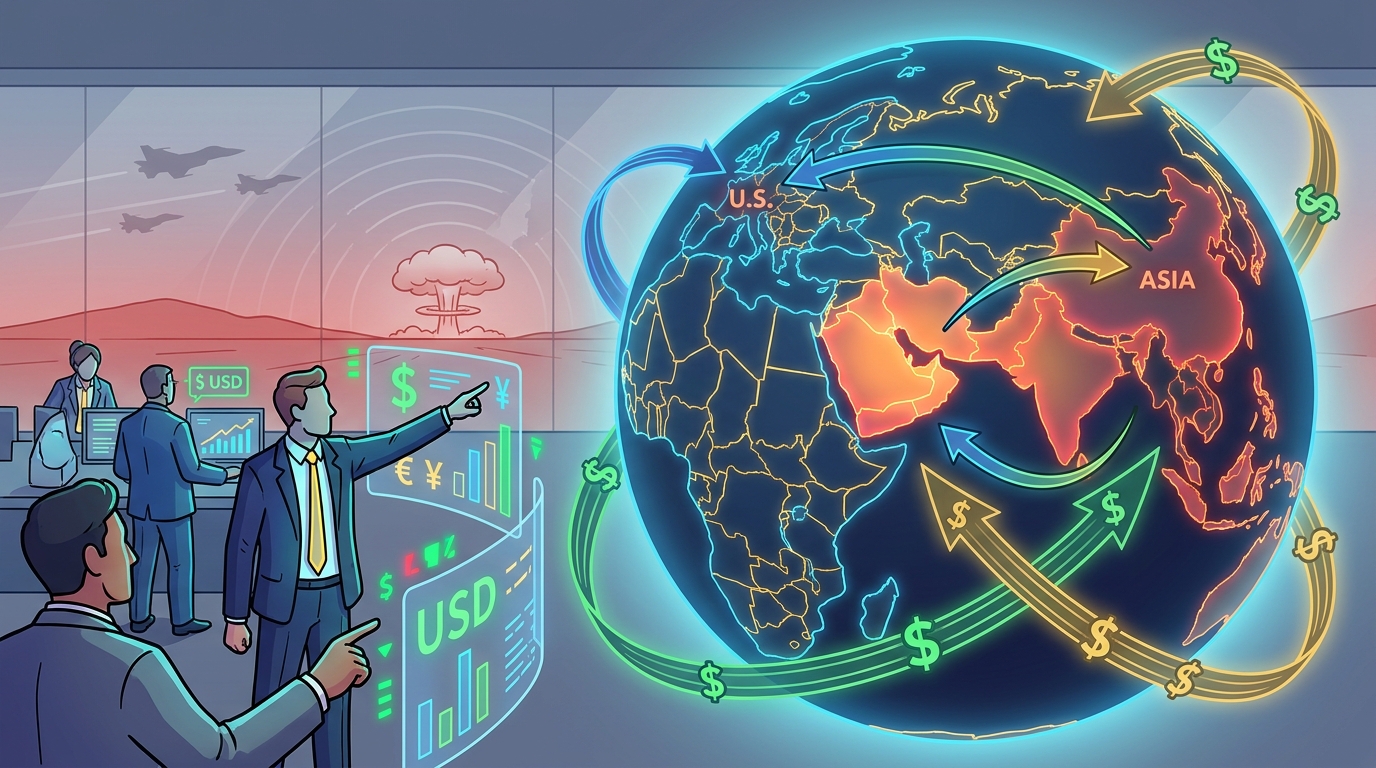
The US Treasury is in active discussions to establish currency swap lines with Gulf and Asian nations, Treasury Secretary Scott Bessent announced on Friday. The move comes as multiple allies seek assistance in managing economic fallout from the ongoing Iran conflict.

Bessent has not publicly identified which specific countries have made requests for swap line arrangements. However, he emphasized that such agreements would provide mutual benefits for both the United States and its international partners.
“Additional swap lines can benefit our nation by reinforcing dollar usage and liquidity internationally, maintaining smooth functioning in dollar funding markets, promoting trade and investment with the United States,” Bessent stated in a post on X, formerly Twitter.
The Treasury Secretary suggested that these arrangements could mark a significant shift in global dollar liquidity infrastructure. “Extending permanent swap lines can be a major first step in creating new U.S. dollar funding centers in the Gulf and Asia,” he added.
During testimony before U.S. lawmakers on Wednesday, Bessent revealed that several allies in the Gulf region and Asia have formally requested currency swap lines. These nations are seeking support to manage energy shocks and other economic disruptions stemming from the Iran war.
Bessent specifically noted that both the United States and the United Arab Emirates would benefit from a proposed swap line arrangement. President Donald Trump indicated on Tuesday that he was considering such an agreement with the UAE.
The Treasury Secretary praised the financial strength of potential partners, noting that many possess robust sovereign balance sheets. “Many of these countries have pristine sovereign balance sheets and large dollar holdings – larger than many major economies with whom we maintain permanent swap facilities,” Bessent said on Friday.
Currently, the Federal Reserve maintains permanent standing currency swap lines with only five major central banks. These privileged partners include the Bank of Canada, Bank of Japan, European Central Bank, Bank of England, and Swiss National Bank.
These major central banks enjoy the advantage of borrowing dollars directly from the Federal Reserve using their own currencies as collateral. Smaller central banks, by contrast, must borrow dollars through their accounts at the New York Fed by pledging U.S. Treasury securities held on deposit as collateral.

The Federal Reserve did temporarily extend swap line privileges to nine additional countries during the COVID-19 pandemic. Those nations were Mexico, Brazil, Australia, Denmark, Norway, Sweden, South Korea, New Zealand, and Singapore.
Expanding the permanent swap line facility beyond the current five partners would represent a major policy shift. Implementation may face timing constraints related to Federal Reserve leadership changes.
The expansion may not proceed until Trump’s Federal Reserve Chair nominee, Kevin Warsh, receives Senate confirmation and assumes office. During his confirmation hearing this week, Warsh indicated support for deeper cooperation between the Treasury Department and the Fed on international finance issues beyond traditional monetary policy.
Warsh specifically mentioned international finance as an area where enhanced Treasury-Fed coordination would be appropriate. This suggests potential openness to expanding dollar swap arrangements as part of broader U.S. financial diplomacy efforts.
The timing of these discussions reflects growing concerns about global dollar liquidity amid geopolitical tensions. The Iran conflict has created significant market volatility and raised questions about energy security in key regions.
For Gulf nations heavily dependent on oil exports and Asian economies reliant on energy imports, dollar swap lines could provide crucial stability. Such arrangements would ensure access to dollar funding during periods of market stress or sudden capital outflows.
Bessent commended countries exploring these financial safety measures. He characterized their interest in additional financial buffers as prudent crisis management planning.
The dollar swap line discussions represent one element of broader U.S. efforts to maintain dollar dominance in global finance. By extending such facilities to strategic partners, the United States reinforces the dollar’s role as the world’s primary reserve currency.
As talks continue, market participants will be watching closely for announcements about specific countries and the terms of any agreements. The outcome could reshape global dollar liquidity architecture and strengthen financial ties between the United States and key emerging markets.
More Reads:
Tether Freezes $344 Million in USDT on Tron Following U.S. Law Enforcement Request
Trump Confirmed to Attend TRUMP Memecoin Gala at Mar-a-Lago on Saturday
If you’re reading this, you’re already ahead. Stay there, by joining the…
Discover more from Dipprofit
Subscribe to get the latest posts sent to your email.