
For years, the cryptocurrency industry sold itself as the future of money — borderless, decentralized, unstoppable. But somewhere in the shadows of that revolution, another system was quietly being built. One driven not by innovation, but by survival, sanctions, and state-sponsored cyber warfare.
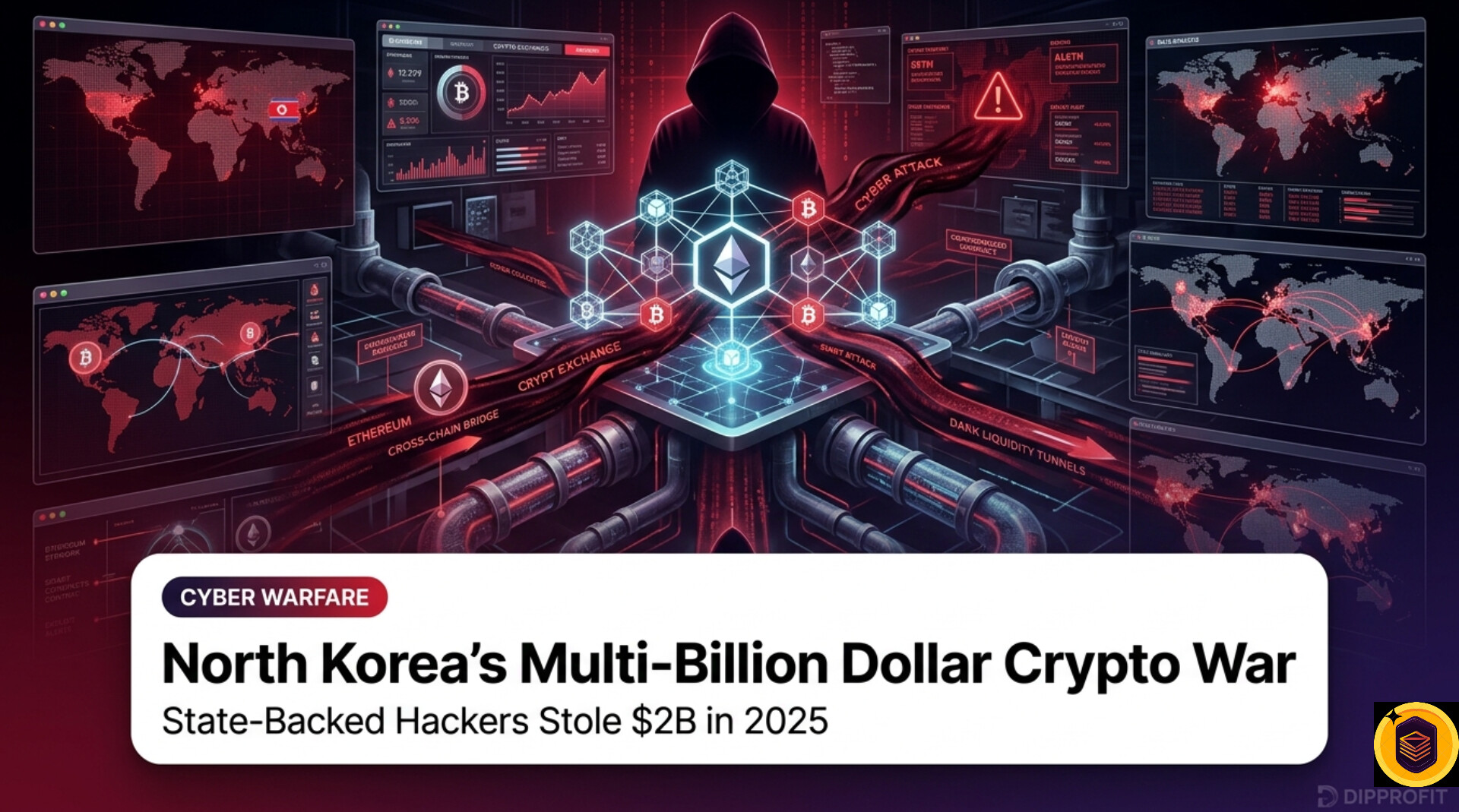
A new report from blockchain security giant CertiK paints a disturbing picture of just how deep the problem has become. According to the firm’s latest findings, hackers linked to North Korea stole roughly $2.06 billion worth of cryptocurrency in 2025 alone. That figure represents nearly 60% of all crypto theft losses recorded globally during the year.
This is no longer a story about scattered online scams or isolated exchange breaches. What the industry is facing now resembles an organized digital economy built around cyber theft — one sophisticated enough to rival some of the world’s most advanced criminal enterprises.
And the frightening part is this: they are getting better.
Blockchain investigators say North Korean hacking groups, widely associated with the notorious Lazarus Group, have evolved far beyond the reckless smash-and-grab attacks that once defined crypto crime. These operations are now strategic, patient, and highly coordinated. Instead of targeting dozens of weak platforms, they increasingly focus on fewer attacks with devastating scale.
The Bybit breach earlier last year became the clearest example of that evolution. The attack, which reportedly drained around $1.5 billion in Ethereum, shook the digital asset market to its core and instantly entered history as one of the largest crypto thefts ever recorded. Investigators later linked the operation to North Korean actors after tracing laundering patterns and wallet activity connected to previous Lazarus campaigns.
For many investors, it was the moment crypto stopped feeling untouchable.
What makes these attacks particularly dangerous is not just the theft itself, but the speed at which the stolen funds disappear into the maze of decentralized finance. CertiK’s report found that in one major case, more than 86% of stolen assets were laundered within a month using decentralized exchanges, mixers, and cross-chain bridges.
By the time investigators begin tracing the funds, they are often already scattered across dozens of blockchains, converted into different tokens, or moved through privacy-focused protocols designed to leave little trace behind.
This is where the crypto industry faces its uncomfortable reality.
The same technology celebrated for financial freedom has also created the perfect environment for sophisticated laundering networks. Every new bridge, every anonymous wallet, every permissionless protocol adds another layer of complexity for law enforcement agencies already struggling to keep pace.
And while exchanges continue investing millions into cybersecurity, the attackers are operating with something far more powerful than financial motivation: national interest.
Western intelligence agencies have repeatedly alleged that North Korea uses cybercrime as a direct source of state revenue, helping fund military ambitions and easing the pressure of international sanctions. Crypto theft has effectively become an economic survival strategy.
That changes the nature of the threat entirely.
Most cybercriminals steal for profit. State-backed hackers steal because governments depend on the outcome.
The implications for the broader crypto market are enormous. Institutional investors entering digital assets want stability, security, and trust. Instead, headlines continue to expose billion-dollar exploits, compromised smart contracts, insider failures, and laundering networks operating at industrial scale.
Even within the crypto community, frustration is beginning to grow. Developers who once believed decentralization alone could solve systemic financial problems are now confronting a painful truth: technology without security creates opportunity for exploitation.
The numbers alone tell the story.
Since 2016, North Korean-linked groups have reportedly stolen around $6.75 billion across more than 260 documented crypto-related incidents. That figure rivals the GDP of some small nations. And according to multiple blockchain intelligence firms, the trend is still accelerating rather than slowing down.
What’s especially alarming is how professionalized these operations have become. Security researchers say modern attacks increasingly involve social engineering, fake recruitment schemes, compromised developers, malicious software updates, and infiltration tactics that can remain undetected for months. The stereotype of a lone hacker in a dark room no longer fits reality.
This is cyber warfare disguised as financial crime.
The crypto industry now finds itself at a crossroads. On one side is the original vision of open financial infrastructure accessible to anyone in the world. On the other is the growing realization that without stronger safeguards, those same systems can become weapons in the hands of highly organized state actors.
Some platforms are responding aggressively. Exchanges are tightening cold wallet procedures. Blockchain analytics firms are improving tracking systems. Governments are increasing pressure on compliance standards and cross-border cooperation. But critics argue the industry is still reacting rather than preparing.
And every successful exploit sends another message to the market: vulnerability still exists.
For ordinary users, the consequences go far beyond headlines. Every major hack damages confidence, triggers panic withdrawals, pressures token prices, and raises fresh concerns about whether digital assets are truly safe at scale. Retail investors may not understand cross-chain laundering mechanics or smart contract vulnerabilities, but they understand fear when billions vanish overnight.
The tragedy is that much of crypto’s innovation remains genuinely transformative. Decentralized finance has opened financial access to millions globally. Stablecoins have reshaped international payments. Blockchain technology continues to influence banking, gaming, and digital ownership.
Yet alongside that progress, an invisible war is unfolding behind the screens.
And right now, North Korea appears to be winning far more battles than the industry would like to admit.
More Reads:
DeFi Moves From Niche Experiment to Mainstream Financial Tool Across Latin America
Spot Bitcoin ETFs Log 6th Consecutive Week of Net Inflows, Longest Streak Since August 2025
If you’re reading this, you’re already ahead. Stay there, by joining the…

Dipprofit’s private Telegram community
Discover more from Dipprofit
Subscribe to get the latest posts sent to your email.