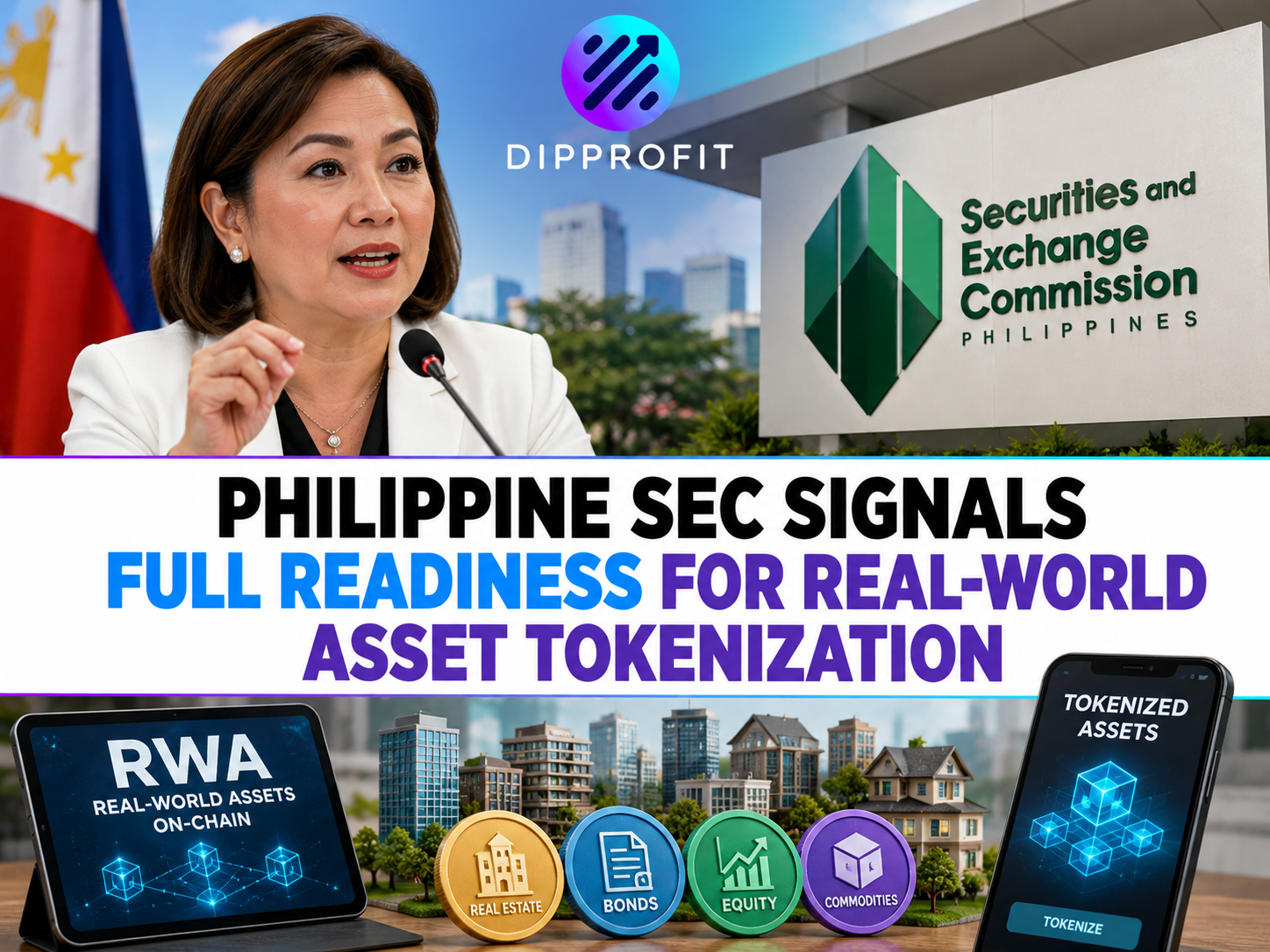

The Philippine Securities and Exchange Commission has officially signaled that the country possesses the legal and regulatory infrastructure needed to accommodate the tokenization of real-world assets, marking a significant step forward for blockchain adoption in Southeast Asia. SEC Commissioner Rogelio Quevedo made the announcement during the Philippine Blockchain Week 2026, stating that the regulator is “now fully convinced that we have the proper law and the proper regulatory mind and background” to accept asset tokenization.
Quevedo emphasized that tokenized assets could revolutionize the country’s capital markets and stock exchanges while simultaneously addressing a critical investor protection challenge. Speaking with Cointelegraph, he highlighted how tokenized investment products could provide overseas Filipino workers with legitimate investment alternatives, a demographic that currently struggles to find safe places to deploy their capital. “Our OFWs, they have the capital. They do not know where to place their money. They do not know how to make their money earn,” Quevedo explained, pointing to the prevalence of investment scams targeting Filipinos seeking returns.
The SEC’s confidence in its readiness stems partly from enhanced enforcement capabilities that have been developed in recent years. Quevedo revealed that the regulator is leveraging artificial intelligence to combat fraudulent schemes and has established partnerships with major online platforms including Google and TikTok to remove illegal investment offerings from their ecosystems. This multi-pronged approach demonstrates how traditional regulatory oversight can adapt to emerging technologies.
The Philippines has already begun testing tokenized assets through its Strategic Sandbox, or StratBox, a regulatory framework that allows fintech companies to test new products and business models in a live but controlled environment. The sandbox grants the SEC authority to waive or modify certain legal and regulatory requirements for individual participants, though participation does not automatically exempt companies from existing laws. This approach follows a pattern seen in related coverage of similar regulatory moves where agencies balance innovation with investor protection.
See also: Former SEC lawyers says the agency’s crypto tokenization fix won’t last, See Why
In November 2025, the SEC admitted four companies to the sandbox program, including one testing a tokenized real estate offering. Two additional participants were approved to test access to United States equities, while BlockShoals Technologies received in-principle approval to test crypto-related products and services. These pilot programs provide valuable data on how tokenization can function within a regulated framework.
The significance of the Philippines’ position cannot be overstated for the broader Asia-Pacific region. As industry leaders have noted, tokenization rather than price speculation may drive crypto’s next chapter of growth. The Philippine SEC’s readiness signals that major emerging markets are preparing infrastructure for this transition.
Quevedo’s remarks frame regulated tokenization as both a capital-markets innovation and a potential investor-protection tool. By providing legitimate pathways for asset tokenization, the SEC hopes to steer retail investors away from unregistered schemes that have historically targeted vulnerable populations. This dual benefit makes the regulatory approach particularly compelling for developing economies.
The Philippines’ regulatory stance also reflects broader regional trends. The country has previously issued stricter crypto listing rules and banned privacy coins, demonstrating a balanced approach to blockchain technology that prioritizes consumer protection without stifling innovation.
See also: Abra CEO Says Tokenization, Not Bitcoin Price, Will Drive Crypto’s Next Chapter
The SEC’s Strategic Sandbox framework represents a practical middle ground between outright prohibition and unregulated markets. By allowing controlled experimentation, regulators can gather evidence about how tokenization impacts market efficiency, investor behavior, and systemic risk. This data-driven approach strengthens the case for broader adoption once pilot programs demonstrate safety and efficacy.
Looking ahead, the Philippines appears positioned to become a regional hub for tokenization innovation. With proper legal foundations, enhanced enforcement capabilities, and active sandbox testing, the country has created conditions favorable for both established financial institutions and blockchain startups to explore tokenized assets. The SEC’s explicit confidence in its readiness suggests that formal approval frameworks may not be far behind.
For overseas Filipino workers and domestic retail investors, the potential benefits are substantial. Tokenized investment products could democratize access to asset classes previously available only to wealthy investors, while the SEC’s enhanced oversight reduces fraud risk. As the sandbox program generates results, the Philippines may serve as a model for other emerging markets seeking to balance innovation with investor protection in the tokenization era.
More Reads:
The Complete MACD Indicator Trading Guide: From Beginner to Pro
GoMining Launches Bitcoin Payment SDK to Challenge Block’s Square with Native BTC Settlement
If you’re reading this, you’re already ahead. Stay there, by joining the…
Dipprofit’s private Telegram community

Discover more from Dipprofit
Subscribe to get the latest posts sent to your email.