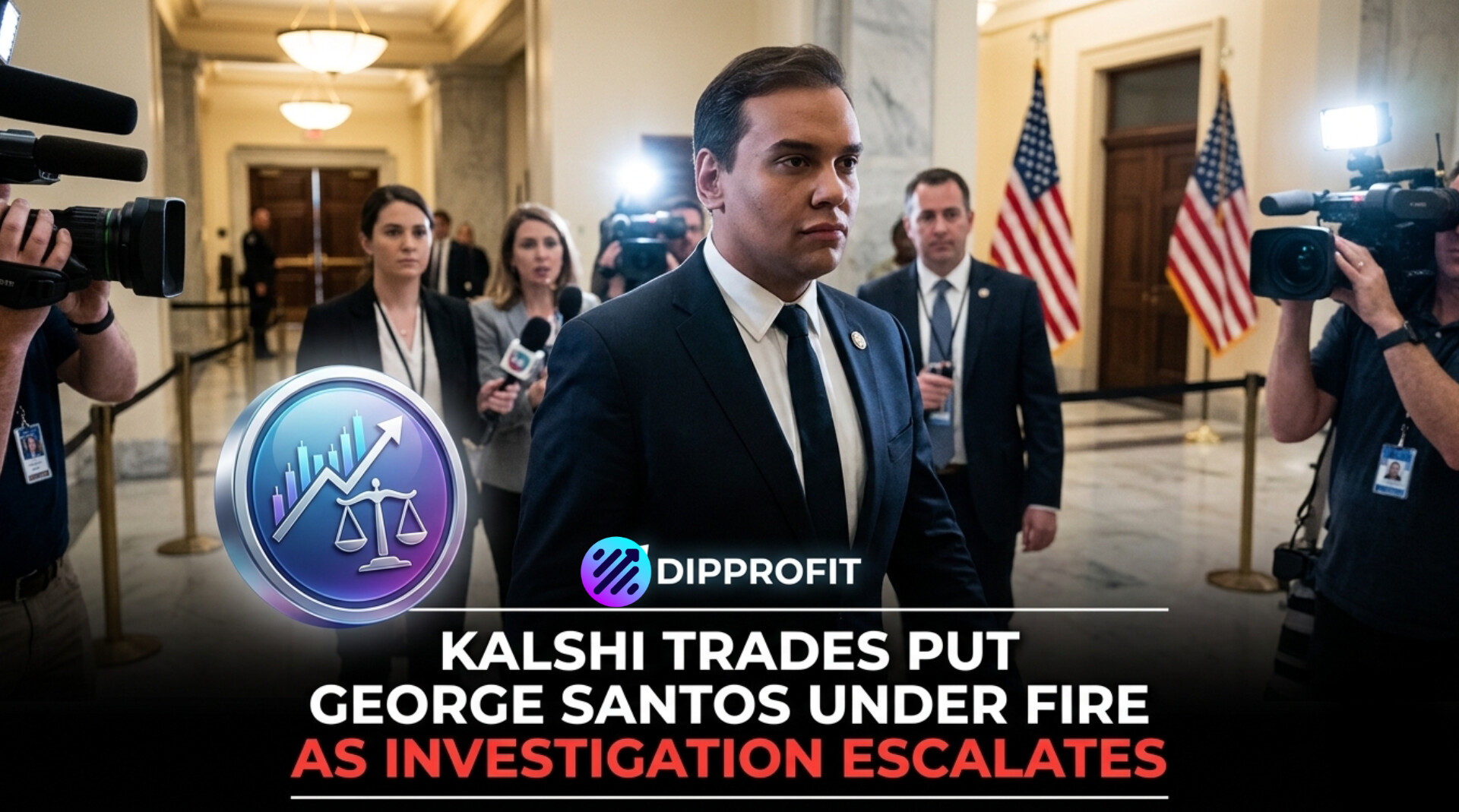

Former U.S. Representative George Santos has been referred to both the Department of Justice and the Commodity Futures Trading Commission over trades he made on Kalshi, a crypto-based prediction market platform, according to a new report. The referral centers on trades Santos allegedly placed related to the State of the Union address, raising fresh questions about the intersection of cryptocurrency trading, political events, and regulatory oversight.
The referrals suggest potential violations of federal law regarding insider trading and market manipulation. Kalshi allows users to trade on the outcomes of political and economic events, creating a novel arena where political figures could theoretically profit from advance knowledge of major announcements or events. This follows a pattern seen in related coverage of similar regulatory moves affecting financial markets and political actors.
Santos, who resigned from Congress in November 2023 amid mounting legal troubles and ethics investigations, has faced numerous criminal charges including wire fraud, money laundering, and campaign finance violations. The new referral adds another layer to his legal complications and highlights emerging concerns about how prediction markets intersect with political activity.
Kalshi has positioned itself as a regulated prediction market, operating under CFTC oversight. The platform allows users to trade binary contracts on various outcomes, from election results to economic indicators. However, the Santos case underscores potential vulnerabilities in how these markets handle trades by individuals with access to non-public information or political influence.
See also: Dollar Dips Ahead of Key US Jobs Report as Geopolitical Tensions Simmer
The CFTC has been gradually expanding its regulatory framework around crypto derivatives and prediction markets. According to Cointelegraph, the commission has taken an increasingly active role in scrutinizing trading activity that could constitute market manipulation or insider trading in the crypto space. The referral of Santos suggests the agency is applying these principles to prediction markets as well.
The DOJ referral indicates potential criminal liability beyond civil regulatory violations. Insider trading laws, traditionally applied to securities markets, have increasingly been extended to cryptocurrency and derivatives markets. If Santos possessed advance knowledge about State of the Union content or timing and used that information to place profitable trades, prosecutors could argue he violated federal securities laws or wire fraud statutes.
The specifics of which State of the Union address triggered the investigation remain unclear from available reports. However, the timing of the referral suggests investigators have identified a pattern or specific instance of suspicious trading activity that warrants formal review by both agencies.
This case reflects broader tensions in the crypto and prediction market space. As these platforms grow in popularity and regulatory clarity improves, questions about fair access and information asymmetries become more acute. Political figures, government employees, and others with potential access to non-public information occupy a gray area that regulators are only beginning to address systematically.
Kalshi itself has not been accused of wrongdoing in the Santos matter. The platform has worked to establish itself as a compliant operator within the CFTC’s regulatory framework. However, the referral raises questions about whether prediction market platforms have adequate surveillance and compliance systems to detect potentially problematic trading patterns by users with political access or influence.
See also: Japan’s Yen Interventions During Golden Week May Be Largest Since 2022, Bank of America Reports
The referral also comes amid broader scrutiny of prediction markets and their role in political discourse. Some critics worry that allowing financial betting on political outcomes could create perverse incentives or conflicts of interest. Others argue that prediction markets provide valuable information aggregation and price discovery mechanisms.
For Santos, the referral represents yet another legal headwind. His existing criminal charges carry potential prison time, and additional investigations could compound his legal exposure. The case may also serve as a cautionary tale for other political figures considering participation in crypto-based trading platforms.
The outcome of the DOJ and CFTC reviews could have significant implications for how prediction markets are regulated going forward. If investigators determine that Santos violated applicable laws, it could prompt stricter compliance requirements for platforms like Kalshi or new rules governing who can trade on political events. Data from CoinGecko shows prediction market platforms have grown substantially in recent years, making regulatory clarity increasingly important.
Both agencies are expected to conduct thorough investigations into the allegations. The referral process typically involves preliminary review followed by potential formal investigations if sufficient evidence of wrongdoing emerges. The timeline for conclusions remains uncertain, but the involvement of both the DOJ and CFTC suggests the matter is being taken seriously by federal authorities.
More Reads:
EU and New York Regulators Sign Stablecoin Oversight Agreement to Combat Cross-Border Risks
Bitcoin’s Identity Crisis Explains Why Price Behavior Remains Unpredictable
If you’re reading this, you’re already ahead. Stay there, by joining the…
Dipprofit’s private Telegram community

Discover more from Dipprofit
Subscribe to get the latest posts sent to your email.