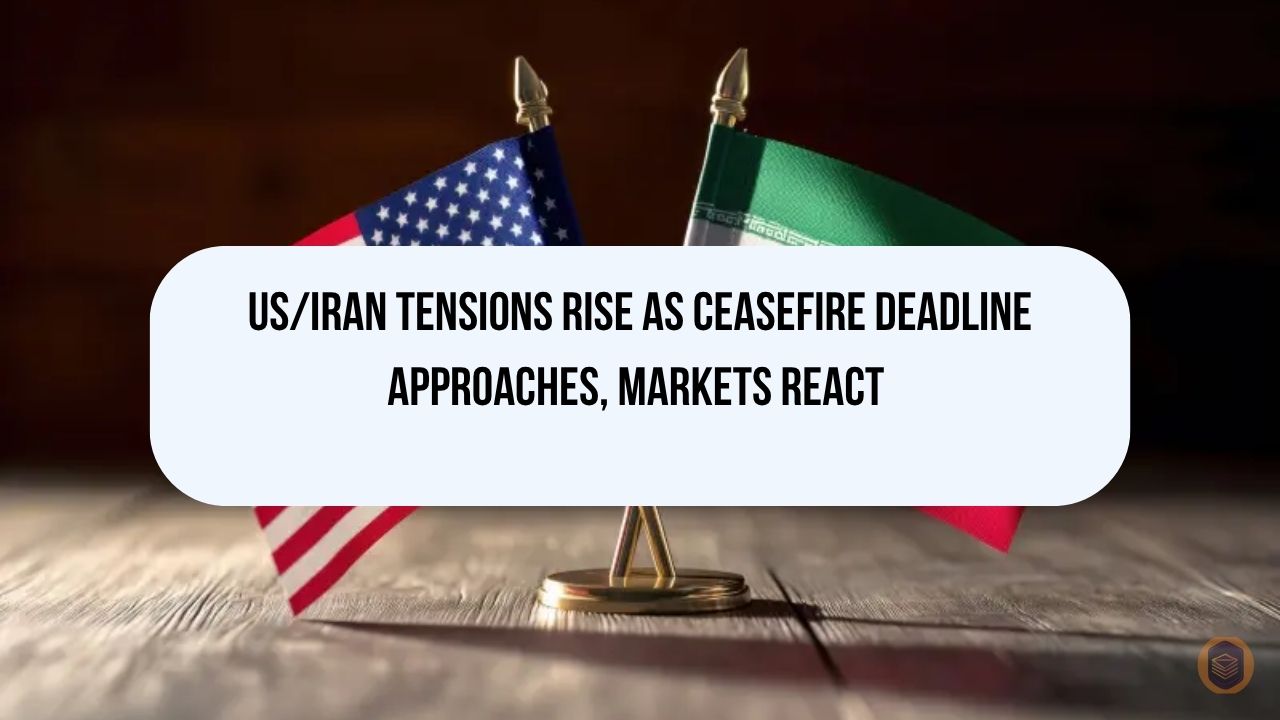

Escalating tensions between the United States and Iran knocked US equity markets lower on Monday as investors weighed the prospects for a peace deal ahead of a critical ceasefire deadline. The S&P 500 and NASDAQ 100 both declined after closing at record highs on Friday, following Iran’s decision to re-close the Strait of Hormuz over the weekend.
The latest flare-up came after US forces attacked and boarded the Tousa, an oil tanker carrying Iranian cargo to China, as part of Washington’s enforcement of a blockade on Iranian ports. Iran responded by shutting down the strategic shipping lane it had briefly reopened, dashing market hopes for de-escalation.

Peace talks are scheduled to take place in Pakistan on Tuesday, just one day before the current ceasefire expires on Wednesday. However, Iran has indicated it will not attend the meeting following the weekend’s maritime confrontation. The uncertainty has dampened risk sentiment across global markets.
Despite the setback, prediction markets like Polymarket continue to show implied probabilities favoring an extension of the ceasefire. Market traders are also pricing in the possibility of a comprehensive US/Iran peace deal by the end of May, along with Iranian agreement to surrender enriched uranium by year-end 2026.
The geopolitical tensions provided modest support to crude oil prices, which edged higher on Monday morning following the Tousa incident. However, the gains remained limited as traders assessed the potential impact on global supply chains.
Precious metals showed mixed performance in the risk-off environment. Gold and silver displayed weak bullish signals, though the recovery in these traditional safe-haven assets appeared to lack conviction. Market traders have remained cautious about taking aggressive long positions given the uncertain trajectory of the diplomatic situation.

See also: Gold (XAU/USD) Weekly Analysis: Bullish Momentum Builds As Price Reclaims $4,800 Level
The cryptocurrency market failed to capitalize on the volatility, with Bitcoin trading lower after an unsuccessful attempt to break above $75,000 last week. The digital asset’s inability to rally alongside soaring US stock markets has raised questions about its appeal as a speculative investment. The lackluster performance now suggests waning interest in cryptocurrencies among mainstream investors.
In currency markets, the euro emerged as the strongest major currency since the Tokyo trading session opened, while the Australian dollar lagged behind its peers. The USD/JPY pair showed modest gains after finding technical support below the 158 yen level, though momentum appeared tentative.
The relatively quiet start to the week featured no major economic data releases, leaving markets to focus primarily on geopolitical developments. Traders are closely monitoring both diplomatic channels and military actions in the Persian Gulf region as they assess the likelihood of an extended ceasefire.
The Strait of Hormuz now serves as a critical chokepoint for global oil shipments, with approximately one-fifth of the world’s petroleum passing through the narrow waterway. Any prolonged closure would have significant implications for energy markets and global supply chains, potentially driving oil prices substantially higher.
US equity futures suggest investors remain cautious about adding risk exposure ahead of Tuesday’s planned talks. The S&P 500’s pullback from record highs reflects concerns that escalating military confrontations could derail the fragile diplomatic process.
Market traders are also evaluating the sustainability of recent stock market gains in light of renewed geopolitical uncertainty as the combination of record valuations and heightened Middle East tensions has created a more challenging risk-reward environment for equity investors.
Day traders focused on S&P 500 futures may find opportunities on the long side if diplomatic progress emerges from Tuesday’s scheduled talks. However, the potential for further military incidents or diplomatic breakdowns suggests maintaining tight risk controls.
The future market outlook remains heavily dependent on developments in the US-Iran standoff over the coming 48 hours.
Any signs of diplomatic progress could quickly reverse Monday’s losses, while further escalation would likely trigger more substantial risk-off positioning across asset classes.
If you’re reading this, you’re already ahead. Stay there, by joining the…
Discover more from Dipprofit
Subscribe to get the latest posts sent to your email.