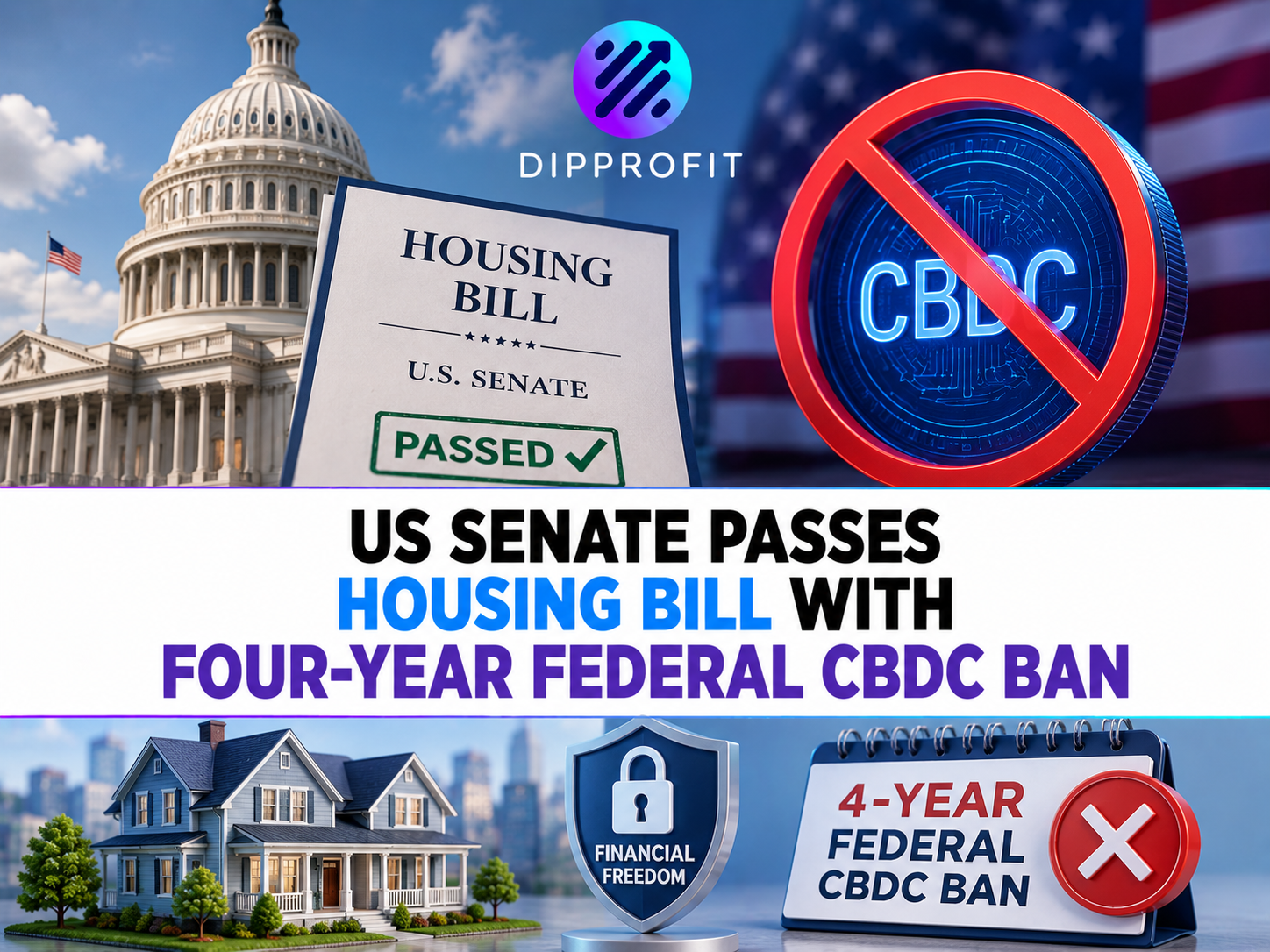

The U.S. Senate has passed a housing bill that includes a four-year moratorium on the Federal Reserve developing a central bank digital currency, marking another legislative victory for crypto advocates concerned about government-issued digital money. The measure, which addresses housing policy, embedded the CBDC restriction as part of broader financial provisions, signaling continued congressional skepticism toward a digital dollar.
The ban prevents the Federal Reserve from launching a CBDC until at least 2030, effectively freezing any near-term plans for a federally-backed digital currency. This follows a pattern seen in related coverage of similar regulatory moves that have gained momentum in recent legislative sessions. The restriction reflects growing bipartisan concern about privacy implications and the potential for government overreach through a digital currency system.

Cryptocurrency advocates have long opposed CBDC development, arguing that a digital dollar could enable unprecedented surveillance of financial transactions and give the government excessive control over monetary policy. The four-year moratorium represents a significant delay for Fed officials who have been exploring CBDC technology for several years. By embedding this restriction in a housing bill, lawmakers ensured the measure would likely pass without facing a standalone vote on the controversial topic.
The Federal Reserve has previously indicated interest in studying CBDC implementation, with officials suggesting such a currency could modernize the payment system and reduce reliance on private stablecoins. However, the central bank has not committed to launching a CBDC, and the new legislative barrier makes any near-term rollout impossible. The move also reflects broader congressional interest in regulating digital assets, as lawmakers balance innovation concerns with consumer protection.
See also: Congress Reaches Deal on Housing Bill With CBDC Ban Until 2030
Data from CoinGecko shows that crypto markets have remained relatively stable following the announcement, with major assets like Bitcoin and Ethereum experiencing modest fluctuations typical of broader market conditions. The CBDC ban itself did not trigger significant price movements, suggesting investors view the measure as a regulatory clarification rather than a market-moving event.
The housing bill’s passage demonstrates that crypto-related provisions can gain traction when attached to legislation addressing other pressing policy concerns. This legislative strategy has proven effective for advocates seeking to restrict CBDC development without requiring standalone votes that might face different political dynamics. Several states, including South Carolina, have already passed their own anti-CBDC measures, creating a patchwork of restrictions that complicate any potential federal rollout.
The four-year timeline gives the crypto industry and its allies time to build additional legislative barriers or shift the political landscape around digital currency policy. Supporters of CBDCs argue the technology could improve payment efficiency and financial inclusion, but opponents contend the risks to privacy and financial freedom outweigh potential benefits. The Senate’s decision reflects the current political balance, where concerns about government surveillance and control resonate across ideological lines.
See also: South Carolina Governor Signs Bill to Protect Bitcoin Miners and Ban CBDC
Federal Reserve Chair Jerome Powell and other officials will need to navigate this new legislative constraint as they continue exploring digital currency technology. The ban does not prohibit research or development, only deployment of an actual CBDC. This distinction allows the Fed to maintain technical readiness while respecting congressional intent to delay any public rollout.

The housing bill’s passage also signals that Congress remains engaged with cryptocurrency policy issues, even as it addresses traditional legislative priorities. Future sessions will likely see continued debate over CBDC policy, stablecoin regulation, and the broader role of digital assets in the financial system. The four-year moratorium provides a natural checkpoint for lawmakers to reassess CBDC development and adjust policy accordingly.
Crypto industry observers note that the CBDC ban represents a defensive victory for the sector, preventing a potential competitor to private cryptocurrencies and stablecoins. However, the restriction is temporary, meaning the debate will resurface before 2030. Advocates on both sides of the CBDC question will likely use the intervening years to build their cases for or against federal digital currency implementation.
More Reads:
Ripple’s CASP MiCA License Application: What We Know About the July 1 Deadline
MoneyGram Joins Solana as Validator, Deepening Stablecoin Payment Infrastructure Play
If you’re reading this, you’re already ahead. Stay there, by joining the…
Dipprofit’s private Telegram community
Discover more from Dipprofit
Subscribe to get the latest posts sent to your email.