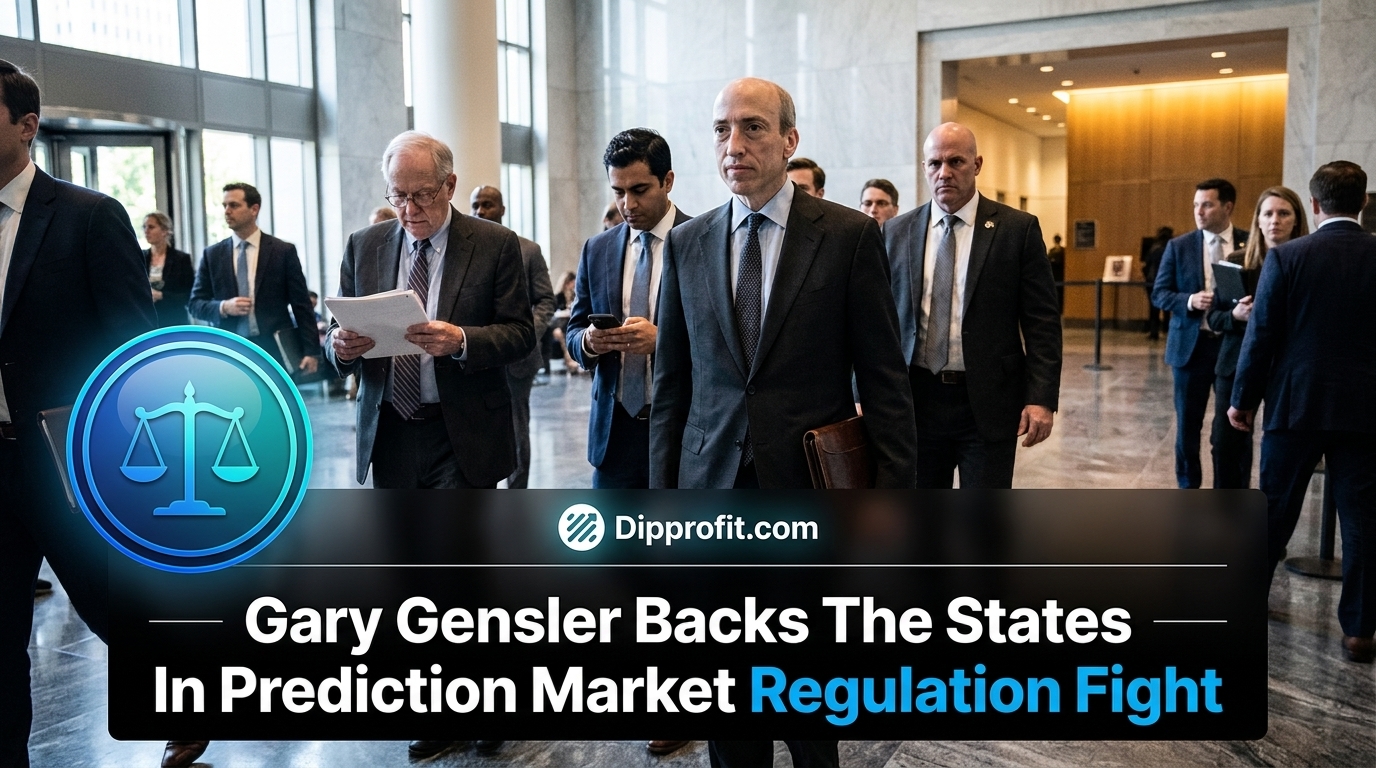

Sec Chair Gary Gensler is at it again
SEC Chair Gary Gensler has thrown his support behind states seeking to regulate prediction markets, marking a significant moment in the ongoing jurisdictional battle over how these platforms should be governed. The move signals the federal regulator’s willingness to defer to state-level authority on an issue that has become increasingly contentious as prediction market platforms gain mainstream adoption.

Prediction markets, which allow users to bet on the outcomes of future events, have exploded in popularity over the past year. Platforms like Polymarket have attracted millions in trading volume, drawing both retail and institutional participants. However, the regulatory landscape remains murky, with federal agencies and state governments competing for oversight authority.
Gensler’s backing of state-level regulation represents a notable shift in the SEC’s typical approach to crypto and blockchain-based financial products. Historically, the SEC has sought to maintain broad federal authority over securities and derivatives markets. By endorsing state involvement in prediction market oversight, Gensler is acknowledging the complexity of regulating these platforms and the legitimate interests states have in protecting their residents.
The timing of Gensler’s statement comes as several states have begun developing their own regulatory frameworks for prediction markets. This follows a pattern seen in CFTC issues first prediction markets rule proposal, setting public interest framework coverage of similar regulatory moves at the federal level. States argue they are better positioned to understand local market conditions and consumer protection needs.
See also: CFTC Issues First Prediction Markets Rule Proposal, Setting Public Interest Framework
The Commodity Futures Trading Commission has also been active in this space, proposing its own rules for prediction market platforms. However, the CFTC’s authority is limited to certain types of derivatives and event contracts, creating gaps that states believe they need to fill. Gensler’s support for state regulation could help clarify which agency has jurisdiction over different aspects of prediction market operations.
Industry observers note that this regulatory clarity could actually benefit legitimate prediction market operators. Platforms that comply with state requirements and demonstrate commitment to consumer protection may gain competitive advantages over less scrupulous competitors. This dynamic mirrors what we’ve seen with Polymarket launches private company prediction markets, opening $5 trillion asset class to retail traders, where regulatory compliance became a key differentiator.
The prediction market sector has attracted significant venture capital investment, with backers betting that these platforms will eventually become mainstream financial infrastructure. However, regulatory uncertainty has been a major obstacle to mainstream adoption. Gensler’s endorsement of state-level regulation could remove some of that uncertainty and accelerate growth in the sector.
Consumer protection remains a central concern for regulators at both state and federal levels. Prediction markets involve real money and real risk, and regulators want to ensure that platforms implement adequate safeguards against fraud, market manipulation, and excessive leverage. States are particularly concerned about protecting residents from predatory trading practices and ensuring platforms maintain sufficient capital reserves.

See also: This New Platform Lets You Practice Crypto Prediction Markets for Free and Win Real Tokens
Gensler’s position also reflects broader tensions within the Biden administration about how to regulate crypto and blockchain technologies. While some federal agencies have taken aggressive enforcement stances, others have advocated for clearer rules that would allow innovation to flourish. By backing state regulation, Gensler may be trying to find middle ground that protects consumers without stifling the industry.
The prediction market space continues to evolve rapidly, with new platforms and features launching regularly. According to Cointelegraph, trading volumes on major prediction platforms have grown substantially over the past year, suggesting strong market demand. This growth makes regulatory clarity increasingly urgent.
Looking ahead, the regulatory framework for prediction markets will likely involve coordination between federal agencies and state governments. Gensler’s backing of state involvement suggests the SEC is willing to work collaboratively rather than assert exclusive federal authority. This approach could provide the regulatory clarity that both platforms and users need to participate with confidence.
The outcome of this regulatory battle will have implications far beyond prediction markets. It could set precedent for how other emerging financial technologies are regulated, with states potentially playing a larger role than they have in traditional securities markets. For now, Gensler’s support for state regulation represents a significant development in the ongoing effort to create a coherent regulatory framework for prediction markets.
If you’re reading this, you’re already ahead. Stay there, by joining the…
Dipprofit’s private Telegram community
Discover more from Dipprofit
Subscribe to get the latest posts sent to your email.