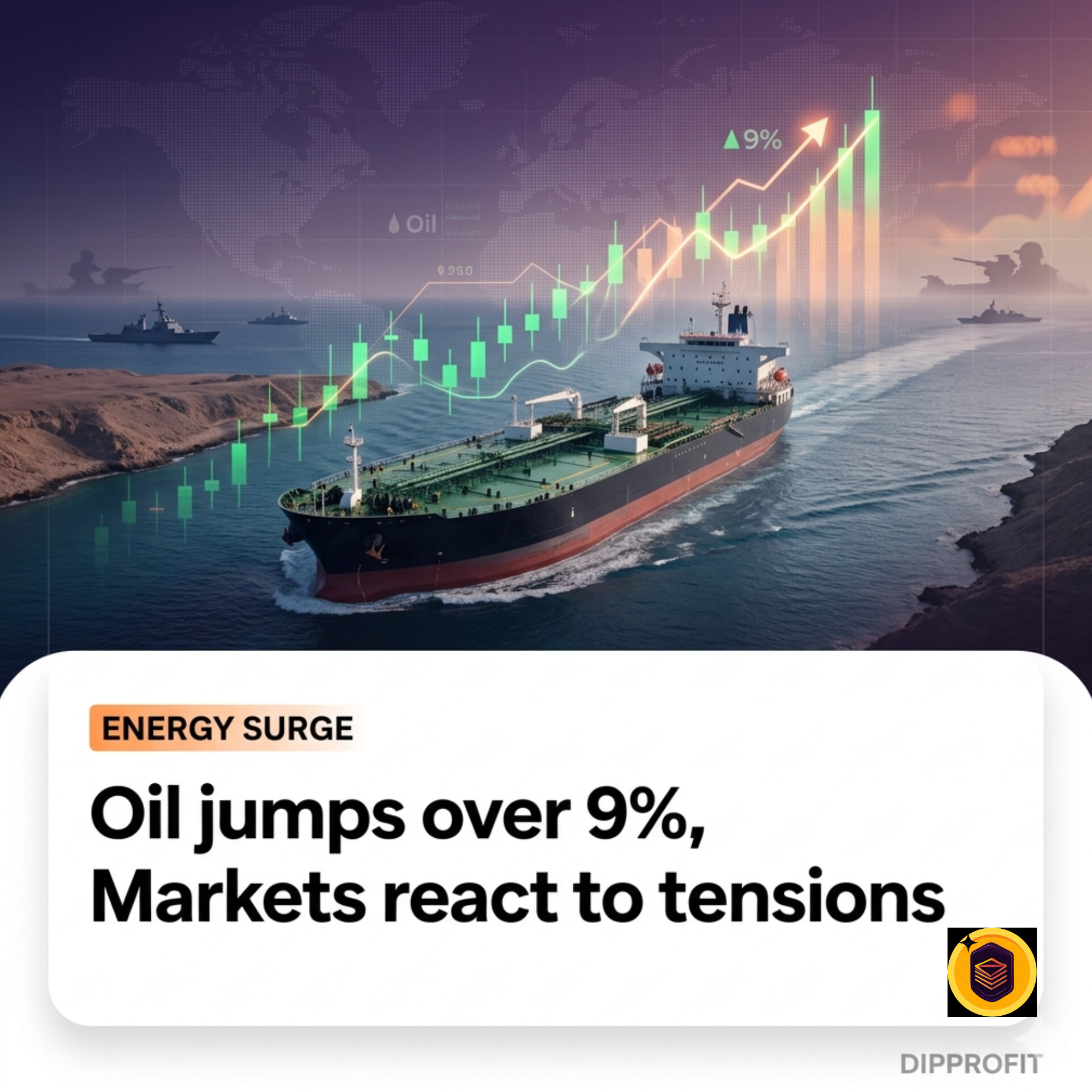

Crude oil prices jumped more than 9% on Wednesday as President Donald Trump’s administration considers launching additional military strikes against Iran while maintaining a long-term blockade on Iranian oil exports. The surge pushed Brent Crude to a new long-term high, with both oil and gasoline exchange-traded funds trading at multi-year peaks.
The rally in energy markets comes as the stalemate between Washington and Tehran intensifies, with Trump recently describing his blockade strategy as “superior to bombing.” The president is scheduled to receive briefings today on further military strike options targeting Iran, with any potential action likely to occur over the weekend when most markets are closed.
Brent Crude appears poised to close at fresh long-term highs, while gasoline and oil ETFs including UGA and BRNT have reached multi-year price levels. Market analysts suggest that unless a peace deal emerges or rhetoric becomes more conciliatory, energy commodities could continue their upward trajectory, though traders should remain mindful of elevated volatility and the potential for sharp reversals.
In currency markets, the Canadian Dollar emerged as the strongest major currency since the Tokyo open, while the Japanese Yen weakened significantly. The USD/JPY pair traded notably higher, climbing well above the ¥160 level. Many trend-following traders have established long positions in the currency pair, anticipating further gains as the interest rate differential between the two countries remains wide.
Two major central bank policy meetings are scheduled for today, with both the European Central Bank and the Bank of England set to announce their decisions. Neither institution is expected to raise interest rates, but market participants will scrutinize the accompanying forecasts and policy statements for any surprises that could move the Euro or British Pound. Yesterday’s Federal Reserve and Bank of Canada meetings produced little market impact and contained no significant surprises.
Several high-impact economic data releases are scheduled for today that could affect market sentiment. The U.S. Core PCE Price Index, which the Federal Reserve considers a leading inflation indicator, will be closely watched by traders. Additional releases include U.S. Advance GDP figures, the U.S. Employment Cost Index, and Canadian GDP data. Any significant deviations from expectations could trigger volatility across forex and equity markets.
In commodity markets beyond energy, agricultural products have shown notable strength. Wheat and corn ETFs including WEAT and CORN reached new long-term highs on Tuesday, contributing to a broader rally in soft commodities. Historical trading data suggests that buying soft commodities on breakouts to new six-month highs and applying trailing stops has proven to be a profitable strategy for active traders.
The cryptocurrency market showed signs of stabilization, with Bitcoin finding support just above the $75,000 level after recent weakness. The leading digital asset has been trading in a relatively narrow range as investors await clearer directional signals. Meanwhile, precious metals appeared to be staging a recovery, with both gold and silver posting gains after recent declines.
The combination of geopolitical tensions in the Middle East, central bank policy decisions, and key economic data releases creates a complex trading environment for forex and commodity market participants. Traders are advised to use appropriate risk management techniques given the elevated volatility and potential for news-driven price swings.
Energy markets remain the primary focus as the Iran situation continues to develop. Any escalation in military action or diplomatic breakthroughs could trigger significant price movements across multiple asset classes. Market participants will be closely monitoring headlines throughout the trading session for any developments that could affect the supply-demand balance in global energy markets.
The surge in crude oil prices also has implications for inflation expectations and central bank policy. Higher energy costs typically feed through to broader price indices with a lag, potentially complicating the inflation outlook for major economies. This dynamic adds another layer of complexity to the policy decisions facing the ECB and Bank of England today.
More Reads:
Coinbase launches tokenized stablecoin credit fund CUSHY on Solana, Ethereum and Base
Dollar Weakens Against Yen as Japan Signals Possible Intervention
If you’re reading this, you’re already ahead. Stay there, by joining the…
Dipprofit’s private Telegram community

Discover more from Dipprofit
Subscribe to get the latest posts sent to your email.