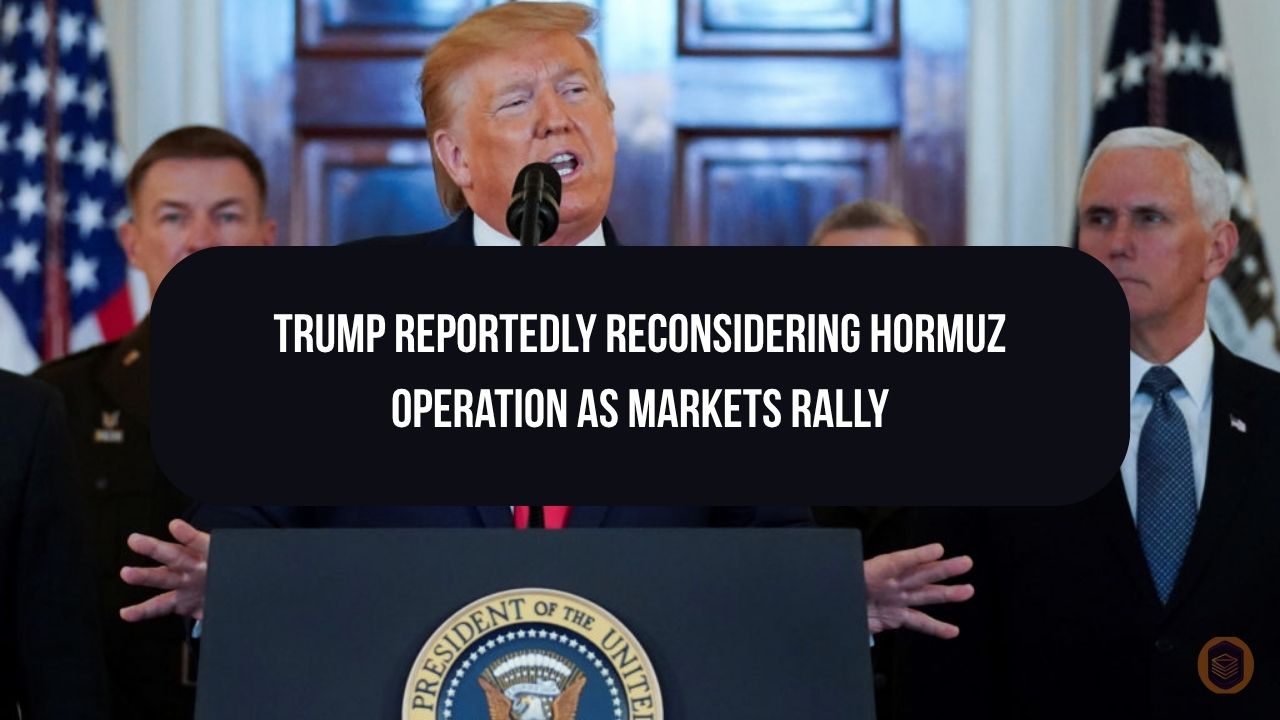

Stock markets gained ground Monday morning following unverified reports that President Donald Trump may not order a military operation to forcibly reopen the Strait of Hormuz, temporarily easing investor concerns over the escalating Middle East conflict.
The S&P 500 Index, which closed at a fresh seven-month low on Friday after a volatile session, rose firmly in off-hours trading following the Hormuz report. However, market analysts caution that the White House has previously released pro-market news at strategic moments to support equity prices and suppress crude oil and gasoline costs.

The ongoing Middle East war continues to dominate market sentiment more than any other factor. Despite the reported policy reconsideration, the flow of American military personnel and equipment into the region shows no signs of slowing, according to defense sources.
Energy markets remain elevated amid supply concerns. Gasoline futures reached a new long-term high on Friday, while WTI Crude Oil futures posted a record close. Technical indicators suggest bullish momentum for both commodities as long as the Strait of Hormuz remains closed to commercial shipping traffic.
Most trend traders have maintained long positions in energy assets, though market strategists recommend retail traders consider smaller position sizes given the heightened volatility. President Trump successfully talked down energy prices temporarily last week through public statements, demonstrating the market’s sensitivity to geopolitical rhetoric.
Currency markets showed the British Pound as the strongest major currency since Monday’s Tokyo open, while the New Zealand Dollar weakened. The USD/JPY pair continues a minor bearish retracement after last week’s bullish breakout, with trend traders maintaining long positions.
See also: Bitcoin Dips 3% Then Rebounds as Iran War Erupts; Crypto Markets Show Resilience

Speculation about the conflict’s trajectory continues on prediction markets. According to Polymarket, traders expect the United States to announce an end to military operations in Iran in May, with a ceasefire agreement likely in June. This timeline suggests at least another month of active hostilities.
Polymarket data also indicates expectations for a U.S. ground operation on Iranian territory before the end of April. President Trump has publicly discussed several strategic options, including using American troops to seize Kharg Island or other strategic Iranian territory, taking control of Iran’s oil infrastructure, or securing Iran’s uranium stockpile.
Precious metals markets showed continued weakness in volatility. Gold and Silver prices edged higher, though momentum remains subdued. Gold faces potential overhead resistance near the $4,600 level, according to analysis.
See also: BNB Weekly Price Analysis: Consolidation Near $613 as Exchange Volume Declines
Global bond markets and yields continued rising as investors priced in inflationary pressures from the Middle East conflict. The expectation is that elevated energy prices will require central banks to maintain higher interest rates for an extended period, potentially complicating monetary policy decisions.
The White House has not officially confirmed or denied the Hormuz operation reports. Administration officials have not responded to requests for comment on the military strategy shift.
Energy analysts note that any decision regarding the Strait of Hormuz carries significant implications for global oil supply. The strait serves as a critical chokepoint for petroleum exports from the Persian Gulf, with approximately 21 million barrels per day passing through the waterway under normal conditions.
Market participants await two high-impact economic data releases scheduled for Monday. The U.S. JOLTS Job Openings report and Canadian GDP figures could provide additional direction for currency and equity markets, though geopolitical developments are expected to remain the dominant driver of price action.
Traders and investors are advised to monitor official White House communications and verified news sources for confirmed information about U.S. military policy regarding the Strait of Hormuz situation. The current market environment requires heightened risk management given the rapidly evolving geopolitical landscape.
If you’re reading this, you’re already ahead. Stay there, by joining the…
Discover more from Dipprofit
Subscribe to get the latest posts sent to your email.