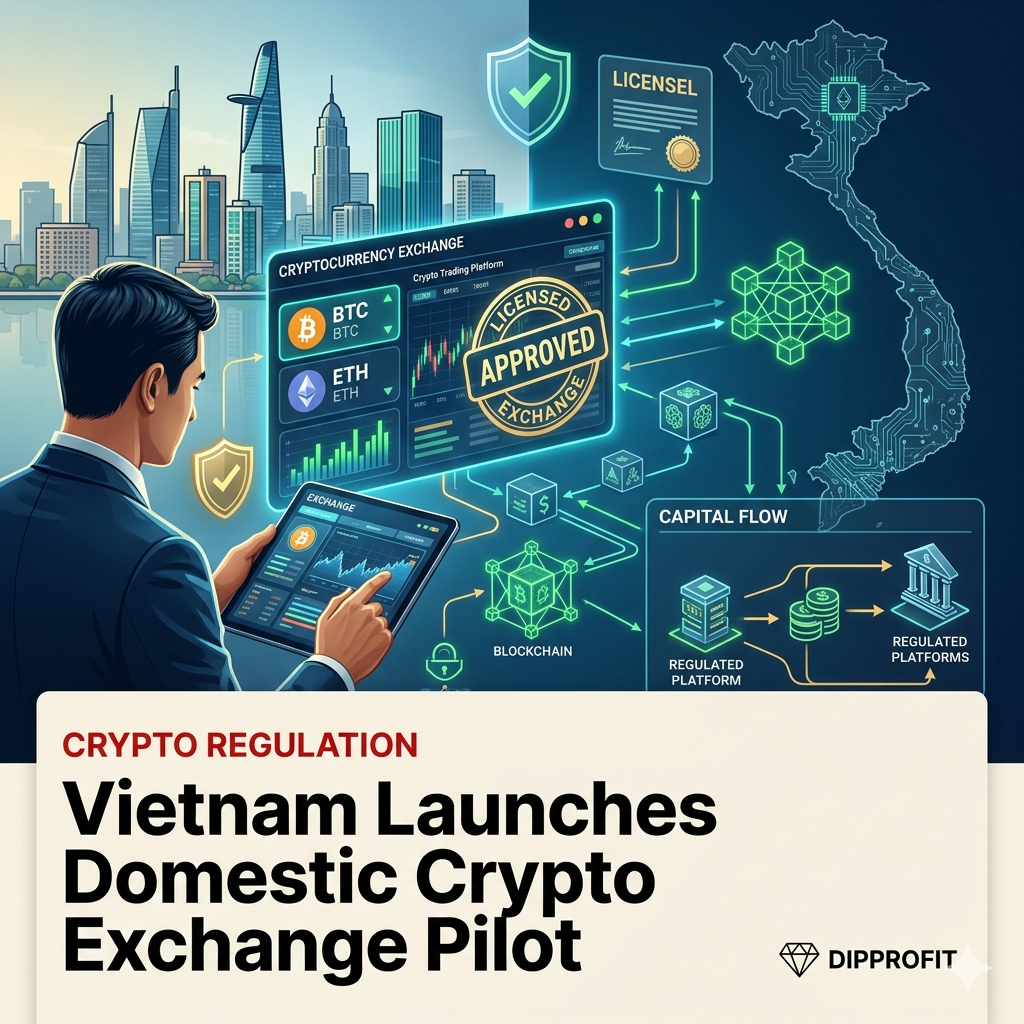

Vietnam Launches Domestic Crypto Exchange Pilot Program to Restrict Offshore Trading
Vietnam is moving to regulate its rapidly growing cryptocurrency market by establishing a pilot program for locally-operated digital asset exchanges. The initiative aims to curb trading on foreign platforms and maintain better control over the country’s capital flows, according to a government resolution issued in February.

Five companies have cleared the initial screening round for Vietnam’s first domestic cryptocurrency exchange licenses, according to a March 12 Finance Ministry document reported by Reuters. The approved applicants include affiliates of three private banks—Techcombank, VPBank and LPBank—along with VIX Securities and the Sun Group conglomerate.
The pilot program, outlined in a government resolution from February, could see its full rollout as early as March. This marks a significant step in Vietnam’s approach to cryptocurrency regulation, which has accelerated following the country’s recognition of digital and crypto assets through landmark legislation passed early last year.
Vietnam’s crypto market has experienced explosive growth with minimal formal oversight. According to Chainalysis’ latest Global Crypto Adoption Index, Vietnam ranks fourth globally, with Vietnamese users moving an estimated $200 billion in cryptocurrency during the year through June 2025.
Government officials have expressed concern that widespread use of cryptocurrencies and stablecoins could undermine state control over capital flows and facilitate speculative investment. Vietnam already imposes restrictions on cross-border money transfers, and the country’s residents have limited investment alternatives beyond traditional assets like gold and real estate.
The proliferation of gold and property investments has driven Vietnamese gold prices significantly above global levels and contributed to repeated waves of housing market speculation. These factors have prompted authorities to seek tighter regulation of cryptocurrency activity within the country.
By establishing domestic exchanges, Vietnam’s government aims to channel cryptocurrency trading through licensed platforms where regulators can monitor transactions and enforce compliance with capital control policies. The five companies that advanced to the initial screening round represent a mix of traditional financial institutions and major business groups, suggesting a strategy to integrate crypto exchanges into the existing banking and corporate ecosystem.
The regulatory framework for cryptocurrency in Vietnam represents an effort to balance innovation in the digital asset space with government oversight. Officials are seeking to foster growth in the sector while maintaining control over how capital moves in and out of the country.
Techcombank, VPBank and LPBank—three of the five companies cleared in the initial round—are major players in Vietnam’s banking sector, indicating that traditional financial institutions view cryptocurrency exchange operations as a strategic opportunity. VIX Securities brings securities trading expertise to the mix, while Sun Group’s involvement demonstrates interest from major business conglomerates.

The timeline for the full pilot program rollout remains flexible, with implementation potentially beginning as soon as March following the government resolution. Further regulatory details and licensing requirements are expected to emerge as the program develops.
Vietnam’s approach contrasts with some other Asian markets that have taken more restrictive stances toward cryptocurrency. By creating a regulated domestic exchange framework, Vietnam appears positioned to benefit from its position as a global leader in crypto adoption while simultaneously strengthening government oversight of the sector.
The move also reflects Vietnam’s broader strategy to modernize its financial infrastructure and develop the digital economy. Cryptocurrency exchanges represent part of a wider fintech landscape that policymakers are attempting to integrate into the country’s regulated financial system.
As the pilot program progresses, regulators will likely refine their approach based on early experiences with the approved exchanges. The framework established through this initiative could set the template for future cryptocurrency-related financial services in Vietnam.
More Reads:
Ethereum Traders Turn Bullish as ETH Rebounds to $2,300 on Strong Institutional Demand
DeFi Education Fund Drops SEC Lawsuit Over Airdrops as Regulatory Stance Shifts
If you’re reading this, you’re already ahead. Stay there, by joining the…
Dipprofit’s private Telegram community
Discover more from Dipprofit
Subscribe to get the latest posts sent to your email.