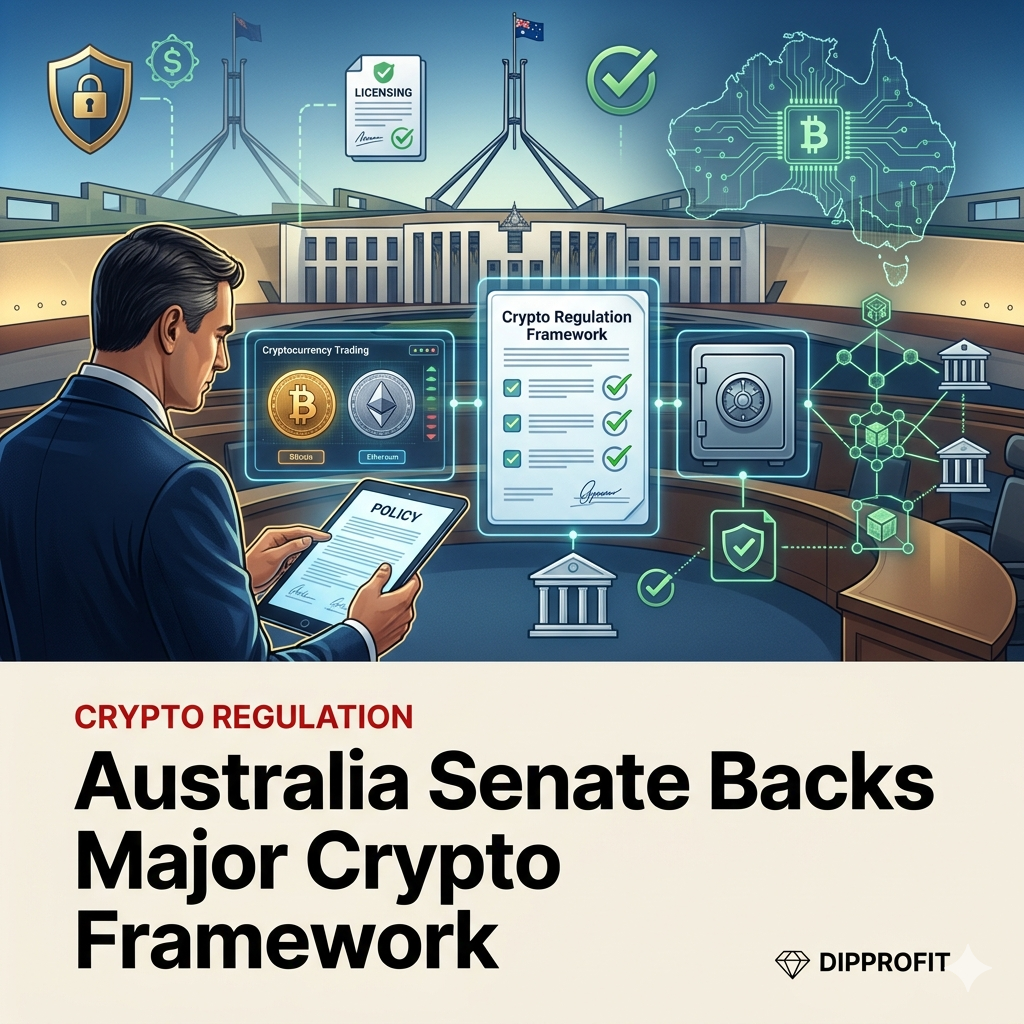

Australia Senate Backs Comprehensive Crypto Framework, Bringing Digital Assets Under Financial Services Law
Australia’s Senate Economics Legislation Committee has recommended moving forward with the country’s first comprehensive regulatory framework for digital-asset platforms and custody services. The proposed Corporations Amendment (Digital Assets Framework) Bill 2025 would bring crypto platforms and token custodians under the country’s existing financial-services regime, marking a significant shift in how the nation approaches digital-asset oversight.

The framework addresses what lawmakers describe as regulatory gaps that currently allow businesses to hold large amounts of client digital assets without the safeguards required in traditional finance. The bill amends the Corporations Act and ASIC Act to create a licensing and compliance regime for businesses managing or holding digital tokens on behalf of customers.
Under the new rules, operators of digital-asset platforms and tokenized custody services would typically need to hold an Australian Financial Services Licence, comply with asset-safeguarding standards, and meet disclosure requirements when onboarding retail clients. The framework includes a six-month transition period for providers that do not already hold such a license.
The Senate committee said the bill represents a step toward modernizing oversight of digital assets in an industry that lawmakers say is expanding rapidly but remains unevenly regulated. The move builds on earlier steps by Australian regulators, including mandatory AUSTRAC registration for crypto exchanges and Treasury consultations aimed at bringing digital-asset platforms within the financial-services framework.
The proposed legislation defines core concepts such as “digital tokens,” “digital asset platforms,” and “tokenized custody platforms.” Rather than regulating blockchain technology itself, the framework aims to bring intermediaries dealing with customer assets under existing financial-services law.
Industry groups broadly welcomed the regulatory clarity. Kate Cooper, CEO of OKX Australia, told Decrypt that clearer rules could help boost economic gains. “Legislative clarity could be the foundation for a significant increase in Australia’s productivity standards,” Cooper said, citing research from the Digital Finance Cooperative Research Centre and the Digital Economy Council of Australia estimating digital-finance innovation could add up to $24 billion a year, or about 1% of GDP, to the economy.
Cooper added that digital-asset platforms support stronger safeguards around how customer assets are held while enabling Australian businesses to access global blockchain technology within a regulated framework. The move comes as crypto companies operating in Australia seek clarity on compliance obligations. Ripple, for instance, announced this week that it is seeking an Australian Financial Services License through the proposed acquisition of BC Payments, positioning itself within the regulated framework.
The bill will now proceed through the next stages of the parliamentary process as lawmakers consider final passage. The Senate committee’s backing signals support for the approach, though the legislation still needs parliamentary approval before becoming law.
The framework represents an attempt to balance innovation with consumer protection. Lawmakers said the changes are intended to close regulatory gaps that currently leave customers vulnerable if platforms fail or mishandle assets. The move toward comprehensive regulation comes amid growing scrutiny of how crypto platforms handle client funds, particularly following high-profile collapses in the sector.

If enacted, the regime would establish clearer guardrails for how digital-asset businesses operate in Australia, potentially serving as a model for other jurisdictions grappling with similar regulatory questions. The six-month transition period gives existing operators time to seek appropriate licenses or adjust their business models to comply with the new requirements.
More Reads:
Stablecoin Regulatory Uncertainty Could Put Banks at Disadvantage, Butler Warns
Neuner Says AI Has Killed Bitcoin Forever as Hashrate Plunges 14.5%
If you’re reading this, you’re already ahead. Stay there, by joining the…
Discover more from Dipprofit
Subscribe to get the latest posts sent to your email.