Blockchain technology has revolutionized digital transactions, but it faces a critical limitation: scalability. As networks like Ethereum and Bitcoin grow more popular, they become congested, leading to:
- Slow transaction processing times
- High transaction fees (sometimes $50+ per transaction)
- Poor user experience that hinders mainstream adoption
Layer 2 solutions were created to solve these problems by processing transactions off the main blockchain while maintaining security.
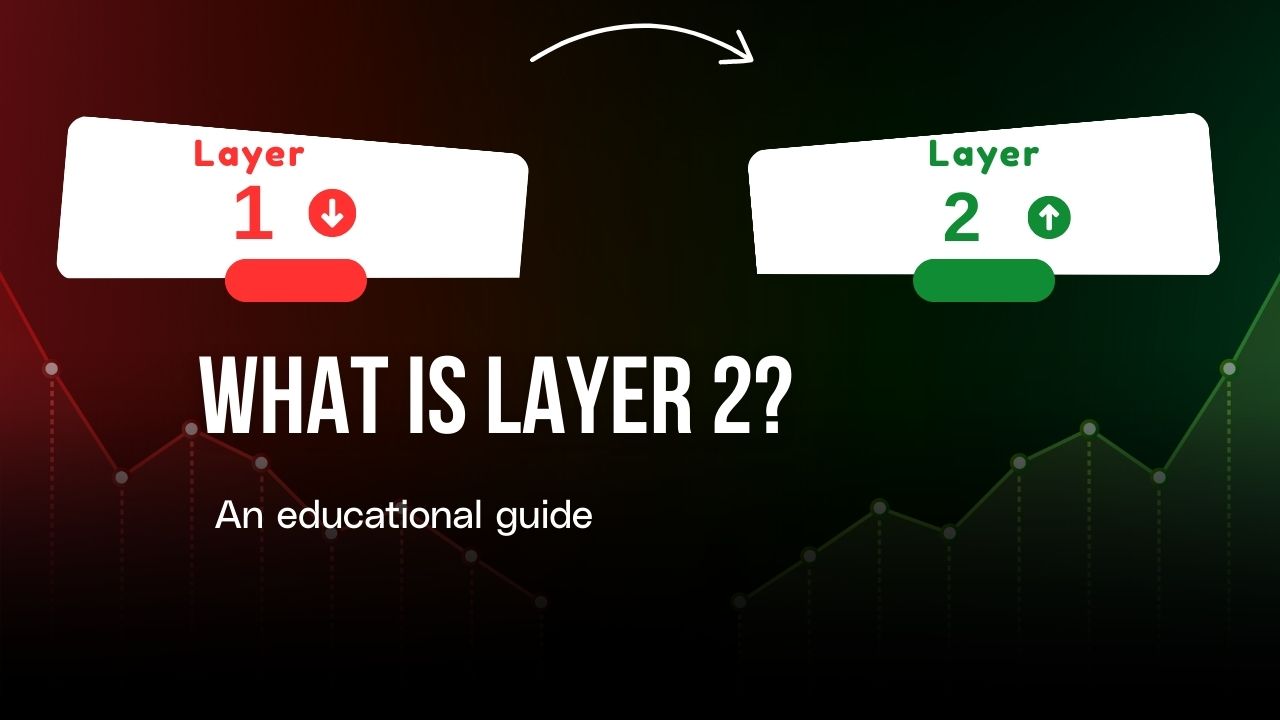
What is Layer 2?
Layer 2 (L2) refers to secondary frameworks built on top of a main blockchain (Layer 1) that process transactions more efficiently. Think of it like an express lane on a highway:
- Layer 1 (the highway) provides security and final settlement
- Layer 2 (the express lane) handles the bulk of traffic quickly and cheaply
Layer 2 solutions process hundreds or thousands of transactions off-chain, then bundle them into a single transaction recorded on Layer 1. This dramatically increases speed and reduces costs while inheriting the security of the underlying blockchain.
See also: All You Need To Know About Vulcan Blockchain: The First Auto-Rebasing Layer-1 Chain
Key Concepts
Layer 1 (L1) Blockchain
Layer 1 is the base blockchain network where all transactions are ultimately settled. Examples include:
- Ethereum
- Bitcoin
- Solana
- Cardano
These networks prioritize security and decentralization but struggle with high transaction volumes.
The Blockchain Trilemma
Blockchains face a fundamental trade-off between three properties:
- Decentralization – No single point of control
- Security – Resistance to attacks and fraud
- Scalability – Ability to process many transactions quickly
Most Layer 1 blockchains prioritize decentralization and security, sacrificing scalability. Layer 2 solutions address scalability without compromising the other two.
How Layer 2 Maintains Security
Layer 2 solutions don’t have their own security as they inherit it from Layer 1. They process transactions off-chain but regularly submit cryptographic proofs to Layer 1, which validates and secures them. This gives you Layer 1 security with Layer 2 speed and cost savings.
See also: nChain’s Universal Blockchain Asset to Rewrite the Definition of Blockchain
How Layer 2 Works: The Process
Here’s the typical flow for using a Layer 2 solution:
- Bridge assets to Layer 2 – Lock your crypto in a smart contract on Layer 1, which issues equivalent tokens on Layer 2
- Transact on Layer 2 – Perform multiple transactions (swaps, transfers, NFT mints) quickly and cheaply on the Layer 2 network
- Transactions are batched – The Layer 2 collects hundreds or thousands of transactions into a single “batch”
- Proof submitted to Layer 1 – A cryptographic proof representing all batched transactions is sent to Layer 1
- Layer 1 validates – A smart contract on Layer 1 verifies the proof and updates the blockchain state
- Withdraw when ready – Move assets back to Layer 1 when needed (may involve a waiting period)
Types of Layer 2 Solutions

Rollups
Rollups are the most popular Layer 2 solutions. They “roll up” hundreds of transactions into a single batch settled on Layer 1.
Optimistic Rollups
How they work: Assume all transactions are valid by default. Anyone can challenge invalid transactions during a 7-day dispute period by submitting a fraud proof.
Examples: Arbitrum, Optimism
Pros:
- Fully compatible with Ethereum smart contracts
- Easy for developers to migrate existing apps
- Lower computational requirements
Cons:
- 7-day withdrawal period to Layer 1
- Relies on fraud proof mechanism
Best for: DeFi applications, NFT marketplaces, general-purpose dApps
ZK-Rollups (Zero-Knowledge Rollups)
How they work: Use complex cryptographic proofs (SNARKs or STARKs) to mathematically verify transaction validity. Each batch includes a proof that’s immediately verified on Layer 1.
Examples: zkSync, StarkNet, Polygon zkEVM
Pros:
- Instant finality once proof is verified
- Faster withdrawals (minutes, not days)
- Enhanced privacy potential
- Mathematically guaranteed validity
Cons:
- More computationally intensive
- Some have limited smart contract compatibility (improving rapidly)
Best for: High-frequency trading, payments, applications requiring fast finality
State Channels
State channels allow participants to transact privately off-chain, only touching Layer 1 twice: when opening and closing the channel.
How they work:
- Participants lock funds in a multi-signature contract on Layer 1
- Conduct unlimited transactions off-chain by updating a shared state
- Submit only the final state to Layer 1 when closing the channel
Examples: Lightning Network (Bitcoin), Raiden Network (Ethereum)
Pros:
- Near-instant transactions
- Minimal fees after channel setup
- High privacy
Cons:
- Both parties must be online
- Requires locking up capital
- Best for transactions between known parties
Best for: Micropayments, streaming payments, frequent transactions between the same parties
Sidechains
Sidechains are independent blockchains connected to Layer 1 via a bridge. Unlike true Layer 2s, they have their own consensus mechanisms and security models.
How they work:
- Lock assets on Layer 1
- Mint equivalent tokens on the sidechain
- Process transactions on the sidechain with its own validators
- Burn sidechain tokens and unlock Layer 1 assets to withdraw
Examples: Polygon PoS, Gnosis Chain
Key difference: Sidechains don’t inherit Layer 1 security but rely on their own validator sets to make them technically distinct from true Layer 2 solutions.
Pros:
- Very high throughput
- Low transaction costs
- Flexible can customize consensus rules
Cons:
- Separate security assumptions
- Less decentralized than Layer 1
- Bridge security risks
Best for: Gaming and high-volume applications where cost matters more than maximum security.
Comparing Layer 2 Solutions
| Solution Type | Security Model | Withdrawal Time | Finality | Best Use Case |
|---|---|---|---|---|
| Optimistic Rollup | Inherited from L1 | 7 days | ~7 days | General dApps, DeFi |
| ZK-Rollup | Inherited from L1 | Minutes to hours | Instant | Payments, trading |
| State Channel | Inherited from L1 | Instant | Instant | Micropayments |
| Sidechain | Independent | Minutes | Fast | Gaming, specialized apps |
Common Misconceptions
“It is here to replace Layer 1”: This is False. Layer 2 works alongside Layer 1, handling transaction volume while relying on Layer 1 for security and final settlement.
“It is less secure” Not for true Layer 2s. Rollups and state channels inherit Layer 1’s security while sidechains have independent security models, which may be weaker.
“All Layer 2s are the same” False. Each type has different trade-offs in speed, security, withdrawal times, and compatibility.
“It is just another blockchain” Partially true for sidechains, but rollups and state channels are deeply integrated with Layer 1 and depend on it for security.
Getting Started with Layer 2

Choosing a Network
For beginners, start with established networks like:
- Arbitrum – Largest Optimistic Rollup, broad DeFi ecosystem
- Optimism – Popular Optimistic Rollup, many major dApps
- zkSync – Leading ZK-Rollup with growing adoption
- Polygon zkEVM – EVM-compatible ZK-Rollup
See also: How to Stake Ethereum: A Step-by-Step Guide for Beginners
Bridging Assets
To make use of this, you’ll need to bridge assets from Layer 1:
- Visit the official bridge (e.g., bridge.arbitrum.io)
- Connect your wallet (MetaMask, etc.)
- Select the amount to bridge
- Approve the transaction and pay Layer 1 gas fees
- Wait for confirmation (usually a few minutes)
Important: Always use official bridges. Third-party bridges can be risky.
Understanding Costs
Bridging to Layer 2: $5-50 in Layer 1 gas fees (one-time per deposit)
Transactions on Layer 2: $0.01-1.00 per transaction
Bridging back to Layer 1: $5-50 in Layer 1 gas fees, plus potential waiting period
Pro tip: Bridge larger amounts less frequently to minimize the impact of Layer 1 fees.
Withdrawal Periods
- Optimistic Rollups: 7 days to withdraw to Layer 1 (for security)
- ZK-Rollups: Minutes to hours
- State Channels: Instant once channel closes
- Sidechains: Minutes
Some third-party services offer “fast bridges” that advance you funds instantly for a small fee while waiting for the official withdrawal period.
Practical Tips
Start small – Test with a small amount first to understand the process
Check dApp support – Verify that your preferred applications are available on your chosen Layer 2
Watch for fees – Layer 2 fees are low, but bridging costs can add up
Consider staying on Layer 2 – If you’ll be making multiple transactions, keep funds on Layer 2 to avoid repeated bridging costs.
Use block explorers – Track your transactions on specific explorers (Arbiscan for Arbitrum, etc.)
Monitor your withdrawal – Set reminders for Optimistic Rollup withdrawals, which require a second transaction after the waiting period.
Since it was introduced, it has made blockchain usable for everyday transactions Ethereum transactions that cost $50-100 on Layer 1 now cost $0.10-1.00 on Layer 2.
Even transaction confirmation times have dropped massively from minutes to seconds.
Other instances include:
- Affordable NFT minting and trading
- Practical DeFi for smaller portfolios
- Microtransactions and gaming
- Real-time trading on decentralized exchanges
In essence, layer 2 solutions are essential infrastructure for blockchain’s future. Layer 1 is responsible for the fundamental security and consensus, while Layer 2 handles much of the transaction volume to reduce costs and increase speed.
They solve the scalability problem without sacrificing the security and decentralization that make blockchain valuable.
For users, Layer 2 means:
- Lower transaction costs (often 100x cheaper)
- Faster confirmations
- Access to the same applications and assets
- Maintained security from Layer 1
As the technology matures, the distinction between Layer 1 and Layer 2 will become invisible to most users as you’ll simply enjoy fast, cheap transactions without worrying about the underlying infrastructure.
Now, if you’re trading tokens, minting NFTs, or using DeFi applications, Layer 2 solutions will make it practical for everyday use.
If you’re reading this, you’re already ahead. Stay there by joining Dipprofit’s private Telegram community.
Discover more from Dipprofit
Subscribe to get the latest posts sent to your email.