If you have ever wondered How do you trade forex? You are asking the same question millions of aspiring traders ask every year. Forex trading can appear complex at first, but once you understand its core principles, it becomes much easier to navigate.
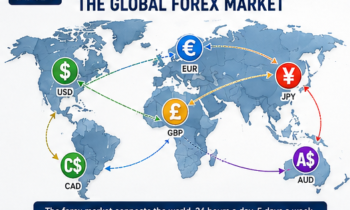
The foreign exchange market, commonly known as Forex or FX, is the world*s largest financial market, with an estimated over $8 trillion in average daily trading volume as of recent global market surveys. Unlike stock markets that trade shares of companies, forex involves buying one currency while simultaneously selling another.
This guide explains everything you need to know, from understanding currency pairs to placing your first trade and managing risk like a professional.
What Is Forex Trading?
Forex trading is the process of exchanging one currency for another in an attempt to profit from changes in exchange rates.
For example:
If you believe the Euro will strengthen against the US Dollar, you can buy the EUR/USD currency pair. If the Euro appreciates, you can sell the pair at a higher price and potentially make a profit.
Unlike traditional stock exchanges, the forex market operates electronically through a global network of banks, brokers, institutions, and retail traders.
Understanding Currency Pairs
Currencies are always traded in pairs.
Example:
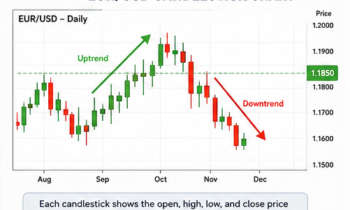
EUR/USD = 1.1850
This means:
EUR is the base currency.
USD is the quote currency.
If EUR/USD rises from 1.1850 to 1.1900, it means the Euro has strengthened against the US Dollar.
Common major currency pairs include:
Pair
Description
EUR/USD
Euro vs US Dollar
GBP/USD
British Pound vs US Dollar
USD/JPY
US Dollar vs Japanese Yen
AUD/USD
Australian Dollar vs US Dollar
USD/CAD
US Dollar vs Canadian Dollar
How to Trade Forex for Beginners
Step 1: Choose a Regulated Forex Broker
A reputable broker provides access to the forex market. Before opening an account, ensure the broker is regulated by a recognized financial authority, offers competitive spreads, reliable execution, and a user-friendly trading platform.
Step 2: Open a Demo Account
Before risking real money, practice on a demo account.
A demo account lets you:
Learn the trading platform.
Practice placing trades.
Test trading strategies.
Build confidence without financial risk.
Professional traders often test new strategies in demo environments before applying them to live markets.
Step 3: Learn Basic Chart Analysis
Price charts help traders identify trends and potential trading opportunities.
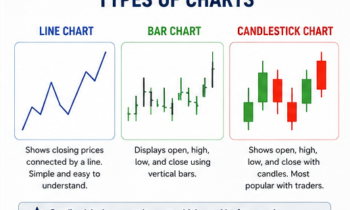
The three main chart types are:
Line Charts
Bar Charts
Candlestick Charts
Candlestick charts are the most widely used because they clearly display market sentiment.
Understanding Market Trends
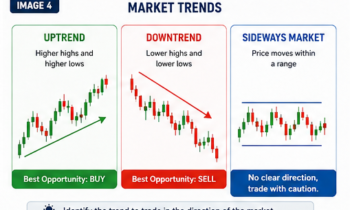
Markets generally move in three directions:
Uptrend
Higher highs and higher lows.
Best opportunity: Buy (Long).
Downtrend
Lower highs and lower lows.
Best opportunity: Sell (Short).
Sideways Market
Price moves within a range.
Many beginner traders lose money by forcing trades during ranging markets.
Use Technical Analysis
Technical analysis studies price movements using charts and indicators.
Popular indicators include:
Moving Averages
RSI (Relative Strength Index)
MACD
Bollinger Bands
For example, Bollinger Bands help traders identify periods of high and low volatility, while RSI can indicate overbought or oversold conditions.
No indicator guarantees success. They should be used alongside price action and sound risk management.
Understand Fundamental Analysis
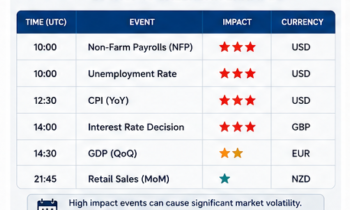
Currencies are influenced by economic and geopolitical events.
Key factors include:
Interest rate decisions
Inflation reports
Employment data
GDP growth
Central bank policies
Geopolitical developments
For instance, a stronger-than-expected employment report may strengthen a country*s currency if traders anticipate tighter monetary policy.
Place Your First Trade
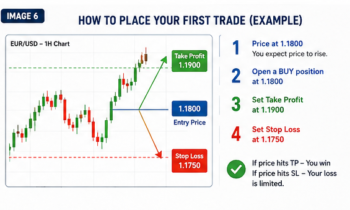
Suppose EUR/USD is trading at 1.1800.
You believe the Euro will rise.
You:
Open a Buy position.
Set a Stop Loss below support.
Set a Take Profit near resistance.
If price reaches your target, the trade closes in profit.
If price reaches your Stop Loss, your loss is limited.
This disciplined approach helps preserve trading capital.
Risk Management Is Everything
Many new traders focus on profits instead of protecting their capital.
Professional traders do the opposite.
Good risk management includes:
Risking no more than 1–2% of your account on a single trade.
Always using a Stop Loss.
Avoiding emotional trading.
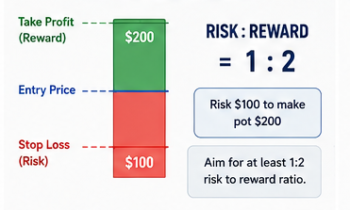
Maintaining a favorable Risk-to-Reward Ratio, such as 1:2 or better.
Consistent risk management often separates long-term traders from those who quickly exit the market.
Common Mistakes Beginners Make
Avoid these common pitfalls:
Trading without a plan.
Overleveraging positions.
Ignoring Stop Loss orders.
Chasing losing trades.
Overtrading.
Letting emotions dictate decisions.
Successful trading is built on discipline, not excitement.
Develop a Trading Plan
A trading plan provides structure and consistency.
Your plan should define:
Which currency pairs you will trade.
Timeframes you will use.
Entry and exit rules.
Risk per trade.
Trading hours.
Journaling process.
Reviewing past trades helps identify strengths and areas for improvement.
Frequently Asked Questions
Is Forex Trading Profitable?
Yes, it can be profitable, but it also carries significant risk. Consistent profitability requires education, discipline, risk management, and realistic expectations.
How Much Money Do I Need to Start?
Many brokers allow accounts with relatively small deposits. However, beginners should only trade with money they can afford to lose.
Is Forex Trading Suitable for Beginners?
Yes. With proper education, a demo account, and disciplined risk management, beginners can build a solid foundation before trading live.
Final Thoughts
Learning how to trade forex is a journey, not a shortcut. The market rewards preparation, patience, and disciplined execution far more than luck.
Start by understanding how currency pairs work, practice in a demo account, learn to read charts, follow major economic events, and make risk management your highest priority. As your knowledge grows, develop a structured trading plan and continually review your performance.
Remember, the goal is not to win every trade but to become a consistently disciplined trader over time. With the right mindset and a commitment to continuous learning, you can build the skills needed to navigate the world*s largest financial market with greater confidence.
Dipprofit Trading AcademySchool of Forex
● Free & Premium Curriculum
Global market knowledge, trade with zero guesswork.
Dipprofit Trading Academy takes you from "what is a pip" to full price-action trading, with graded quizzes, a live leaderboard, and a certificate at the finish line.
Your Overall Progress
—
Sign in to start tracking your progress, rank on the leaderboard, and get a certificate of completion.
📊
Real Progress TrackingEvery quiz score builds your standing
🏆
Global & Level LeaderboardsSee exactly where you rank
🎓
Certificate on CompletionFinish every level, earn your proof
Curriculum
Your path through the School of Forex
"View Lessons" previews a level right here. "Start Lesson" takes you straight into it.