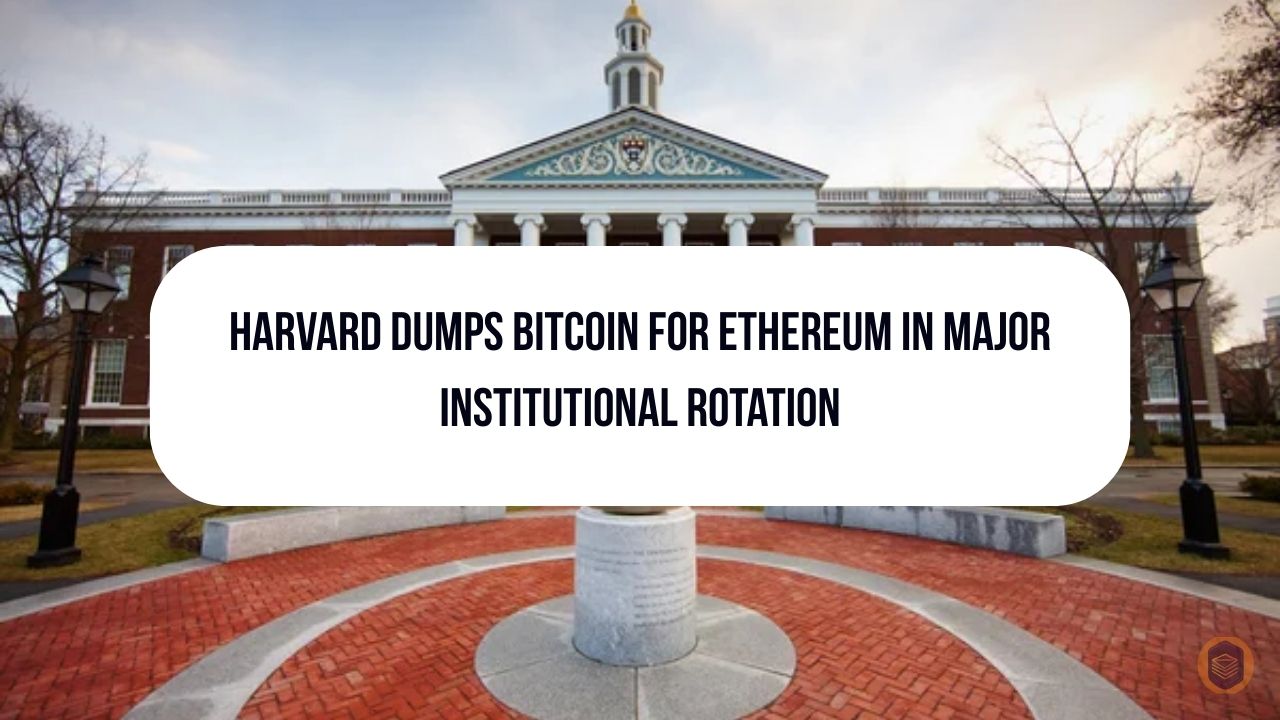
Harvard University has trimmed its Bitcoin holdings and rotated capital into Ethereum, signaling a potential shift in how major institutions are thinking about crypto’s two largest assets. The endowment sold a portion of its iShares Bitcoin Trust (IBIT) shares while simultaneously opening a new position in BlackRock’s iShares Ethereum Trust, according to a 13F SEC filing from Q4.
The move reveals the endowment reduced its Bitcoin exposure from approximately $350 million to $265 million by trimming 1.46 million IBIT shares. At the same time, Harvard opened a fresh position with 3.87 million shares in BlackRock’s Ethereum Trust, worth roughly $86.8 million. Combined, the institution’s spot crypto ETF exposure now sits at just over $352 million.
Harvard’s crypto journey has been relatively recent. The endowment first disclosed a $116 million Bitcoin position in August 2025. By November, it had tripled that, holding to around $350 million. Now, less than a quarter later, it’s recalibrating its portfolio between the two assets.
Sean Bill, co-founder and CIO of Bitcoin Standard Treasury Company, framed the move as a relative value play. He told Decrypt that Harvard likely believes Ethereum is undervalued compared to Bitcoin at current prices.
Jennifer Ouarrag, Head of Legal at institutional staking provider Twinstake, described the rotation as a recalibration toward assets with multiple return drivers. While Bitcoin remains the primary institutional store-of-value proxy, Ethereum offers exposure to a broader smart-contract ecosystem, she noted.
Harvard selling Bitcoin alone might signal caution in the sector. But Harvard selling Bitcoin specifically to buy Ethereum tells a different story, which we barely know about.
The move suggests institutional investors are increasingly tracking the Bitcoin-to-Ethereum ratio and making portfolio decisions based on which asset has underperformed. This level of deliberate allocation between crypto’s two largest assets represents a maturing institutional approach to digital asset diversification.
BlackRock, which created both spot Bitcoin and Ethereum ETFs, has been vocal about Ethereum’s potential. The asset manager increasingly discusses Ethereum alongside Bitcoin as a core crypto allocation, rather than as a secondary play.
The two assets operate fundamentally differently. Bitcoin functions as a store of value, a digital alternative to gold that exists primarily to preserve purchasing power over time. Ethereum, by contrast, generates returns through its smart contract ecosystem and staking mechanisms that provide holders with regular yield.
Ethereum’s utility as infrastructure for decentralized applications, smart contracts, and emerging technologies like AI integration gives it productivity characteristics that Bitcoin doesn’t offer.
For institutions seeking exposure to the broader crypto economy rather than just digital scarcity, Ethereum is a better option.
The rotation comes as Bitcoin and Ethereum face mixed momentum. Bitcoin is currently trading around $68,162, down 0.35% over 24 hours. Ethereum sits at $1,981.65, down 1.42% over the same period. Broader crypto markets are slightly red, with major assets down roughly 1%.
Bitcoin ETF outflows continue to pressure the market, with roughly $2 billion in net outflows reported over the past three weeks. This context makes Harvard’s decision to maintain overall crypto exposure while rotating assets particularly noteworthy.
Harvard’s move may influence how other institutional investors think about Bitcoin versus Ethereum allocation. These kinds of portfolio rotations will likely become more common and more visible through SEC filings.
The question now is whether other major institutions will follow Harvard’s lead in viewing Ethereum as a complementary asset to Bitcoin rather than merely a secondary altcoin play. If they do, it could reshape how institutional capital flows through crypto’s top two assets.
If you’re reading this, you’re already ahead. Stay there, by joining the…
Dipprofit’s private Telegram community
Discover more from Dipprofit
Subscribe to get the latest posts sent to your email.