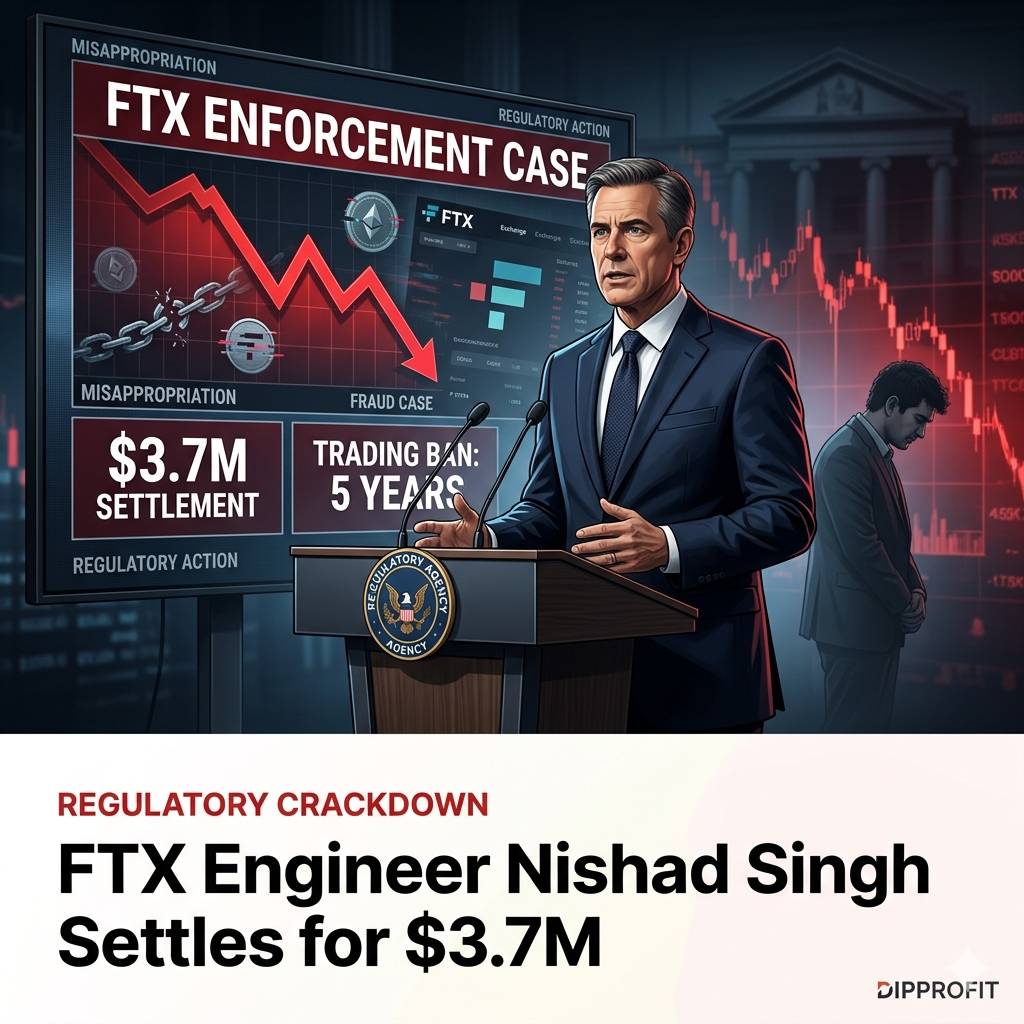
Nishad Singh, the former head of engineering at FTX, will pay $3.7 million to resolve his case with the United States commodities regulator over his alleged role in the collapse of the crypto exchange and the misappropriation of user funds.
The US Commodity Futures Trading Commission announced on Wednesday that Singh agreed to a supplemental consent order requiring him to pay $3.7 million in disgorgement. The order also imposes a five-year ban on trading in markets and an eight-year registration ban, preventing him from obtaining a license to operate in the sector.
“The initial consent order and supplemental consent order resolve the CFTC’s enforcement action against Singh,” the regulator stated.
David Miller, the CFTC’s director of enforcement, ruled out additional restitution or civil monetary penalties for now. He said the current penalties reflect Singh’s cooperation with authorities throughout the investigation.
“The defendant engaged in, and aided, significant violations of the Act and CFTC regulations as the former FTX head of engineering, and the consent orders reflect the severity of these violations,” Miller said. “But this resolution also reflects the Commission’s commitment to rewarding and incentivizing material assistance in Division investigations.”
FTX’s bankruptcy in November 2022 sent shock waves through the crypto industry, erasing billions in market liquidity and shattering user confidence. The collapse prompted authorities to accuse the exchange’s leadership of fraud and misappropriating customer funds.
Attorneys for Singh said he was grateful this latest matter was at an end. They were “pleased that the CFTC recognized our client’s limited role in the underlying conduct and his extensive cooperation,” according to Bloomberg.
The CFTC accused Singh of personally misappropriating millions of dollars in assets. The regulator charged him in February 2023 with two counts: fraud by misappropriation and aiding and abetting fraud committed by former FTX CEO Sam Bankman-Fried.
In April 2023, Singh entered into a consent order, was found liable for the charges and agreed to cooperate with the commission’s investigators. The regulator originally sought a range of penalties, including restitution, civil monetary penalties and permanent trading and registration bans.
Singh faced legal action from multiple US agencies after FTX collapsed. In a separate case brought by the Securities and Exchange Commission in February 2023, Singh was accused of misusing customer funds and committing fraud by misappropriation, in violation of securities laws. The SEC case was settled in December with Singh receiving an eight-year industry ban.
US prosecutors also indicted Singh and four of his colleagues on charges including fraud and campaign finance violations after the exchange collapsed. He faced decades in prison if found guilty of the criminal charges.
However, Singh avoided significant prison time by cooperating with authorities and testifying against Bankman-Fried during the criminal trial. After his cooperation with prosecutors, he received time served and three years of supervised release, a significantly lighter sentence than the decades he originally faced.
Changpeng Zhao, co-founder of Binance, which owns the cryptocurrency wallet that claims to serve 220 million users, said the FTX Recovery Trust will distribute $2.2 billion to creditors in March as part of the ongoing bankruptcy proceedings.
Singh’s relatively lenient treatment stands in stark contrast to the fate of Bankman-Fried, who was convicted on multiple counts of fraud and conspiracy. The former FTX CEO was sentenced to 25 years in prison for his role in orchestrating one of the largest financial fraud schemes in US history.
The settlement with Singh marks another step toward closing the book on one of the most significant collapses in cryptocurrency history. The case highlighted the need for stronger regulatory oversight in the digital asset industry and exposed how customer funds were allegedly misused by executives at one of the world’s largest crypto exchanges.
More Reads:
Franklin Templeton Launches Franklin Crypto Division With 250 Digital Acquisition
The De-escalation Trade: Why Capital is Flooding Back into Altcoins
If you’re reading this, you’re already ahead. Stay there, by joining the…
Discover more from Dipprofit
Subscribe to get the latest posts sent to your email.