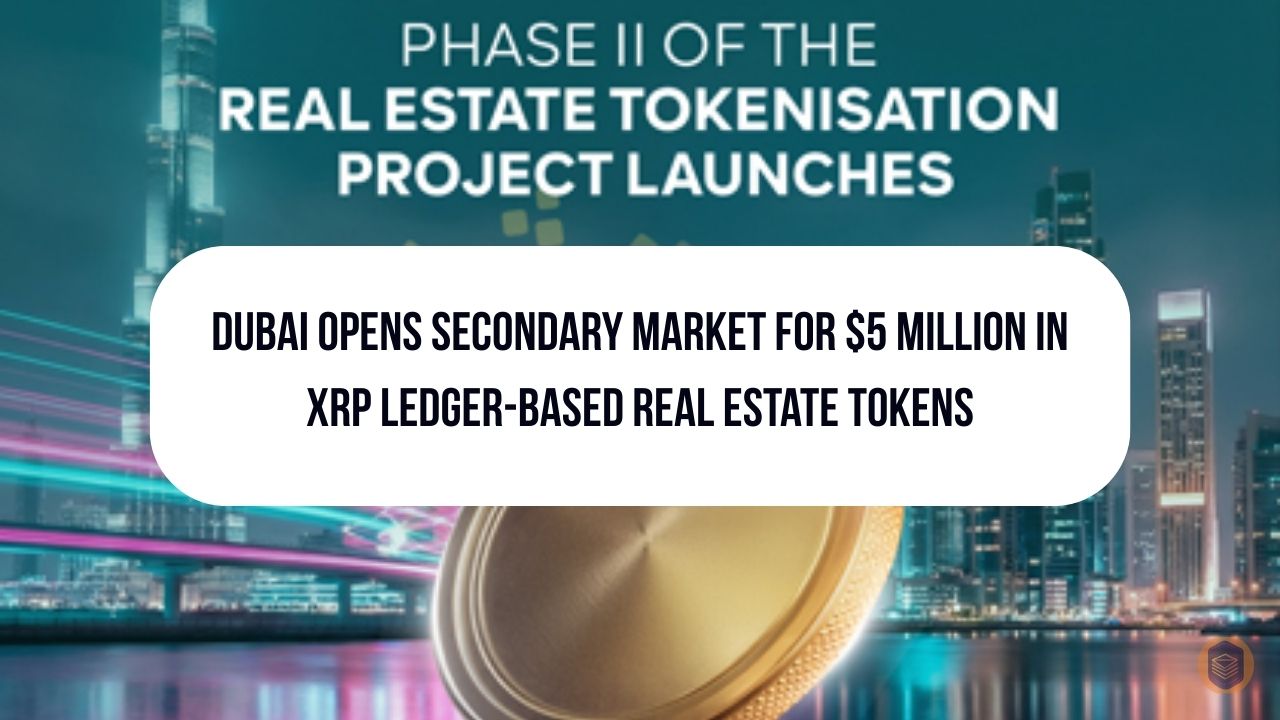
Dubai’s Land Department and tokenization firm Ctrl Alt have launched a secondary market for real estate-backed tokens, enabling investors to resell fractional property ownership on the XRP Ledger blockchain.
Approximately 7.8 million tokens tied to ten Dubai properties are now eligible for trading within a controlled market environment. Transactions will be recorded on the XRP Ledger blockchain and secured by Ripple Custody, with all trades synced to Dubai’s official land registry.
The secondary market represents the next phase of Dubai’s real estate tokenization initiative. Over $5 million in tokenized property is currently available for trading, allowing property investors to buy and sell fractional ownership stakes with greater liquidity than traditional real estate markets.
Token holders can now transfer and trade their assets on a regulated distribution platform. Each token is backed by verified title deeds, ensuring that blockchain-based ownership claims are directly tied to registered property in Dubai’s official records. This integration with government infrastructure distinguishes the project from other tokenization experiments.
Ripple Custody provides custodial services for the tokens, adding a layer of security and institutional-grade protection for token holders. The custody solution is designed to meet regulatory standards expected in markets dealing with high-value assets.
Real-world asset tokenization has emerged as one of the most significant use cases for blockchain technology beyond cryptocurrency speculation. Dubai’s initiative demonstrates how sovereign wealth and government institutions are beginning to adopt blockchain infrastructure for traditional asset classes.
The XRP Ledger was selected as the underlying blockchain for the project, highlighting Ripple’s push into real-world asset markets beyond its core remittance and payment business. The choice provides a dedicated blockchain infrastructure for tracking property ownership transfers.
Dubai’s broader tokenization plan aims to convert $16 billion in property value by 2033, making it one of the most ambitious government-backed blockchain initiatives globally. The secondary market launch suggests the project is progressing toward full implementation at scale.
The controlled trading environment indicates that Dubai authorities are maintaining oversight of token transfers. Rather than allowing completely decentralized trading, transactions occur through regulated channels that ensure compliance with local real estate laws and regulations.
Property tokenization addresses several challenges in real estate markets, including illiquidity, high transaction costs, and barriers to fractional ownership. By enabling instant resale of property tokens, Dubai’s secondary market reduces the time required to complete real estate transactions.
The project demonstrates how blockchain technology can facilitate the digitization of government services and asset registries. Other jurisdictions may follow Dubai’s model as they explore ways to modernize property registration systems.
Ctrl Alt’s role as the tokenization partner suggests growing collaboration between blockchain firms and government institutions. Such partnerships could become more common as governments seek technical expertise in implementing blockchain-based systems.
See also: What is Tokenization of Real-World Assets & How Does it Work
The secondary market’s launch addresses a key limitation of tokenized assets: illiquidity. Without functioning resale markets, tokenized assets become difficult to value and less attractive to investors. Dubai’s regulated platform provides a solution to this problem.
Token holders now have mechanisms to exit their positions without waiting for property redemption, making fractional property ownership more practical as an investment vehicle. This liquidity enhancement could increase adoption of the tokenization platform.
The project’s success may influence how other governments approach real estate tokenization and blockchain integration with official registries. Dubai’s approach of maintaining regulatory control while leveraging blockchain efficiency could serve as a model for other jurisdictions.
If you’re reading this, you’re already ahead. Stay there, by joining the…
Dipprofit’s private Telegram community
Discover more from Dipprofit
Subscribe to get the latest posts sent to your email.