CFTC Chair Says U.S. Perpetual Futures Are Coming Within the Next Month
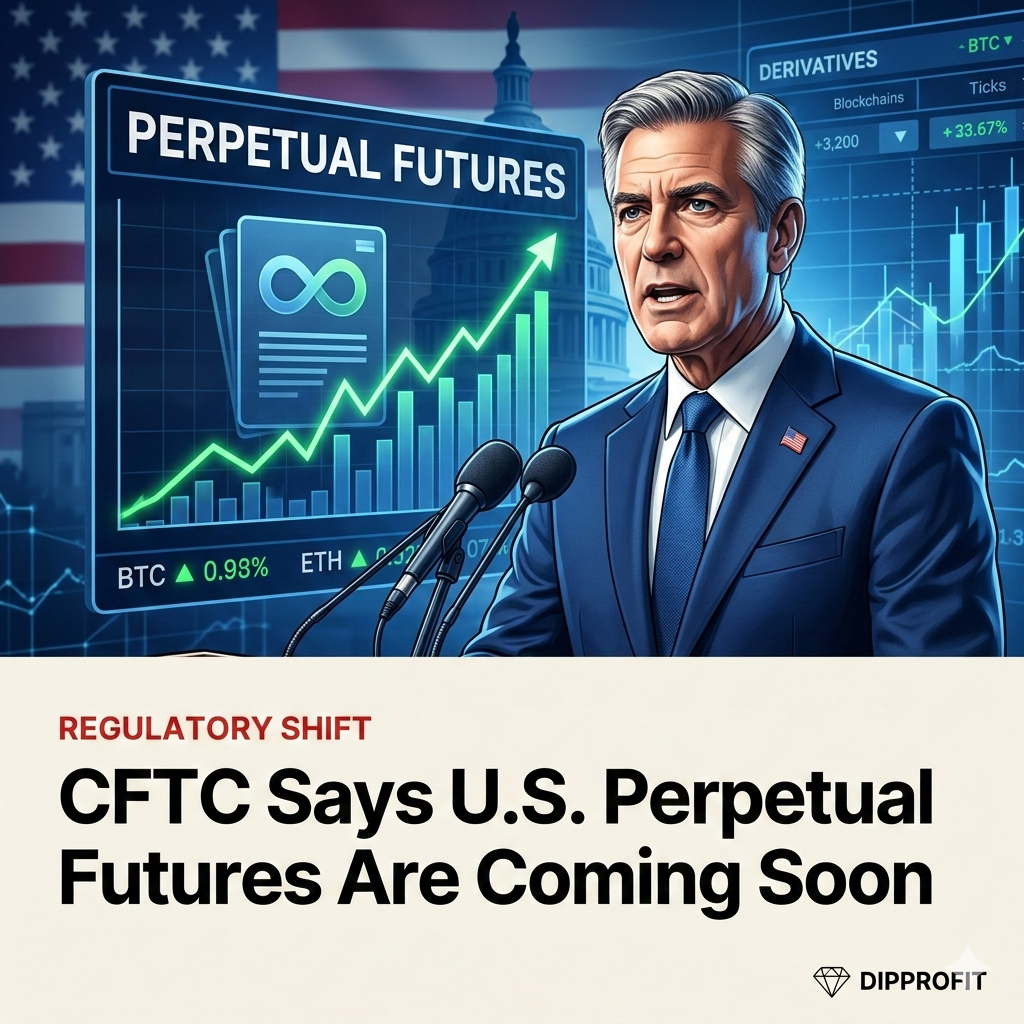
The U.S. is about to legalize perpetual futures. CFTC Chairman Mike Selig announced that his agency is working toward bringing regulated perpetual futures to American traders within the next month or so, marking a dramatic reversal from the prior administration’s de facto ban on the products.
Alongside SEC Chair Paul Atkins, Selig said guidance on perpetual futures is expected imminently, with a more formal rulemaking process to follow. The announcement signals a major shift in regulatory stance toward one of crypto’s most dominant financial instruments.
What Are Perpetual Futures?
Perpetual futures are leveraged contracts with no expiration date, allowing traders to hold crypto exposure indefinitely. Unlike traditional futures that expire on specific dates, perpetual contracts can be held open as long as a trader maintains sufficient collateral.
The products have become the dominant instrument in global crypto derivatives markets, representing over 90 percent of all crypto derivatives volume. Yet U.S. users have been effectively locked out since the previous administration pushed these contracts offshore.
Selig acknowledged the problem directly. “The prior administration drove a lot of these firms and the liquidity offshore,” he said. His team is now working to reverse that trend.
Why This Matters Now
The legalization of regulated perpetual futures in the U.S. could reshape crypto market structure. Institutional capital that has avoided offshore and decentralized venues due to regulatory uncertainty now has a potential on-ramp to legitimate U.S.-regulated perps.
The move addresses complaints from major crypto firms about being forced to use outdated technology and offshore infrastructure. “As regulators, we don’t want to be enforcing firms to rely on old tech and be stuck in the past,” Selig said. “Many firms want to move onchain.”
The Expected Regulatory Framework
While specific rules remain unclear, industry observers expect the CFTC to impose conservative leverage caps, require KYC/AML compliance, mandate transparent funding rate methodology, and enable real-time surveillance of trading activity.
These requirements will likely differ significantly from the offshore and decentralized alternatives that have flourished in the absence of U.S. regulation. Centralized U.S. venues operated by regulated brokers will look very different from fully decentralized protocols.
Market Impact and Volume Effects
Bitcoin prices surged on the news, with BTC gaining 5.74 percent to reach $71,286 overnight. Ethereum added 3 percent to $2,050, while broader crypto markets saw gains of 4-6 percent across major assets.
Bitcoin ETFs saw $225 million in net inflows on Monday following the announcement, while ETH ETFs recorded $10 million in outflows. The moves suggest institutional interest in spot products alongside the anticipated futures offerings.
Competition and Market Structure
The question now becomes how market share will be distributed between centralized regulated venues and decentralized alternatives. Coinbase, Kraken, CME, and other established players could vie for institutional business, while decentralized protocols may continue serving retail and non-KYC traders.
Tighter spreads on highly liquid pairs like BTC and ETH perpetuals could follow as regulated U.S. venues enter the market with institutional-grade infrastructure. This could compress margins for offshore competitors that currently dominate the space.
What Comes Next
Formal guidance from the CFTC is expected imminently, with rulemaking to follow. Firms seeking to offer perpetual futures to U.S. customers will need to navigate the new regulatory framework once it’s finalized.
The timeline of “the next month or so” suggests the regulatory path could move faster than previous crypto products faced. This acceleration reflects the current administration’s broader openness to crypto infrastructure development.
For traders, the legalization of regulated perpetual futures represents a significant expansion of available products and venues. For regulators, it represents a strategic shift toward bringing offshore activity back into the domestic financial system where it can be monitored and supervised.
More Reads:
Bitcoin Forming Bottom as Four-Year Halving Cycle Ends, Says VanEck CEO
South Korea Orders Cross-Agency Probe After Tax Office Leaks Crypto Wallet Seed Phrase
Discover more from Dipprofit
Subscribe to get the latest posts sent to your email.