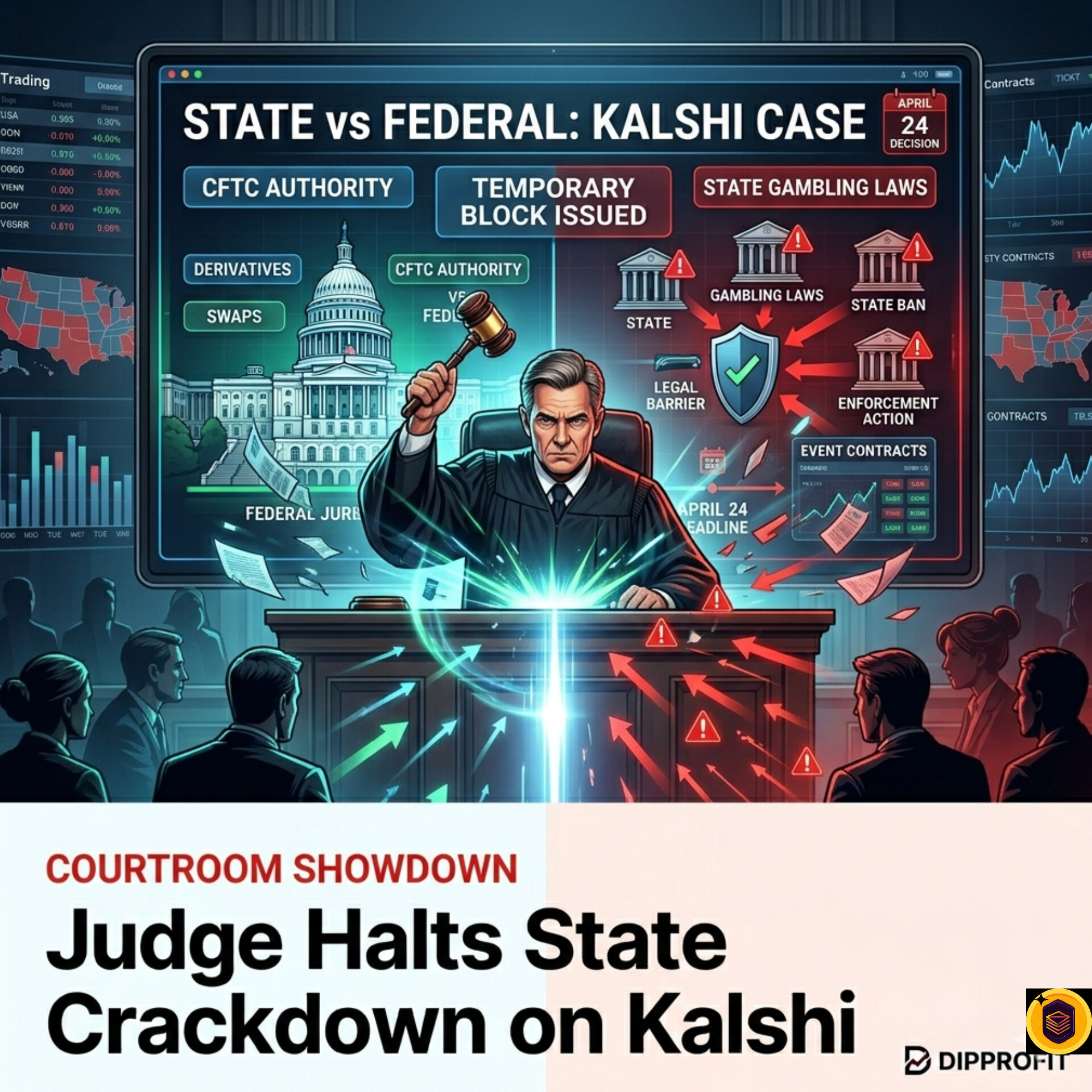
A federal judge in Arizona has temporarily barred state officials from enforcing gambling laws against prediction market platform Kalshi, marking a significant victory for the Commodity Futures Trading Commission in an escalating dispute over event-based trading products.
Judge Michael Liburdi of the US District Court for the District of Arizona granted a request from the CFTC and the federal government on Friday to halt any state-level action targeting contracts listed on CFTC-regulated markets. The temporary restraining order will remain in effect until April 24, while the court considers whether to issue a longer-term preliminary injunction.
The ruling centers on whether Kalshi’s event contracts should be classified under federal derivatives law or state gambling statutes. Arizona authorities sought to pursue enforcement against Kalshi under local gambling rules last month, prompting the CFTC to file for a court order on Wednesday to stop the action.
Judge Liburdi indicated that the CFTC is likely to succeed in arguing that such contracts qualify as “swaps” under the Commodity Exchange Act, placing them within federal jurisdiction. The law grants the agency exclusive authority over swaps traded on designated contract markets.
As part of the decision, Arizona officials are temporarily prohibited from initiating or continuing civil or criminal enforcement tied to Kalshi’s event contracts on regulated exchanges. The order represents the latest development in a broader debate over prediction markets in the United States, as regulators and states clash over whether such products resemble financial instruments or online betting.
The Arizona case is not an isolated incident for Kalshi. Last week, a Nevada judge extended a ban preventing the platform from offering event-based contracts in that state, siding with regulators who argue the products amount to unlicensed gambling.
The Nevada court found that Kalshi’s offerings closely resemble traditional sports betting. The judge concluded there is no meaningful distinction between placing a wager through a sportsbook and buying a contract tied to an event outcome, determining that such activity falls under Nevada’s gaming laws.
Last month, Utah lawmakers also passed a bill targeting both Kalshi and Polymarket that classifies proposition-style bets on in-game events as gambling. The legislation aims to block such offerings in the state, adding to the growing list of jurisdictions taking action against prediction market platforms.
The CFTC’s involvement in the Arizona case underscores the federal agency’s position that it has exclusive jurisdiction over event contracts traded on regulated markets. The agency has consistently maintained that these products fall under its regulatory authority as derivatives, not state gambling oversight.
Kalshi operates as a CFTC-regulated derivatives exchange, offering contracts that allow users to trade on the outcomes of various events. The platform has seen significant trading activity, with notional volume fluctuating as users bet on everything from political outcomes to economic indicators.
The conflicting positions between federal and state authorities create uncertainty for prediction market operators. While the CFTC argues these platforms fall under federal derivatives regulation, multiple states have taken the position that event contracts constitute gambling under their laws.
The temporary restraining order in Arizona provides Kalshi with breathing room as the legal battle continues. The April 24 deadline will determine whether the court issues a preliminary injunction that could extend the protection against state enforcement for a longer period.
Industry observers note that the outcome of these cases could have far-reaching implications for prediction markets across the United States. A resolution favoring federal jurisdiction could provide clarity for platforms operating under CFTC oversight, while state victories could embolden other jurisdictions to pursue similar enforcement actions.
The dispute highlights the challenges facing prediction market platforms as they navigate a complex regulatory landscape where federal and state authorities maintain competing claims over jurisdiction. As the legal proceedings continue, Kalshi and similar platforms face an uncertain regulatory environment that could significantly impact their operations in various states.
More Reads:
CoinDesk 20 Index Slides 0.2% as Hedera Leads Losses With 1.9% Decline
Best Online Stock Trading Platforms With Low Fees in 2026
If you’re reading this, you’re already ahead. Stay there, by joining the…
Discover more from Dipprofit
Subscribe to get the latest posts sent to your email.