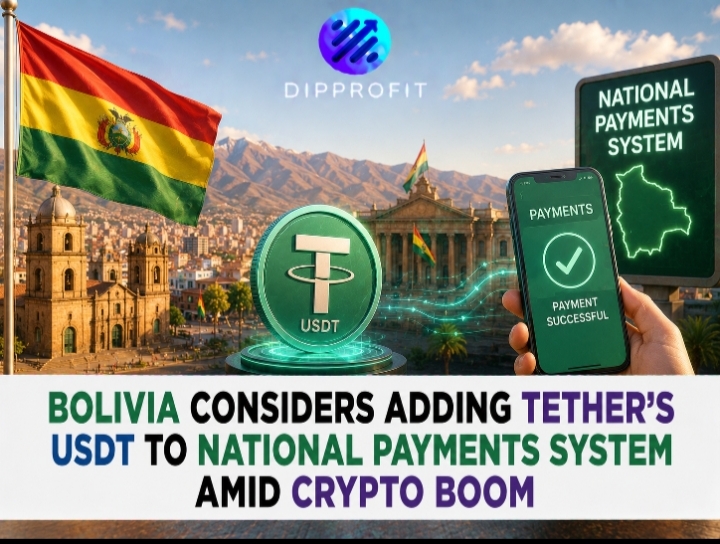

Bolivia is evaluating whether to integrate Tether’s USDT stablecoin into its national payments infrastructure, marking another significant milestone in the country’s rapid pivot toward regulated cryptocurrency adoption. Economy Minister José Gabriel Espinoza announced at a press conference Monday that the government is exploring a framework to allow USDT to circulate alongside the boliviano and U.S. dollar as a regulated payment option.
The proposal comes as crypto usage has exploded in Bolivia following the central bank’s decision to lift restrictions on digital asset transactions in June 2024. Transaction volumes surged to $430 million in the year after restrictions were removed, according to central bank data cited by local news outlet La Razón. This represents a 630% increase in total crypto transaction volume since the regulatory shift.
Officials are currently developing technical frameworks for banks, digital wallets, and payment service providers to facilitate USDT integration. However, the government has not yet published implementation rules or granted the stablecoin legal-tender status. Any official rollout would require substantially stronger anti-money laundering controls, as Bolivia remains on the Financial Action Task Force’s grey list, subjecting the country to heightened monitoring over deficiencies in its financial crime regime.
The sharp rise in crypto adoption reflects growing demand for alternatives to scarce U.S. dollars in Bolivia’s economy. The country ended its long-standing fixed dollar peg earlier this year and transitioned to a floating exchange rate system. This monetary shift has accelerated interest in stablecoins as a more reliable store of value for both businesses and consumers navigating currency volatility.
See also: US Treasury Sanctions 134 ISIS-K Crypto Addresses, Tether Freezes $1.4M in USDT
Bolivia’s embrace of cryptocurrency follows a pattern seen in related coverage of regulatory moves involving stablecoin oversight and compliance measures, highlighting how governments worldwide are grappling with integrating digital assets into formal financial systems. The country has also looked to El Salvador’s regulatory playbook for guidance on crypto framework development.
State-controlled Banco Unión and its Yasta wallet already began allowing customers to purchase USDT through EFY Finance in April for international payments and remittances. This early adoption by a major state bank signals official comfort with stablecoin integration at the institutional level. Additionally, Bolivia’s state energy company YPFB announced plans last year to use cryptocurrency for energy imports, demonstrating broader government interest in digital asset applications.
The central bank data reveals the scale of this shift. Crypto transaction volume climbed from $46.5 million in the first half of 2024 to $294 million during the same period in 2025. These figures underscore how quickly Bolivian businesses and consumers have embraced digital assets once regulatory barriers were removed.
Tether has become increasingly active in emerging markets seeking stablecoin solutions, according to CoinGecko market data. USDT remains the most widely used stablecoin globally, with deep liquidity and established infrastructure for cross-border transactions. For Bolivia, USDT integration could streamline remittances, international trade settlements, and domestic payments while reducing reliance on volatile fiat currencies.
See also: Top 5 Nigerian Startups Transforming USDT, Bitcoin and Naira Transactions in 2026
The regulatory path forward remains uncertain. While the government’s openness to USDT suggests a pragmatic approach to financial innovation, compliance with international anti-money laundering standards will be critical. Bolivia’s grey list status means any stablecoin framework must include robust know-your-customer procedures, transaction monitoring, and reporting mechanisms to satisfy Financial Action Task Force requirements.
Success in Bolivia could establish a template for other Latin American nations considering stablecoin integration. The region has shown growing interest in cryptocurrency adoption as a response to currency instability and limited access to traditional banking infrastructure. Bolivia’s willingness to experiment with regulated digital asset frameworks positions it as a potential leader in this space.
The coming months will be crucial as Bolivian officials finalize technical specifications and compliance requirements for USDT integration. Any announcement of implementation timelines or regulatory details could signal broader regional momentum toward stablecoin adoption in emerging markets facing similar economic pressures.
More Reads:
AI Freelancers Could Drive $262B in Stablecoin Volume by 2033, Swyftx Report Shows
Bitcoin Leaders Saylor and Back Reject BIP-110 Ordinals Proposal Over Network Risk Concerns
If you’re reading this, you’re already ahead. Stay there, by joining the…
Dipprofit’s private Telegram community

Discover more from Dipprofit
Subscribe to get the latest posts sent to your email.