Choosing a Forex broker is arguably the most important decision you will make before placing your very first trade. Even the best trading strategy in the world cannot protect you from an unreliable broker with poor execution, manipulated pricing, or weak financial oversight.
The broker is more than just a trading app. It is the gateway between you and the global foreign exchange market. Every order you place, every stop loss you set, every profit you earn, and every withdrawal you make passes through your broker.
Understanding how Forex brokers actually work gives you a significant advantage. It helps you recognize trustworthy companies, avoid common scams, understand how your trades are executed, and appreciate why different brokers offer different spreads, commissions, leverage, and execution speeds.
This guide explains everything from the ground up. Whether you are opening your first trading account or looking to understand how brokers manage billions of dollars in client orders, this series will give you the knowledge professional traders rely on.
What Is a Forex Broker?
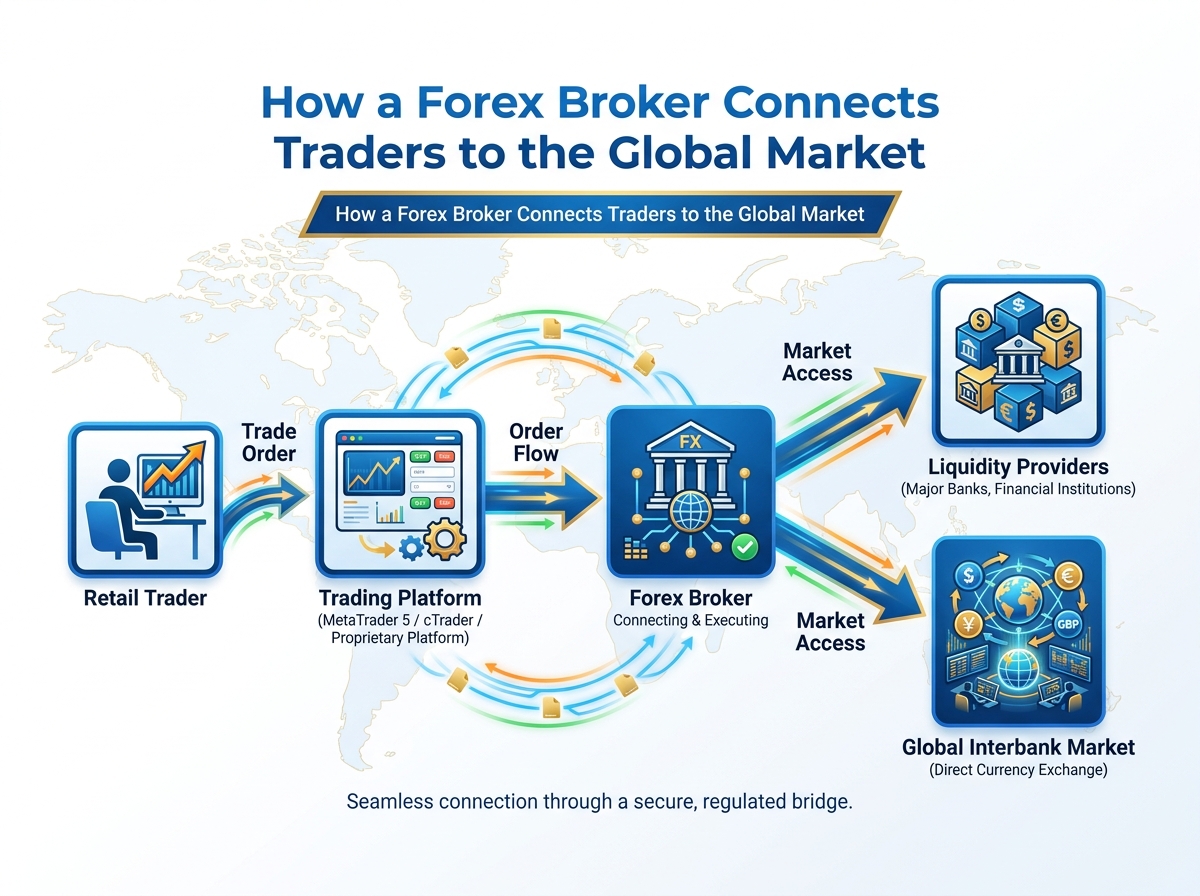
A Forex broker is a licensed financial services company that provides traders with access to the foreign exchange market through an electronic trading platform.
Without a broker, most individual traders would have no practical way to participate in the global currency market. The interbank market—the network where the world*s largest banks exchange currencies—is generally inaccessible to retail traders because of the enormous capital requirements.
Forex brokers bridge that gap.
They connect retail traders to liquidity providers, banks, financial institutions, or, depending on their execution model, may internally manage client orders themselves.
Think of a broker as the bridge connecting your trading platform to the broader financial markets.
When you click Buy EUR/USD, your broker determines how that order is handled behind the scenes.
That process is known as order execution, and understanding it is one of the most important lessons any trader can learn.
Why Forex Brokers Exist
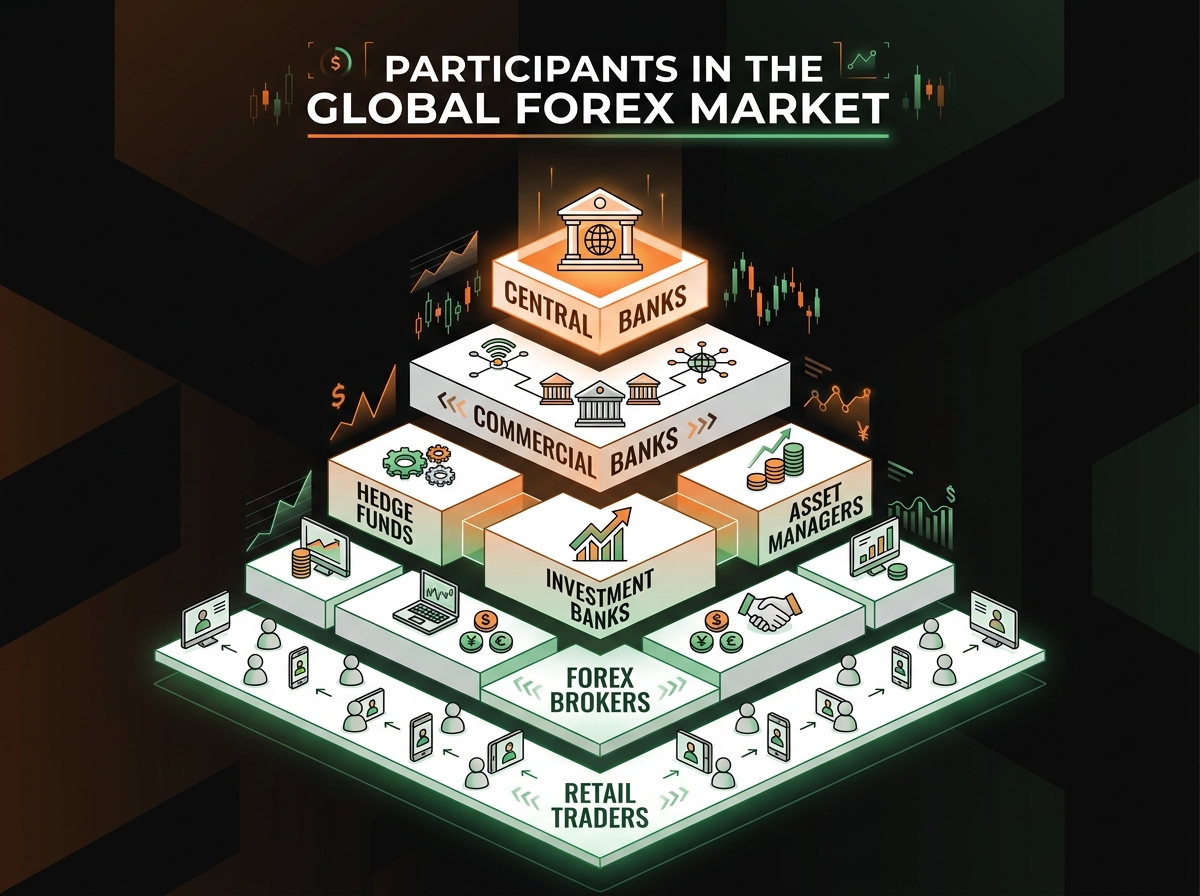
The global foreign exchange market processes trillions of dollars in daily transactions. Most of these trades occur between central banks, commercial banks, multinational corporations, hedge funds, asset managers, and institutional investors.
Retail traders account for only a small percentage of global Forex volume.
Because individual traders cannot access the interbank market directly, brokers aggregate retail orders and provide access through trading platforms.
In addition to market access, brokers provide essential services such as:
Real-time market prices
Trading software
Charting tools
Leverage
Order execution
Risk management infrastructure
Customer support
Regulatory protection where applicable
Deposit and withdrawal services
Without brokers, retail Forex trading as we know it today would not exist.
What Are You Actually Trading in Forex?
This question surprises many beginners.
Most new traders believe they are buying or selling actual currencies.
In most retail trading accounts, that is not what happens.
Instead, traders speculate on whether one currency will rise or fall relative to another.
For example:
EUR/USD
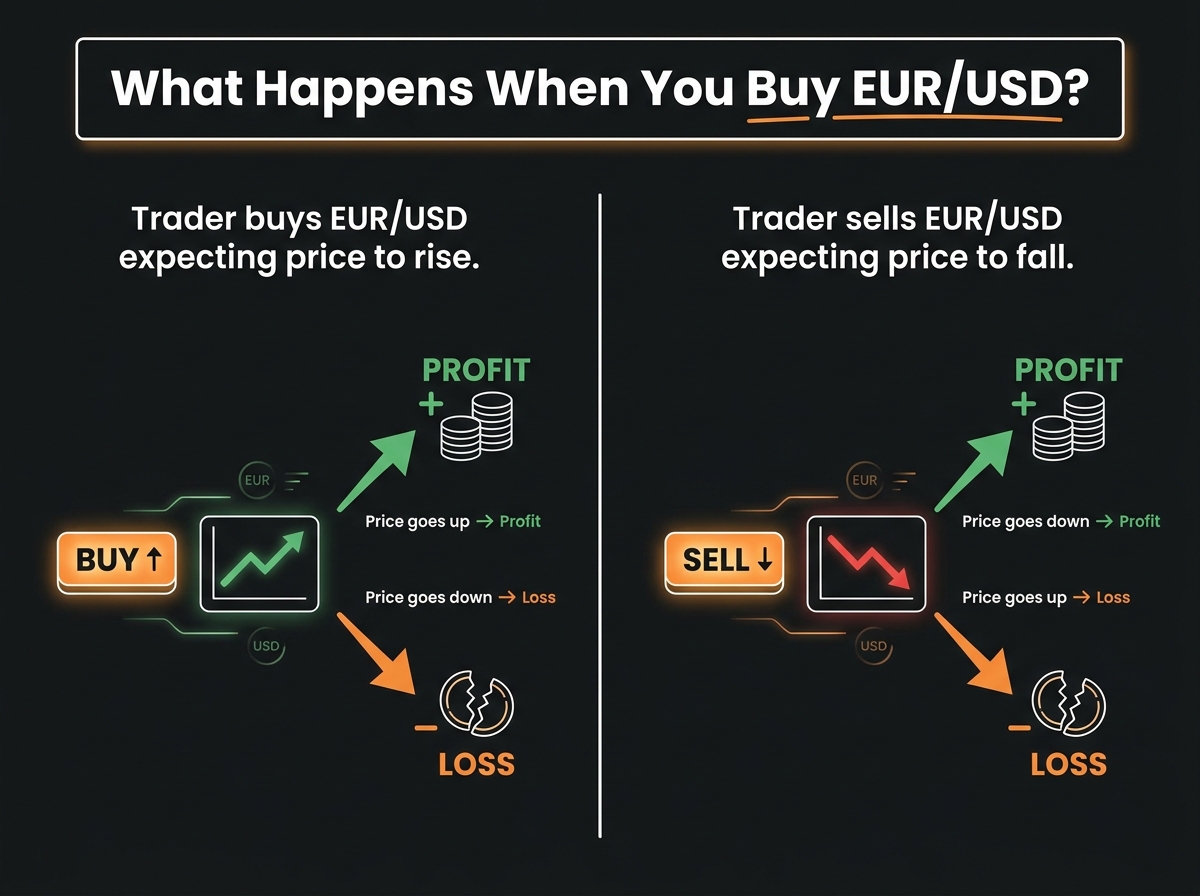
When buying EUR/USD, you are predicting that the euro will strengthen against the US dollar.
When selling EUR/USD, you are predicting that the euro will weaken against the US dollar.
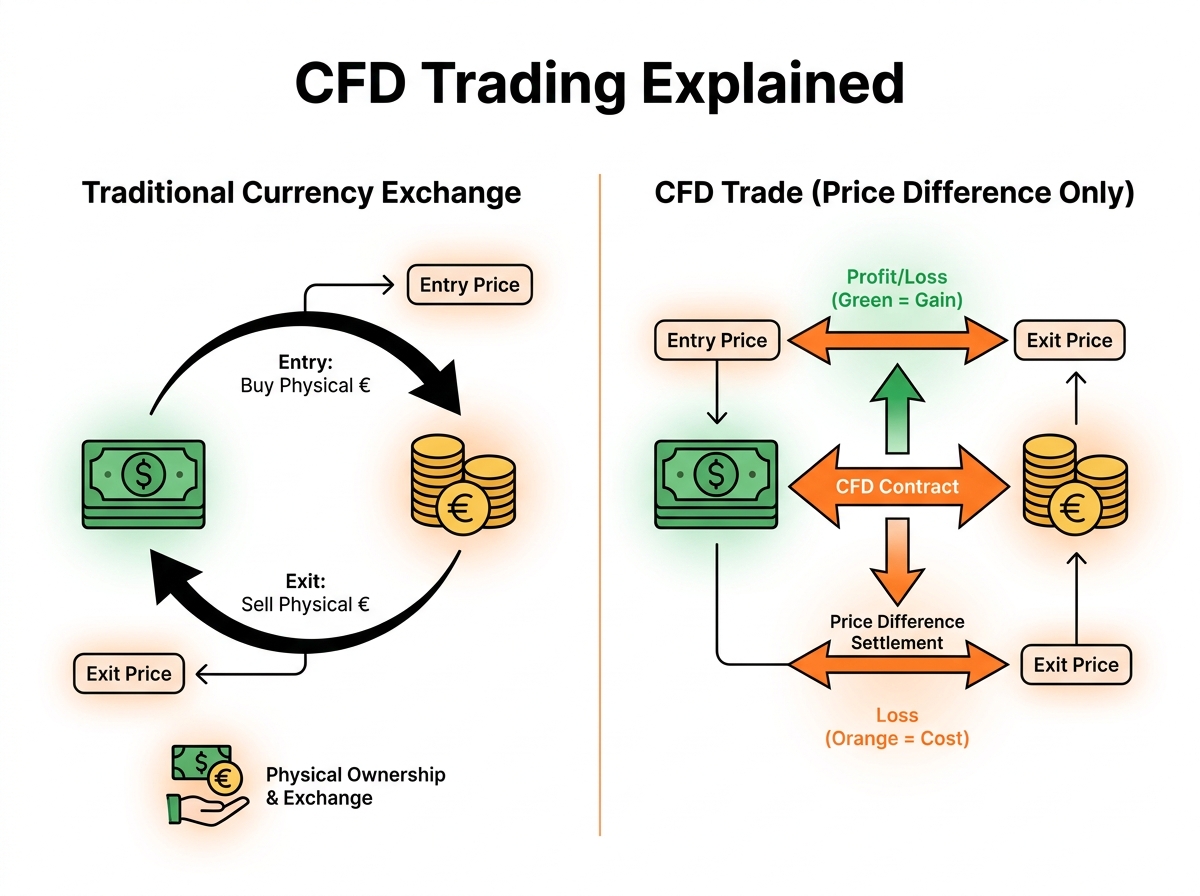
In many retail accounts, no physical euros or dollars ever change hands.
Instead, your profit or loss is calculated based on the price movement between your entry price and exit price.
This distinction becomes particularly important when understanding CFDs.
Trading Forex with CFDs
One of the biggest misconceptions among beginners is believing they own currencies after opening a Forex trade.
Most retail traders actually trade using Contracts for Difference (CFDs).
A CFD is a financial derivative.
Rather than purchasing the underlying asset, you enter into an agreement with your broker to exchange the difference between the opening price and the closing price of a trade.
Suppose EUR/USD rises by 120 pips after you buy.
You receive the value of those 120 pips.
If EUR/USD falls by 120 pips instead, you incur the corresponding loss.
The underlying currency itself never enters your possession.
This structure allows traders to speculate on both rising and falling markets without owning the underlying currencies.
CFDs also make leverage possible, allowing traders to control larger positions using a comparatively small margin deposit. However, leverage amplifies both gains and losses, making disciplined risk management essential.
It is also important to note that CFD availability depends on jurisdiction. Some countries restrict or prohibit retail Forex CFDs, while others regulate them under strict investor protection rules. Always confirm what products are legally available where you live.
Where Are Retail Forex Traders Actually Trading?
Contrary to popular belief, retail Forex traders are generally not placing orders directly into the global interbank currency market.
Instead, they trade through their broker*s infrastructure.
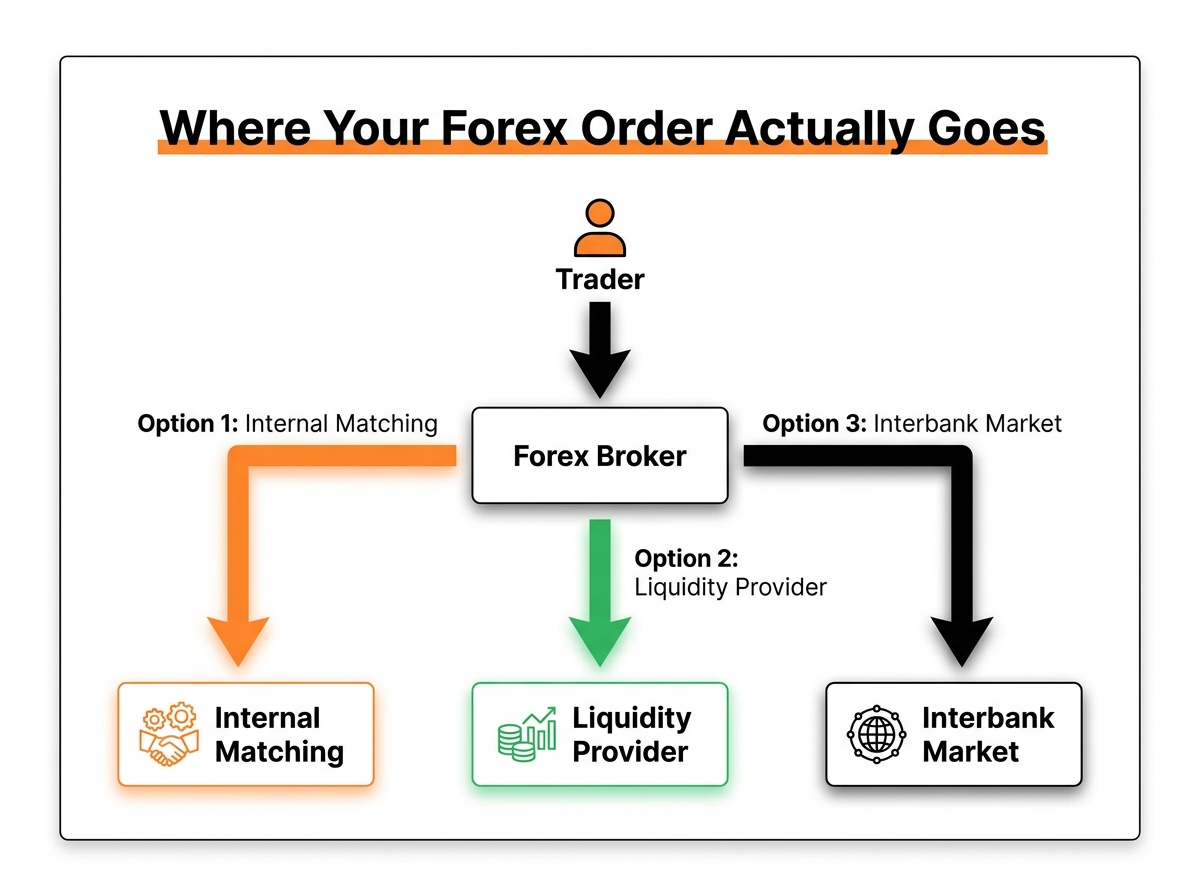
Depending on the broker*s business model, orders may:
Be matched internally against other customer orders.
Be passed to external liquidity providers.
Be hedged by the broker.
Be partially internalized before external execution.
We will examine each of these models in detail later in this guide.
For now, it is important to understand one key point:
Your broker determines how your order reaches the market.
The execution model influences:
Execution speed
Slippage
Spreads
Counterparty risk
Fill quality
Overall trading experience
How Do Forex Brokers Work?
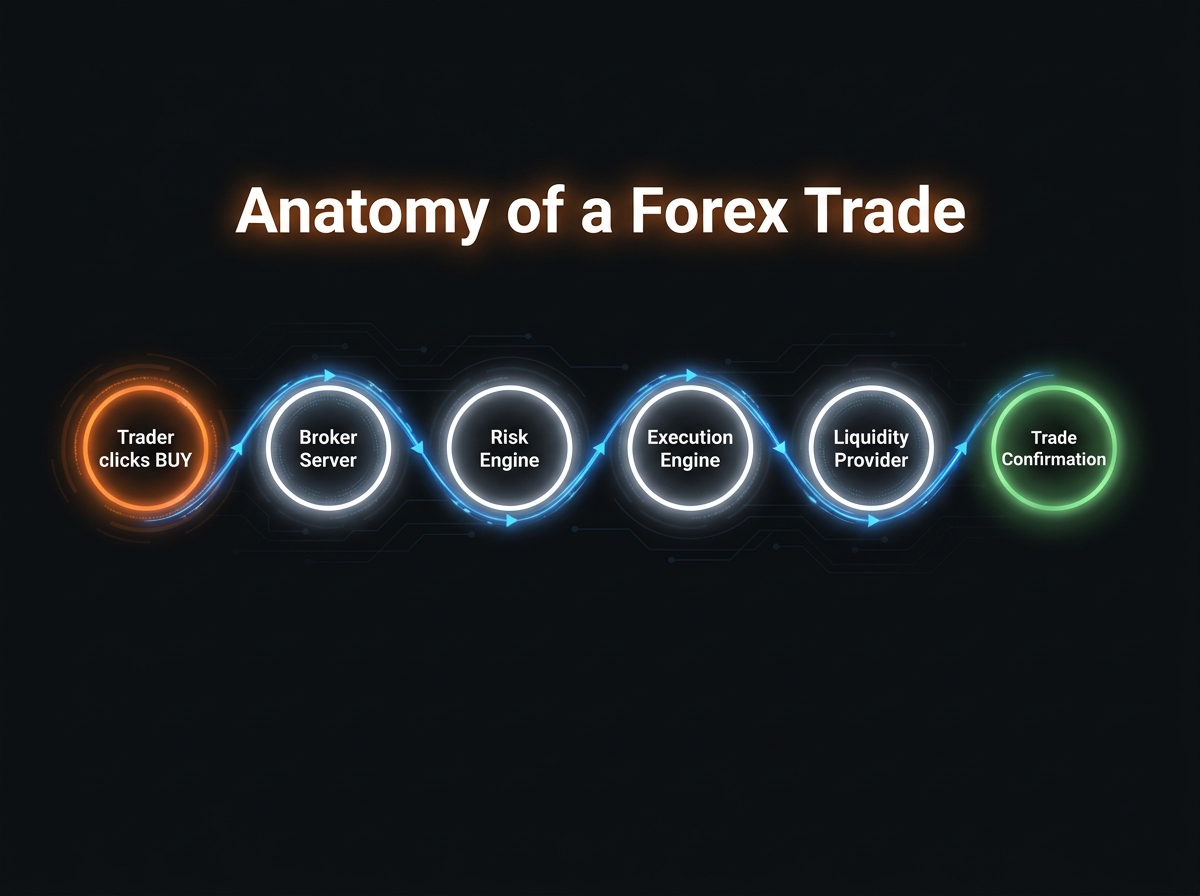
Every time you click the Buy or Sell button on your trading platform, a surprisingly complex process begins behind the scenes. Although it may appear that your trade is executed instantly, your broker*s systems are actually performing several important tasks within milliseconds to ensure your order is processed accurately and efficiently.
Understanding this process helps you appreciate the technology behind forex trading and gives you a better understanding of why execution speed, broker quality, and trading infrastructure matter.
Let us walk through each step.
1. You Submit an Order from Your Trading Platform
The trading process begins when you decide to enter the market.
After analyzing a currency pair, you click either Buy if you expect the price to rise or Sell if you expect the price to fall.
At that exact moment, your trading platform packages important information about your trade and sends it securely to your brokers servers.
This information includes:
The currency pair you want to trade.
Whether you want to Buy or Sell.
Your lot size (trade size).
The type of order you are placing (Market Order, Limit Order, Stop Order, etc.).
Any Stop Loss or Take Profit levels you have specified.
Think of this as placing an order on an online shopping website. Once you click the Place Order button, your request is sent to the company*s servers for processing. Forex trading works in a similar way, except the process usually takes only a few milliseconds.
2. The Broker Receives the Order
Once your order reaches the broker*s servers, the broker immediately begins processing it.
The broker*s systems verify that the order was transmitted correctly and prepare it for execution.
At this stage, the broker also checks several technical details, including:
Whether your trading account is active.
Whether your internet connection transmitted the order successfully.
Whether the requested trade size is valid.
Whether the requested instrument is currently available for trading.
Because the forex market operates almost continuously from Monday to Friday, brokers receive thousands or even millions of trade requests every day.
Modern brokers rely on powerful computer servers capable of processing enormous volumes of orders without significant delays.
3. The Broker Checks Your Available Margin
Before allowing your trade to proceed, the broker must determine whether you have enough funds available in your account.
This process is known as a margin check.
Since most retail forex trading uses leverage, you are not required to pay the full value of the position you wish to control. Instead, you only need to provide a small percentage of the trade value as collateral, known as the required margin.
For example, suppose you have:
Account Balance: $1,000
Broker Leverage: 1:100
With this leverage, you may be able to control positions worth up to $100,000, depending on your brokers margin requirements.
Before opening your trade, the broker automatically calculates:
Available Margin
Used Margin
Free Margin
Margin Level
If your account has sufficient available margin, your order moves to the next stage.
If you do not have enough available funds, the broker rejects the trade and displays an error such as Insufficient Margin.
This protects both you and the broker from taking positions your account cannot support.
4. The Order is Validated
After confirming that sufficient margin exists, the broker performs another series of automatic checks.
This stage is known as order validation.
The broker verifies that:
The market is currently open.
The selected currency pair is available.
The trade size falls within permitted limits.
Your Stop Loss and Take Profit levels meet the brokers minimum distance requirements.
There are no technical errors with the order.
If everything satisfies the brokers requirements, the order is approved for execution.
If any problems are detected, the order may be rejected, modified, or returned with an error message explaining the issue.
This validation process helps prevent accidental trading errors and ensures market integrity.
5. The Broker Routes the Trade According to Its Execution Model
This is one of the least understood but most important stages of forex trading.
After validating your order, the broker must decide where your trade will actually go.
The destination depends on the brokers execution model.
Different brokers handle customer orders differently.
For example:
A-Book Brokers
These brokers pass your order directly to external liquidity providers such as banks, financial institutions, or Electronic Communication Networks (ECNs). The broker simply acts as an intermediary.
B-Book Brokers
Instead of forwarding your order externally, these brokers may keep your trade within their own system and become the direct counterparty to your trade.
Hybrid Brokers
Many modern brokers use a combination of both models.
Small retail trades may remain internal, while larger or riskier trades are automatically forwarded to external liquidity providers.
This routing decision is made entirely by sophisticated software in fractions of a second.
The trader usually never notices this process taking place.
6. The Trade is Executed
Once the routing process is complete, the trade is executed.
Execution simply means your order has been matched with an available price.
At this point:
Your position officially opens.
Your entry price is recorded.
Your trade becomes visible on your trading platform.
Your unrealized profit or loss immediately begins changing as market prices move.
In extremely volatile market conditions, the execution price may differ slightly from the price you originally clicked.
This difference is called slippage.
Slippage can be:
Positive (better price than requested)
Negative (slightly worse price than requested)
Small amounts of slippage are considered normal during periods of high market activity, such as major economic news releases.
7. Your Account Balance Updates Continuously as Prices Change
After your trade has been opened, your brokers systems continue monitoring it in real time.
Every time the market price changes, your account statistics automatically update.
These include:
Floating Profit or Loss
Equity
Used Margin
Free Margin
Margin Level
This continuous updating allows you to see exactly how your trade is performing at any given moment.
If your Stop Loss or Take Profit level is reached, the broker automatically closes the trade according to your instructions.
Likewise, if your accounts Margin Level falls below the brokers minimum requirement, the broker may automatically begin closing positions to protect both your account and its own exposure. This process is known as a margin call or stop-out, depending on the brokers policies.
The Technology Behind Modern Forex Brokers
Although the trading process appears simple from a trader*s perspective, the technology operating behind the scenes is remarkably sophisticated.
Large forex brokers invest millions of dollars every year in infrastructure designed to provide fast execution, accurate pricing, and reliable service to traders around the world.
Without this technology, modern retail forex trading simply would not be possible.
Below are some of the key systems that work together every second.
Trading Servers
Trading servers are the backbone of every forex broker.
They receive customer orders, process trades, manage open positions, and communicate with liquidity providers.
These servers operate continuously throughout the trading week and are built for extremely high reliability with minimal downtime.
Many brokers host their servers in major financial data centers such as London, New York, Tokyo, and Singapore to reduce execution delays.
Pricing Engines
The pricing engine continuously gathers exchange rates from multiple liquidity providers.
Instead of relying on prices from a single bank, it compares quotes from numerous sources and selects the most competitive Bid and Ask prices to display on your trading platform.
This process happens hundreds of times every second, ensuring that traders receive up-to-date market prices.
Risk Management Systems
Every broker must carefully manage its financial exposure.
These systems help brokers determine whether customer trades should be internally managed, externally hedged, or automatically closed if margin requirements are no longer met.
Without these systems, brokers would face enormous financial risks during periods of extreme market volatility.
Liquidity Connections
Forex brokers maintain electronic connections with banks, financial institutions, hedge funds, and liquidity providers.
These connections allow brokers to access large pools of available buyers and sellers.
The more liquidity a broker can access, the better its ability to provide competitive spreads and fast trade execution.
This is one reason why larger brokers often offer tighter spreads than smaller brokers.
Data Centers
To minimize delays, brokers host their infrastructure inside highly secure data centers equipped with:
High-speed internet connections
Backup power generators
Multiple internet providers
Climate-controlled server rooms
Fire suppression systems
Redundant backup servers
These facilities operate 24 hours a day to ensure uninterrupted trading services.
Cybersecurity Infrastructure
Forex brokers handle sensitive financial and personal information belonging to millions of traders.
For this reason, cybersecurity is one of their highest priorities.
Modern brokers use advanced security measures including:
Data encryption
Secure login authentication
Firewalls
Fraud detection systems
Multi-factor authentication (MFA)
Continuous network monitoring
These technologies help protect customer funds and personal information from cyber threats.
Client Fund Accounting Systems
Regulated brokers maintain sophisticated accounting systems that track every customer*s deposits, withdrawals, profits, losses, and available balances.
Many regulators also require brokers to keep client funds in segregated accounts, meaning customer money is held separately from the brokers own operating funds.
This additional layer of protection helps safeguard client assets should the broker experience financial difficulties.
From the moment you click Buy or Sell until your trade is finally closed, dozens of automated systems work together within milliseconds. What seems like a simple mouse click actually triggers a sophisticated network of servers, pricing engines, liquidity providers, cybersecurity systems, and risk management software. Understanding this process gives beginner traders a deeper appreciation of how forex brokers operate and why choosing a reliable, technologically advanced, and well-regulated broker is just as important as developing a profitable trading strategy.
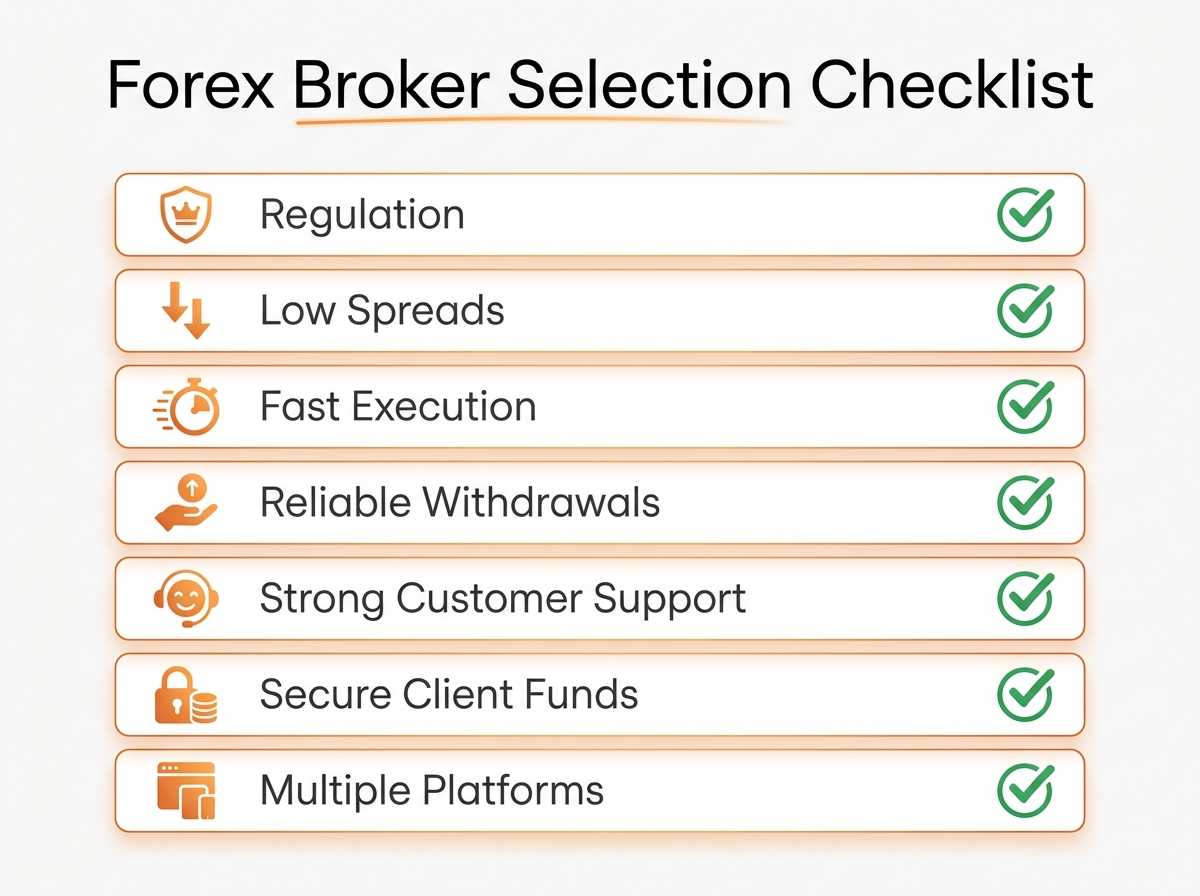
How to Choose a Forex Broker
Regulation
Ensure that the forex broker you choose is regulated by a reputable authority like the National Futures Association (NFA) or the Commodity Futures Trading Commission (CFTC). As you should know, when a platform is certified by government regulatory bodies, it means that its operations are constantly under scrutiny from these bodies making it almost impossible for the forex brokers to engage in any form of fraud.
Some of the best forex brokers in USA are regulated by the above-mentioned bodies according to my research.
Trading Platform/ Fees
Look for a broker with a trading platform that is user-friendly, stable, and supports the types of trading that you intend to do. This is also very important as not all forex brokers support all forms or types of trading. Some forex brokers have high taxes and swap fees that would not be okay for swing trading, so you also need to ensure that the trading platform is okay for you.
It is essential to look at the Brokerage fees a broker charges before creating an account with them, because a lot of retail traders lose a large amount of their funds to trading fees like spread, swap fees, and brokers commision, due to the type of trades they take.
At Dipprofit academy, we have made it easy for beginner traders to calculate the trading fees they are likely to lose on each broker, depending on the currency pairs / instruments they decide to trade using our true cost of forex trading calculator tool. Traders can also compare brokers that are in their region based on the fees that each broker charges and easily select the brokers that charge lower fees.
Currency Pairs
Ensure that the broker you choose offers the currency pairs that you want to trade in. Some of the best forex brokers offer almost all instruments for trading, and this should be another thing to look out for. You need to be sure that the trading platform you are using offers a large repertoire of trading pairs from which you can select your favorite.
Customer Service
Choose a broker that has excellent customer service, with easy access to support staff through multiple channels like phone, email, and chat. As a forex trader, you wouldn’t want to be stranded using your broker and not have anyone to attend to you or help resolve any challenges, this is why the best forex brokers for me must have great customer service to always help traders resolve challenges they might encounter. You wouldn’t want to add to your trading headache you know.
Fees and Commission
Carefully review the fee structure charged by the broker, ensuring that it is transparent and competitive with the market standard. Another important aspect you need to consider when choosing a broker is the fees charged, the spread, and the commissions, as this would also determine your level of profitability. Some of the best forex brokers in USA, charge very reasonable fees and have a good spread.
Education and Research
A good broker will provide resources like tutorials, webinars, and research tools to help you trade in a more informed manner. Lastly, this is a criterion that is very important for beginner traders, and it goes a long way in helping the beginner trader make smart decisions when trading. The education ranges from making it easy for the trader to navigate the platform and understand how to use it to their advantage, to getting trading tips from the brokerage platform experts.
Is the Forex Broker a Legitimate Company?
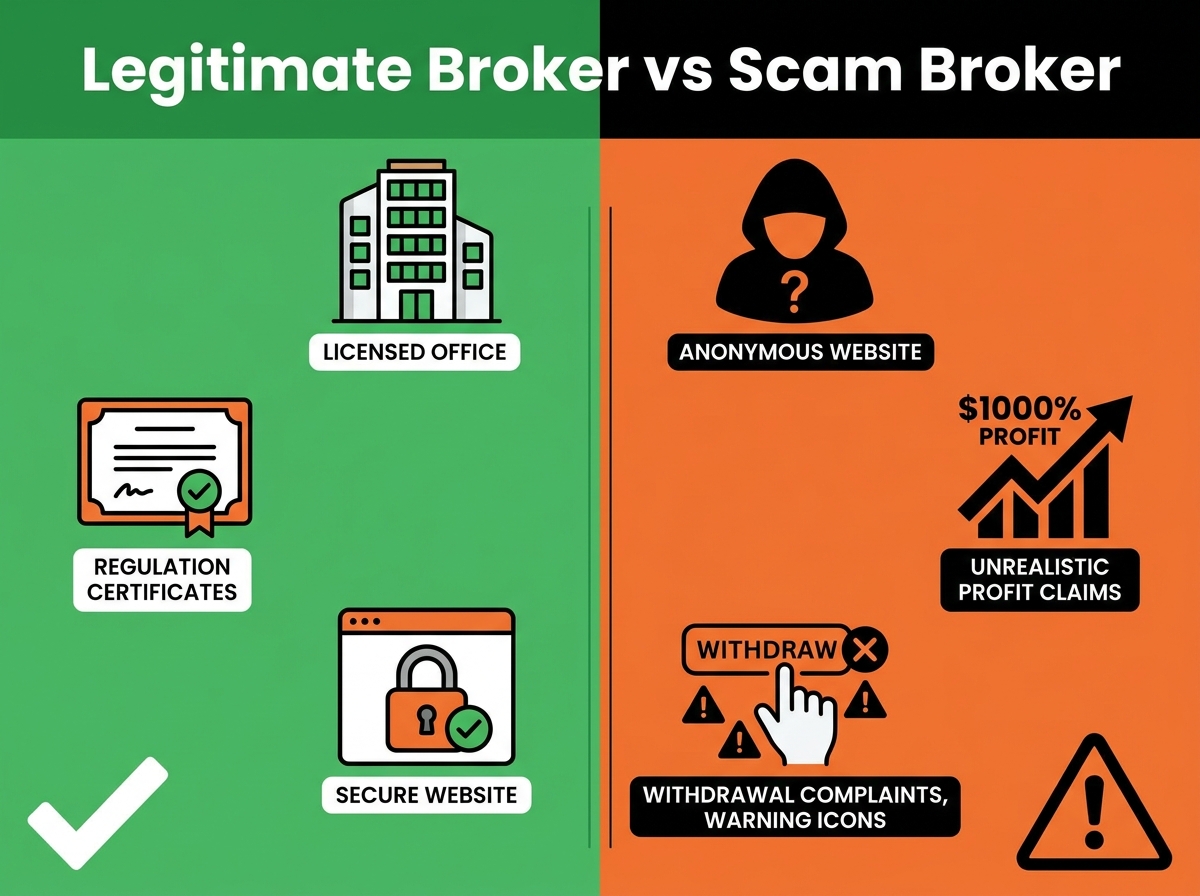
Legitimate brokers operate as registered financial businesses.
Before opening an account:
Verify the companys legal name.
Confirm its registration number.
Review its corporate history.
Research independent customer feedback.
Check financial disclosures where available.
Verify physical office locations.
Read the brokers legal documentation.
Be cautious of brokers that:
Guarantee profits.
Promise unrealistic returns.
Pressure you into larger deposits.
Restrict withdrawals without valid reasons.
Operate without transparent corporate information.
A trustworthy broker welcomes scrutiny.
Is the Forex Broker Licensed and Regulated?
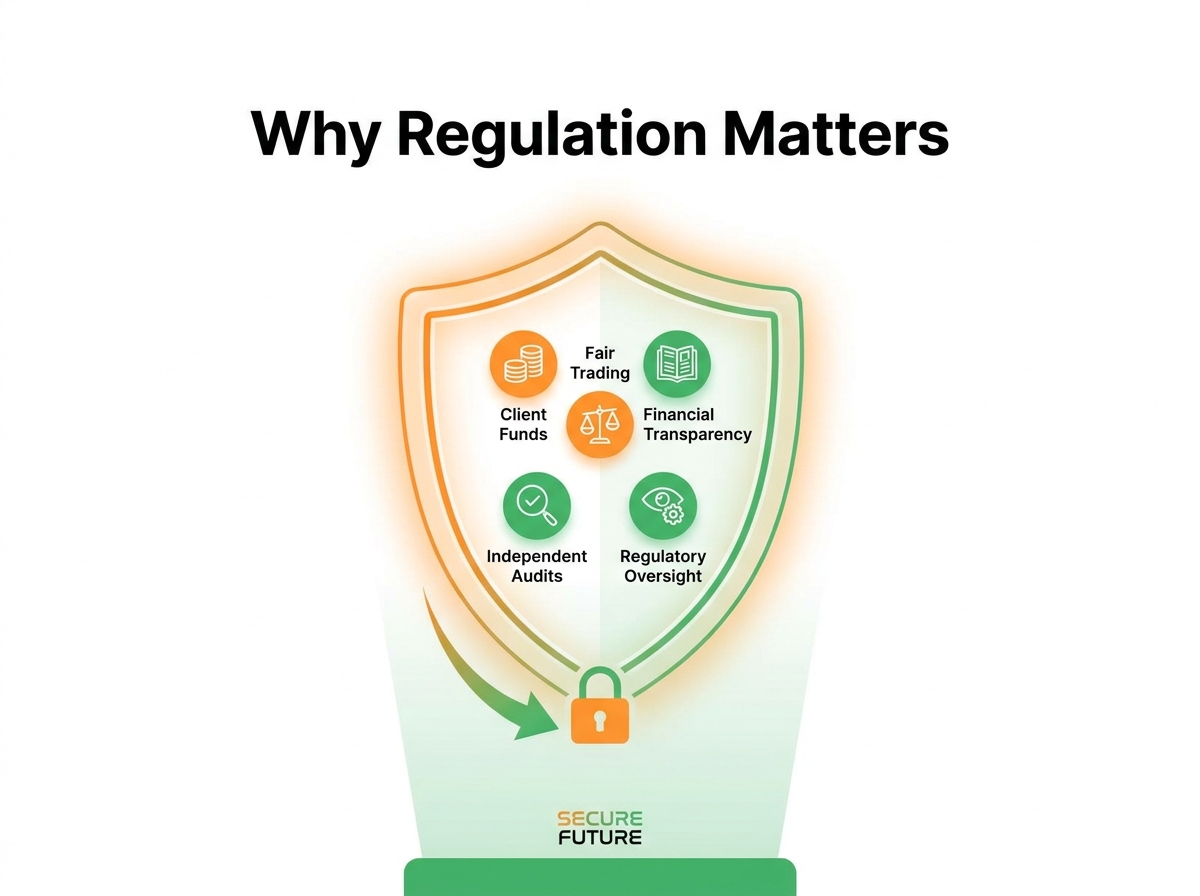
Regulation is one of the strongest safeguards available to retail traders.
A regulated broker must comply with rules designed to protect clients, which may include:
Segregation of client funds from company operating funds.
Minimum capital requirements.
Regular financial reporting.
Independent audits.
Complaint resolution procedures.
Risk disclosures.
Restrictions on marketing practices.
The specific protections available vary by regulator and jurisdiction. Before opening an account, verify the brokers regulatory status directly through the relevant regulators official register rather than relying solely on claims made on the brokers website.
Summary:
A Forex broker is your gateway to the global currency market, providing the technology, pricing, and infrastructure needed to trade. Understanding how brokers operate, what you are actually trading, and the importance of regulation helps you make informed decisions from the very beginning.
In the next part, we will go beyond the basics and examine how Forex brokers make money, including A-Book, STP, internalization, pricing mechanisms, execution quality, and why different brokers may offer different trading experiences. This deeper understanding will help you evaluate brokers not just by marketing claims, but by how their business model affects your trades.
Dipprofit Trading AcademySchool of Forex
● Free & Premium Curriculum
Global market knowledge, trade with zero guesswork.
Dipprofit Trading Academy takes you from "what is a pip" to full price-action trading, with graded quizzes, a live leaderboard, and a certificate at the finish line.
Your Overall Progress
—
Sign in to start tracking your progress, rank on the leaderboard, and get a certificate of completion.
📊
Real Progress TrackingEvery quiz score builds your standing
🏆
Global & Level LeaderboardsSee exactly where you rank
🎓
Certificate on CompletionFinish every level, earn your proof
Curriculum
Your path through the School of Forex
"View Lessons" previews a level right here. "Start Lesson" takes you straight into it.