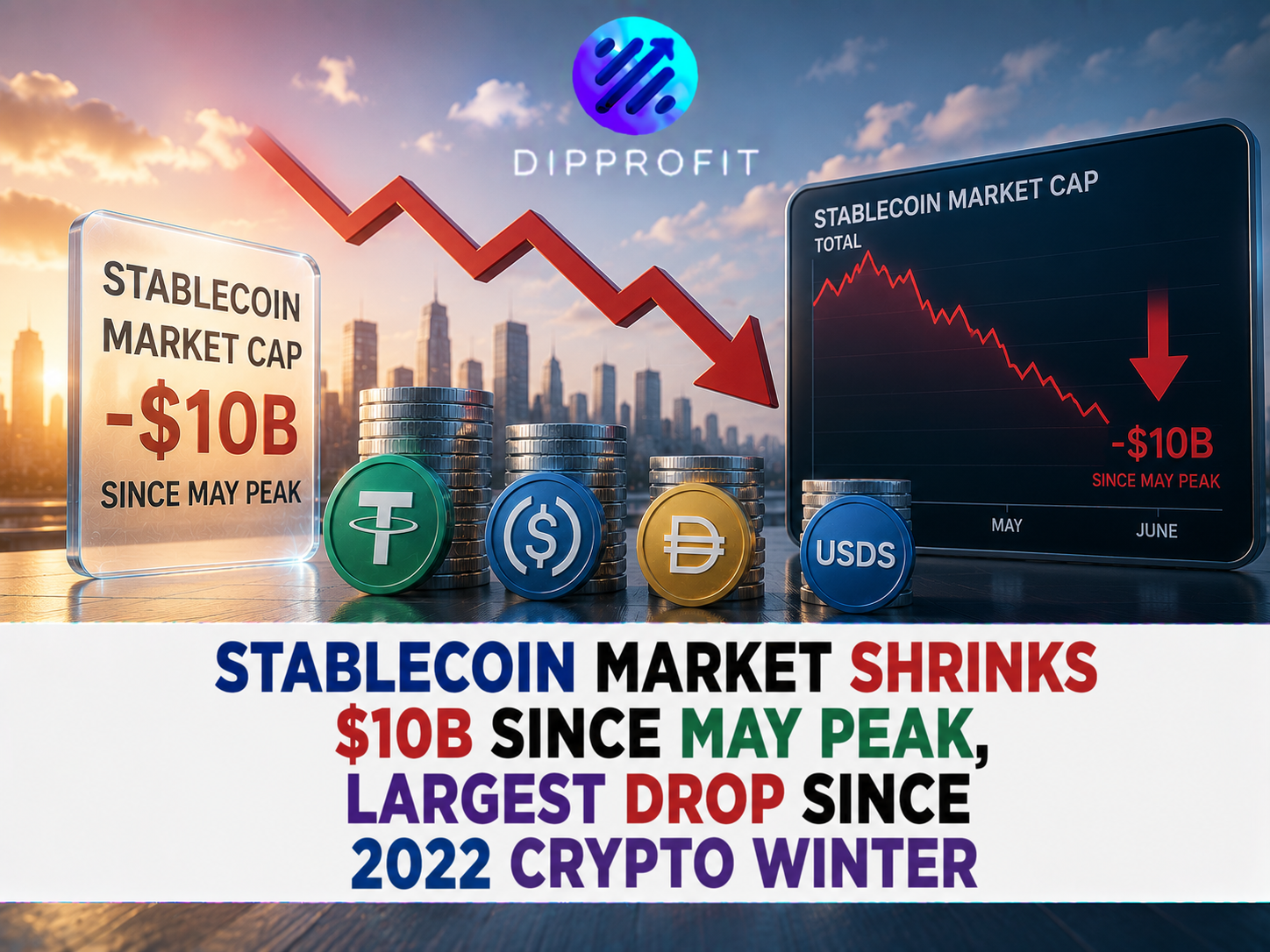

The stablecoin market contracted by roughly $10 billion since May, with June alone accounting for a $7.7 billion decline, the largest monthly drop since the Terra-Luna collapse in May 2022. Despite the headline numbers, analysts say the pullback remains modest by historical standards and does not signal a broader crisis in the digital asset ecosystem.
Tether’s USDT and Circle’s USDC, the two dominant stablecoin issuers, led the decline. USDT fell to approximately $184 billion from $190 billion in May, shedding about $6 billion, while USDC dropped to around $73 billion from its March 2026 peak of just under $80 billion, losing another $7 billion in value.
On a percentage basis, the recent contraction represents only a 3% decline, the largest such downtrend since 2023 but well below the 26% collapse witnessed during the 2022 bear market. That earlier period saw the combined market capitalization of major stablecoins plummet from roughly $166 billion in March 2022 to $122 billion by September 2023, according to data from RWA.xyz.
The current pullback reflects broader consolidation in crypto markets near 2026 lows and reduced onchain liquidity. The stablecoin market has largely stalled around $300 billion since October, when Bitcoin hit its $126,000 record, after more than doubling in size over the previous two years.
See also: US Treasury Sanctions 134 ISIS-K Crypto Addresses, Tether Freezes $1.4M in USDT
Paul Howard, senior director at trading firm Wincent, characterized the recent decline as a temporary setback within a long-term growth trajectory. “The recent decline in stablecoin market cap represents a relatively small pullback in what we believe is a long-term growth market,” Howard said. “Short-term fluctuations in liquidity are normal, but they don’t change our view that stablecoins will continue to play an increasingly important role in the digital asset ecosystem.”
The pullback runs counter to bullish forecasts from major financial institutions. Last year, global bank Citi revised its stablecoin growth forecast for 2030 to $1.9 trillion in its base case and $4 trillion in a bull case, up from previous projections of $1.6 trillion and $3.7 trillion. Standard Chartered projected a $2 trillion market by 2028.
A similar pullback occurred between December 2025 and February 2026, when stablecoin supply fell by roughly $9 billion before bouncing to new records. That period coincided with a major cryptocurrency correction, with Bitcoin plunging from around $95,000 to $60,000.
The decline carries broader implications for crypto markets, as major stablecoins serve as the primary quote currency for digital asset trading and increasingly function in payments and settlement applications. Changes in stablecoin supply are closely monitored as a gauge of liquidity flowing into or out of the broader digital asset ecosystem.
Beyond the headline contraction, the stablecoin landscape is undergoing significant competitive shifts. While USDT and USDC have both seen supply decline recently, several smaller competitors have expanded their market presence following regulatory progress such as the GENIUS Act in the United States. This follows a pattern seen in related coverage of regulatory moves that are reshaping the stablecoin competitive environment.
See also: UK Regulators Finally Signal Serious Crypto Commitment With Major Rule Changes
Global Dollar (USDG), issued by Paxos and backed by a consortium including Robinhood, surpassed $3.2 billion in circulation, while USDGO, issued by Anchorage Digital with Hong Kong’s OSL Group, nearly doubled to $900 million, according to data from CoinGecko. OpenUSD, backed by a group of payments and financial firms, is among several newcomers looking to challenge the dominance of USDT and USDC.
Stablecoin growth has historically coincided with bull markets by providing fresh onchain buying power. Shrinking aggregate supply removes a tailwind for crypto markets, making it harder for cryptocurrencies to sustain rallies unless new demand emerges from institutional or retail investors.
The 2022 bear market proved far more severe for stablecoins. The implosion of TerraUSD, the algorithmic stablecoin of the Terra-Luna project, wiped out $18 billion from the stablecoin market. Tether’s USDT fell from $78 billion to $65 billion between March and November 2022, while USDC experienced a prolonged downtrend exacerbated by Silicon Valley Bank’s collapse in March 2023, falling from $55 billion in July 2022 to below $24 billion by November 2023.
Despite current headwinds, analysts maintain that stablecoins remain positioned for long-term growth as they expand beyond crypto trading into mainstream payments and settlement applications. The recent contraction, while notable, appears consistent with normal market cycles rather than signaling fundamental weakness in the stablecoin ecosystem.
More Reads:
BNB Weekly Analysis: Consolidation Tests $568 Support Amid Exchange Token Sector Headwinds
Ethereum Weekly Analysis: Consolidation Tests $1,742 Support Amid Layer 2 Scaling Optimism
If you’re reading this, you’re already ahead. Stay there, by joining the…
Dipprofit’s private Telegram community

Discover more from Dipprofit
Subscribe to get the latest posts sent to your email.