Margin Trading 101: Understand How Your Margin Account Works
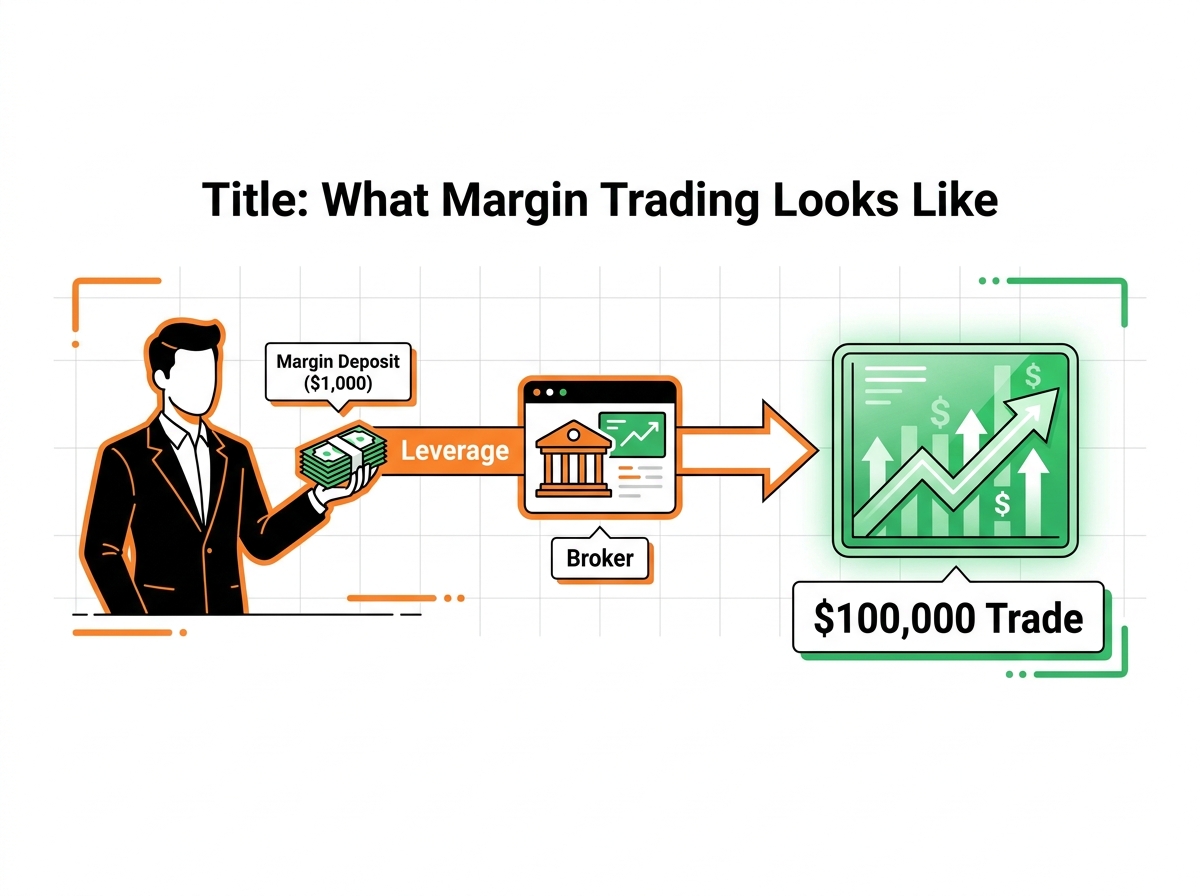
Imagine walking into a bank with only $1,000, but being allowed to control a $100,000 investment.
That sounds unbelievable at first. Yet, this is exactly what happens every day in the Forex market through a concept known as margin trading.
For many beginners, the words margin, leverage, margin call, and stop out sound intimidating. In reality, they are simply tools. When used correctly, they allow traders to participate in markets much larger than the cash sitting in their trading account. When misunderstood, however, they become one of the fastest ways to lose money.
Understanding margin is not optional. It is one of the most important skills every Forex trader must master before placing a single live trade.
In this comprehensive guide, you will learn exactly what margin is, how a margin account works, why brokers require margin, how leverage affects your trades, and how professional traders use margin responsibly to protect their capital.
What Is Margin Trading?
Margin trading is the process of opening positions in the financial markets using borrowed buying power provided by your broker.
Instead of paying the full value of a trade yourself, your broker only requires you to deposit a small percentage of the trade*s total value. That deposit is called margin.
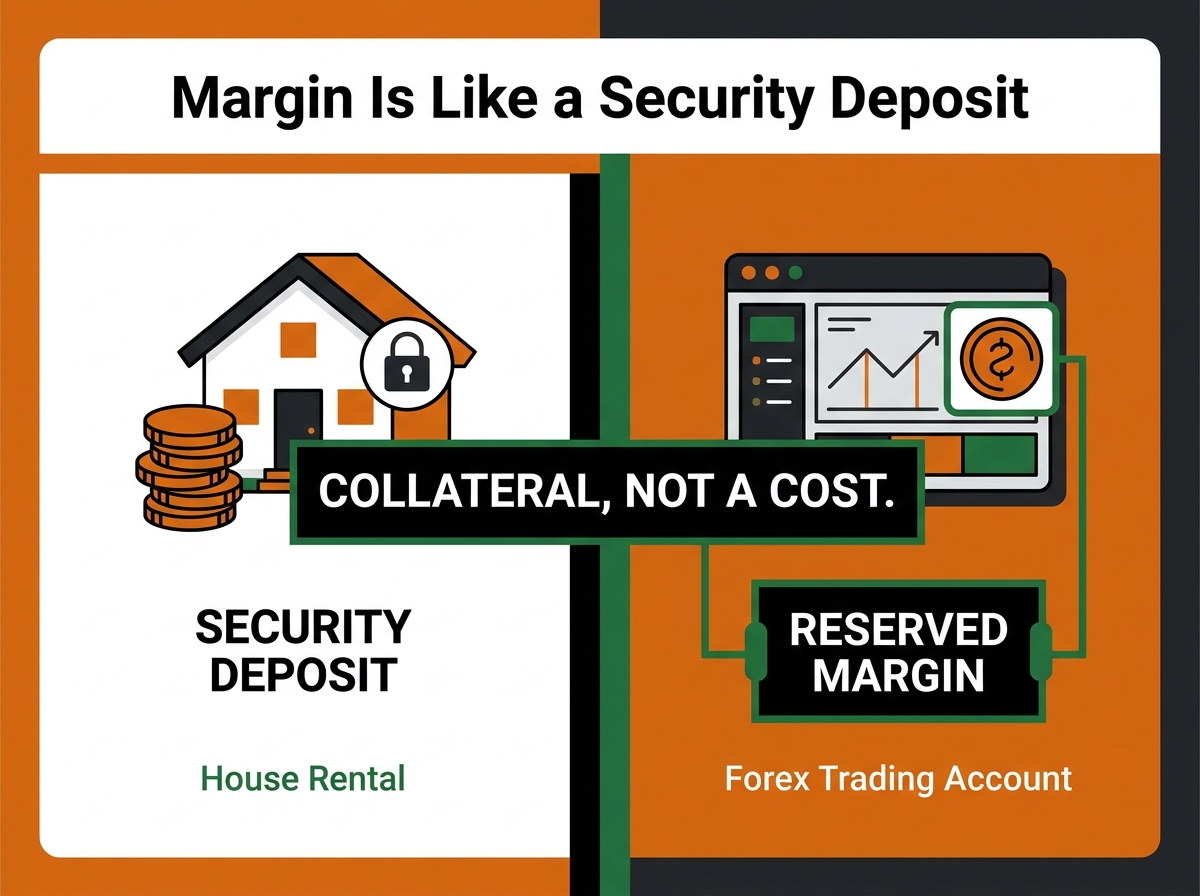
Think of margin as a good faith security deposit, not a fee.
You still own your account balance, but a portion of it is temporarily set aside while your trade remains open.
For example:
You want to buy EUR/USD worth $100,000.
Without leverage, you would need the full $100,000.
With 1:100 leverage, your broker only requires $1,000 as margin.
The remaining amount is effectively made available through leverage.
This is what makes Forex trading accessible to individual traders around the world.
What Is Margin?
Many beginners think margin is money borrowed from the broker.
This isnt entirely accurate.
Margin is better understood as collateral.
When you open a trade, your broker temporarily locks a portion of your trading account as security.
That money remains yours.
You simply cannot use it to open additional trades until your existing position closes.
Think of renting an apartment.
A landlord may ask for a security deposit.
You haven\\\\\\\\\\\\\\\'t paid rent twice.
The deposit simply guarantees you will fulfill your obligations.
Margin works the same way.
Key Characteristics of Margin
Margin is:
Not a transaction fee
Not interest
Not a trading commission
Your own money
Temporarily reserved while a trade is open
Released once the trade closes
Understanding this distinction helps eliminate one of the biggest misconceptions beginners have about Forex trading.
Why Do Forex Brokers Require Margin?
Imagine lending someone a car worth $80,000.
Would you hand over the keys without any guarantee?
Probably not.
Brokers think the same way.
Since leverage allows traders to control much larger positions than the cash they deposit, brokers require collateral to protect themselves if the market moves against the trader.
Margin helps ensure that losses do not exceed the funds available in the trading account.
Without margin requirements, brokers would face enormous financial risk.
How Does a Margin Account Work?
A margin account is simply a trading account that allows you to trade using leverage.
Unlike a cash account, where every trade must be fully funded, a margin account lets you control larger positions with a smaller amount of capital.
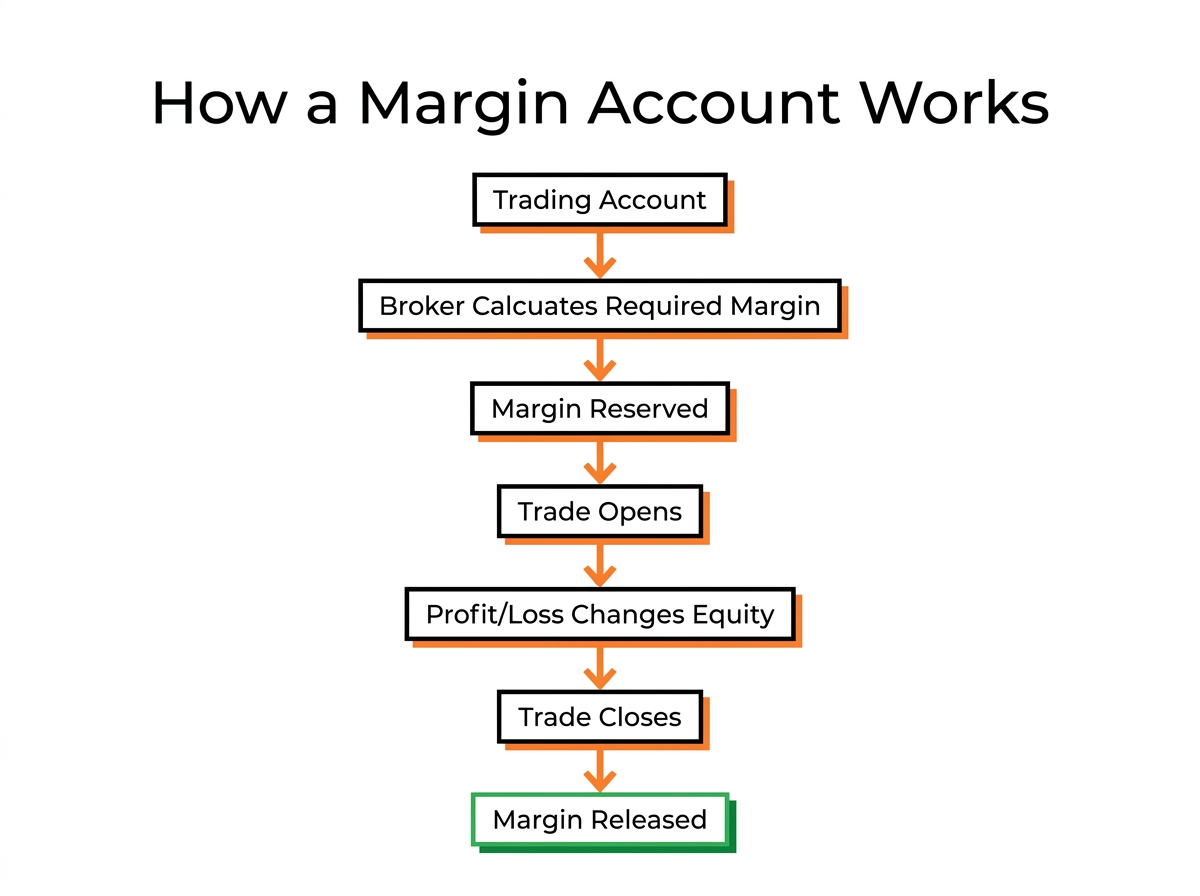
When you place a trade, the following process occurs:
Your broker calculates the required margin.
That amount becomes *Used Margin.*
The remaining balance becomes your available trading capital.
As profits or losses fluctuate, your account equity changes in real time.
Once the trade closes, your margin is released.
Everything happens automatically inside your trading platform.
Margin vs Leverage
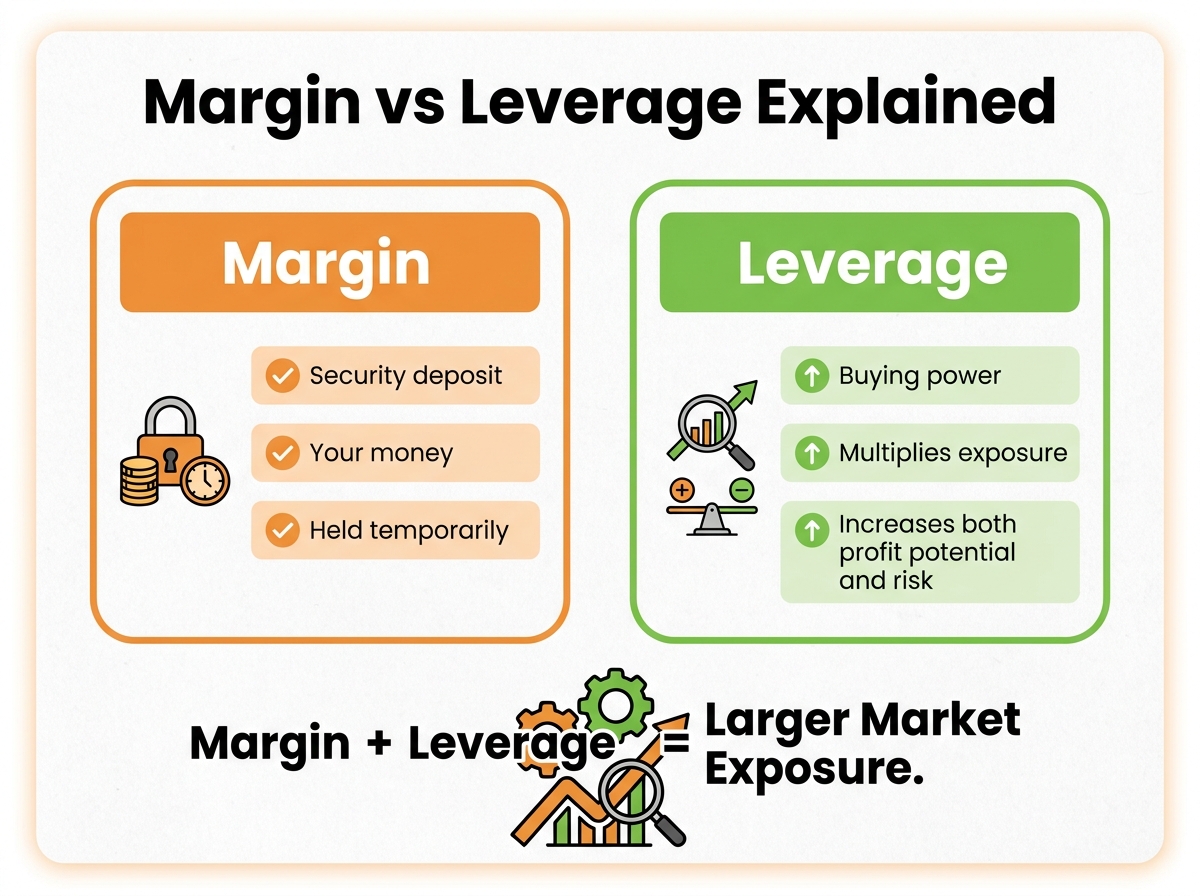
These two concepts are closely related, but they are not the same thing.
Many new traders confuse them.
Here is an easy way to remember the difference.
Margin is the amount of money required to open a position.
Leverage is the multiplier that determines how much buying power you receive from that margin.
For example:
Leverage
Margin Required
1:10
10%
1:20
5%
1:50
2%
1:100
1%
1:200
0.5%
1:500
0.2%
Higher leverage means lower margin requirements.
However, it also increases risk because both profits and losses are magnified.
Professional traders understand that high leverage does not mean you should trade larger positions. Instead, they use leverage primarily for capital efficiency while maintaining disciplined risk management.
How Margin Is Calculated
Every broker calculates required margin using a simple formula:
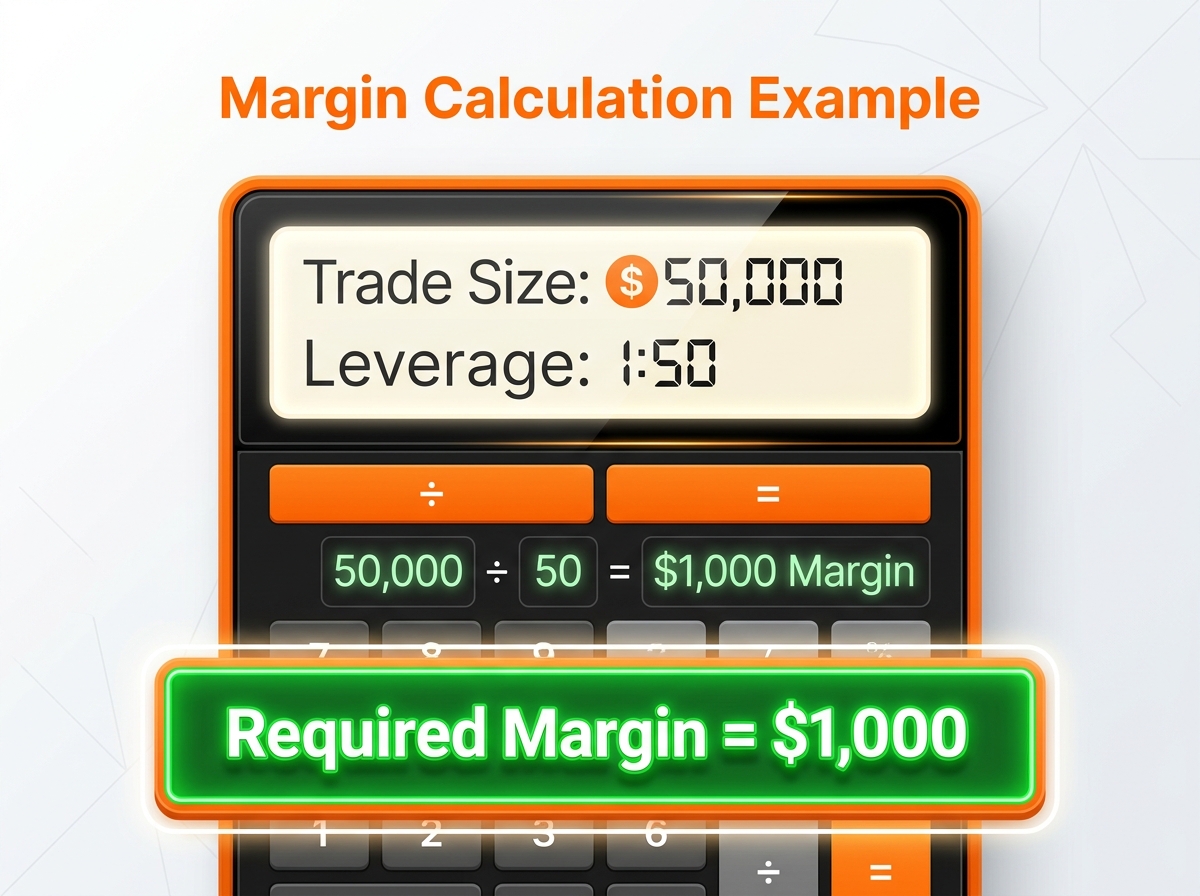
Required Margin = Trade Size ÷ Leverage
Let us look at an example.
Suppose you want to trade:
Position Size = 100,000 EUR
Leverage = 1:100
Required Margin:
100,000 ÷ 100 = 1,000
Your broker reserves $1,000 from your account.
If your account balance is $5,000:
Used Margin = $1,000
Available funds remain available for other trades, provided they satisfy the broker*s margin requirements.
Practical Example
Account Balance:
$2,000
Leverage:
1:50
Trade Size:
$50,000
Required Margin:
$50,000 ÷ 50 = $1,000
Result:
Account Balance: $2,000
Used Margin: $1,000
Remaining Available Funds: $1,000
Notice that you still own your full account balance. A portion is simply reserved while your position remains open.
Different Types of Margin
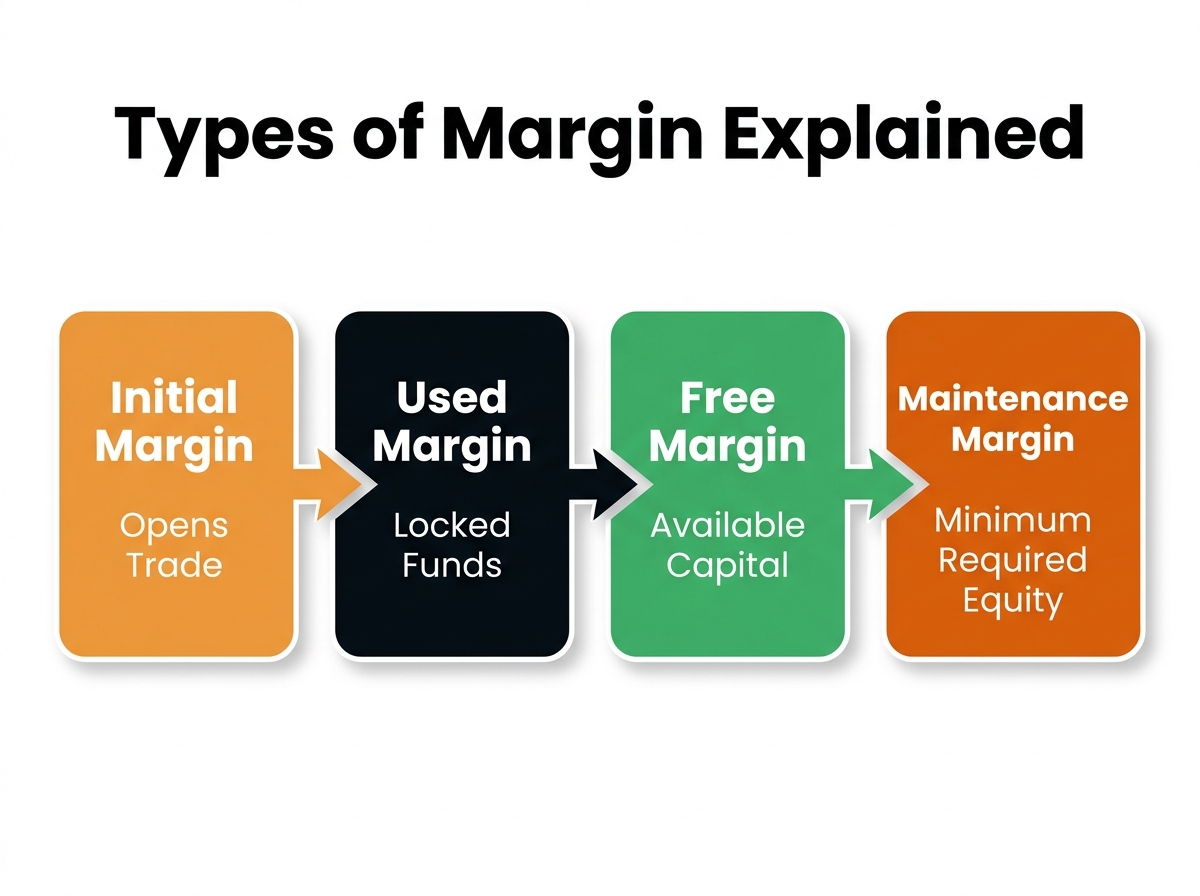
Not all margin serves the same purpose. Most trading platforms display several margin values, each representing a different aspect of your account.
The most common types include:
Initial Margin
The minimum amount required to open a new position.
Maintenance Margin
The minimum equity that must remain in your account to keep positions open.
If your equity falls below this level, your broker may issue a margin call or automatically begin closing positions.
Used Margin
The total amount of your account currently reserved as collateral for open trades.
Free Margin
The amount of capital still available for opening additional trades or absorbing market fluctuations.
Other Margin Vocabulary You Actually Need
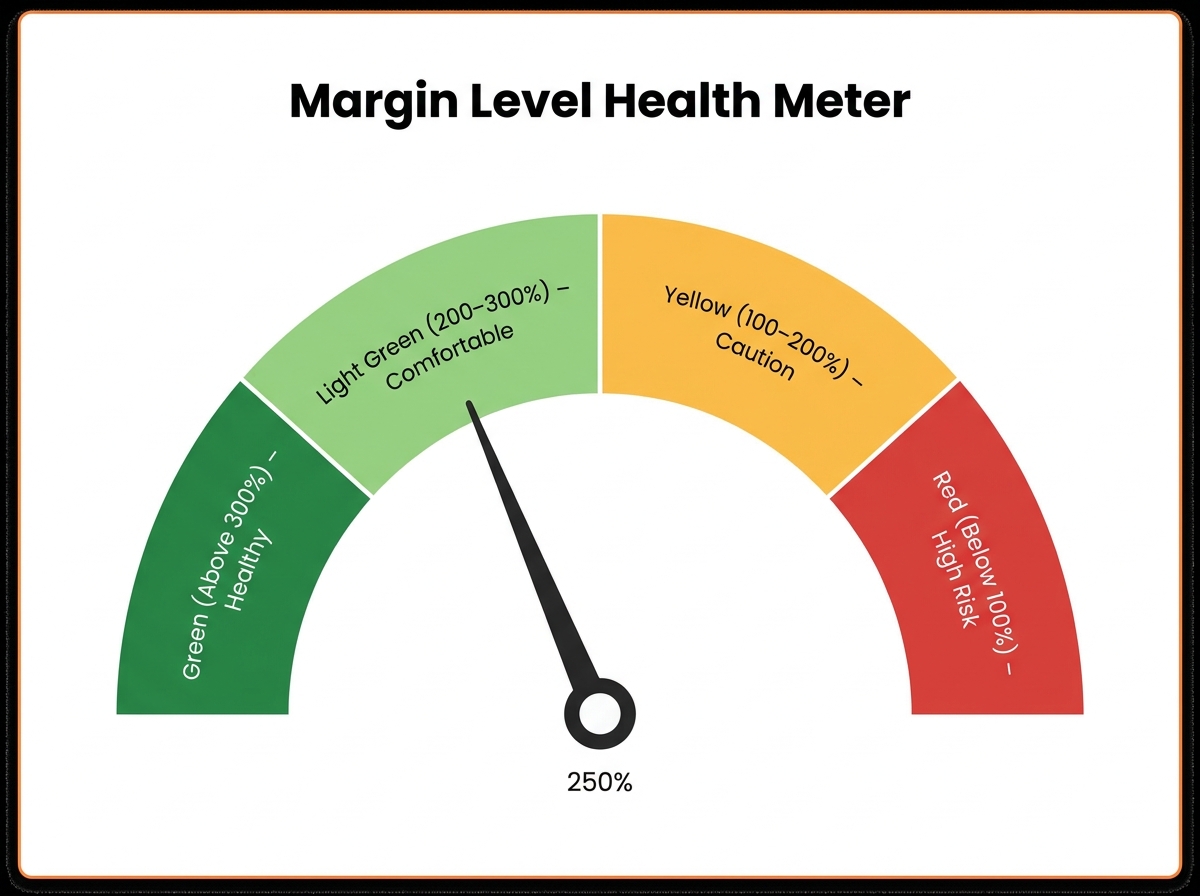
Margin level — (Equity ÷ Used Margin) × 100%, the number brokers watch most closely.
Margin call level — the margin level at which your broker starts warning you.
Stop out level — the margin level at which your broker force-closes positions automatically.
Understanding Equity in a Margin Account
If margin is the security deposit that allows you to open trades, equity is the real-time value of your trading account.
Many beginners assume that their account balance tells them everything they need to know. In reality, your equity is far more important because it constantly changes as your open trades gain or lose value.
The formula is simple:
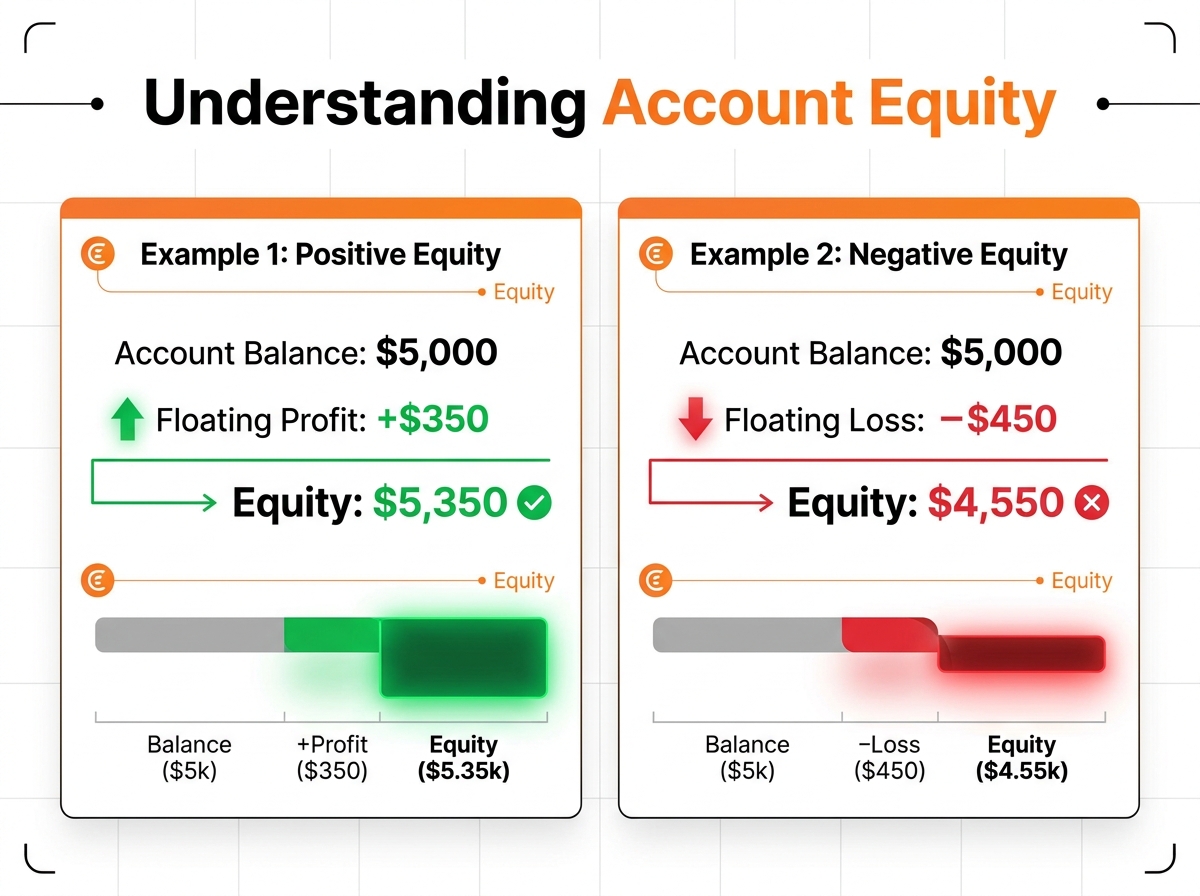
Equity = Account Balance + Floating Profit/Loss
Suppose your account balance is $5,000.
If you currently have an open trade showing a floating profit of $350, your equity becomes:
$5,000 + $350 = $5,350
Now imagine the opposite scenario.
If your open trades are losing $450, your equity becomes:
$5,000 − $450 = $4,550
This number is constantly updated while the market is open.
Your broker uses equity—not your account balance—to determine whether your account has enough funds to keep your trades open.
What Is Free Margin?
Think of Free Margin as your trading account*s available spending power.
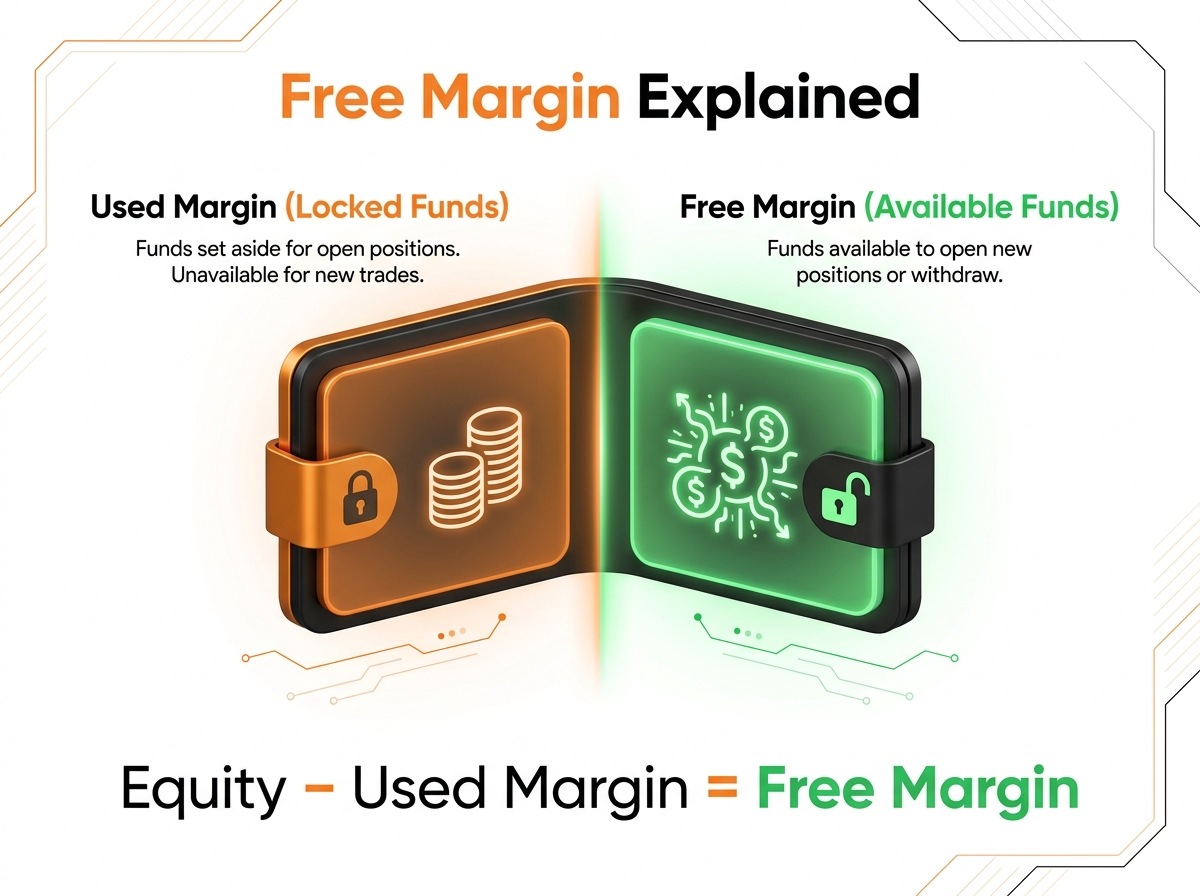
It represents the amount of money that is not currently tied up as collateral and is therefore available for opening new positions or absorbing temporary market losses.
The formula is straightforward:
Free Margin = Equity − Used Margin
Let us use a practical example.
Account Balance: $10,000
Equity: $10,000
Used Margin: $2,000
Your Free Margin is:
$10,000 − $2,000 = $8,000
As your open trades fluctuate in value, your equity changes, which means your free margin also changes.
Professional traders constantly monitor free margin because it provides a clear indication of how much flexibility remains in the account.
Running out of free margin can prevent you from opening additional trades and may increase the risk of a margin call.
Understanding Margin Level
Margin Level is one of the most important risk indicators in Forex trading.
It tells you how healthy your trading account is.
The formula is:
Margin Level (%) = (Equity ÷ Used Margin) × 100
For example:
Equity = $5,000
Used Margin = $1,000
Margin Level:
(5,000 ÷ 1,000) × 100 = 500%
A higher margin level generally indicates a healthier account with more available capital.
As losses accumulate, equity decreases, causing the margin level to fall.
Different brokers have different margin level requirements, but maintaining a comfortable margin level is a hallmark of disciplined trading.
What Is a Margin Call?
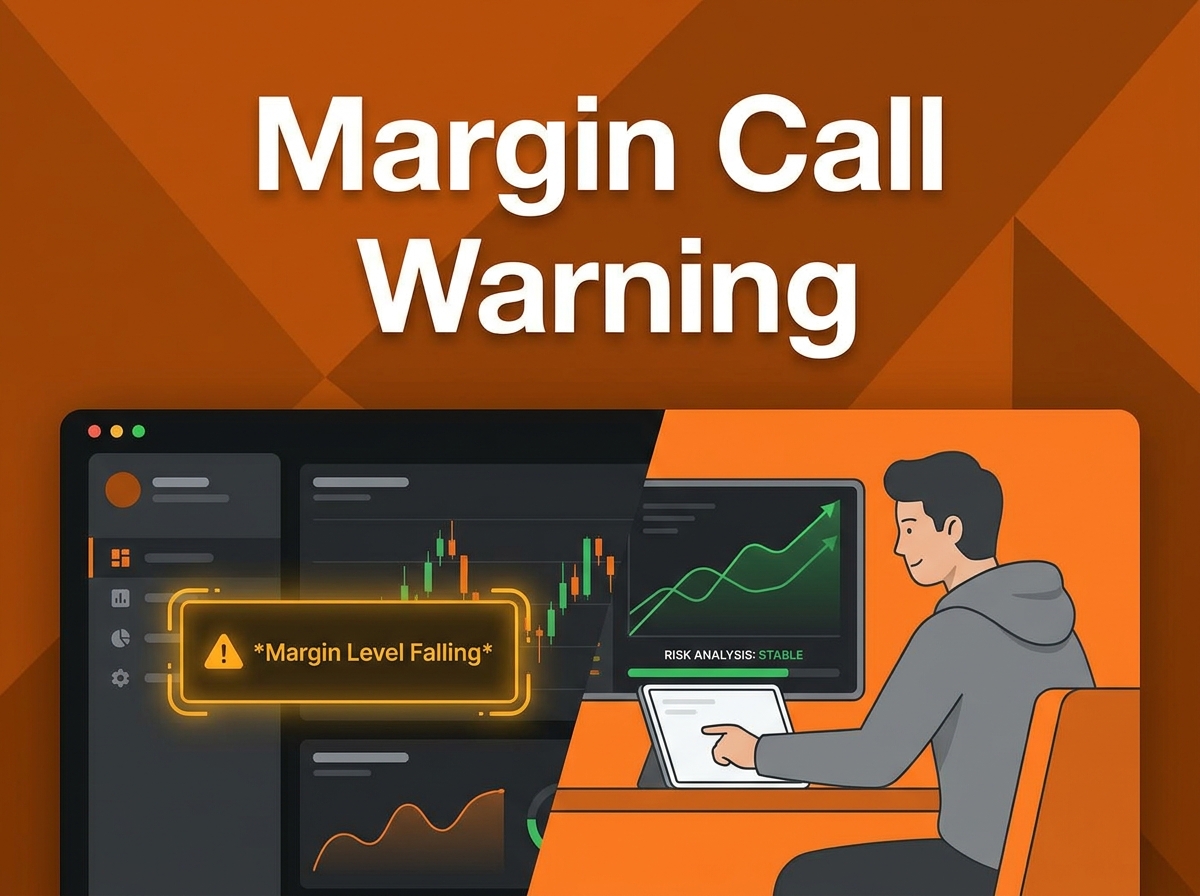
A margin call occurs when your account no longer has sufficient equity to comfortably support your open positions.
Contrary to popular belief, modern brokers rarely telephone traders.
Instead, the trading platform displays warnings or notifications indicating that additional funds may be required or that positions should be reduced.
A margin call is not a punishment.
It is a warning.
It tells you that your account is approaching a dangerous level where continued losses could result in automatic trade closures.
Professional traders view margin calls as signals that risk management has already failed.
Their objective is to avoid ever receiving one.
How a Margin Call Actually Unfolds
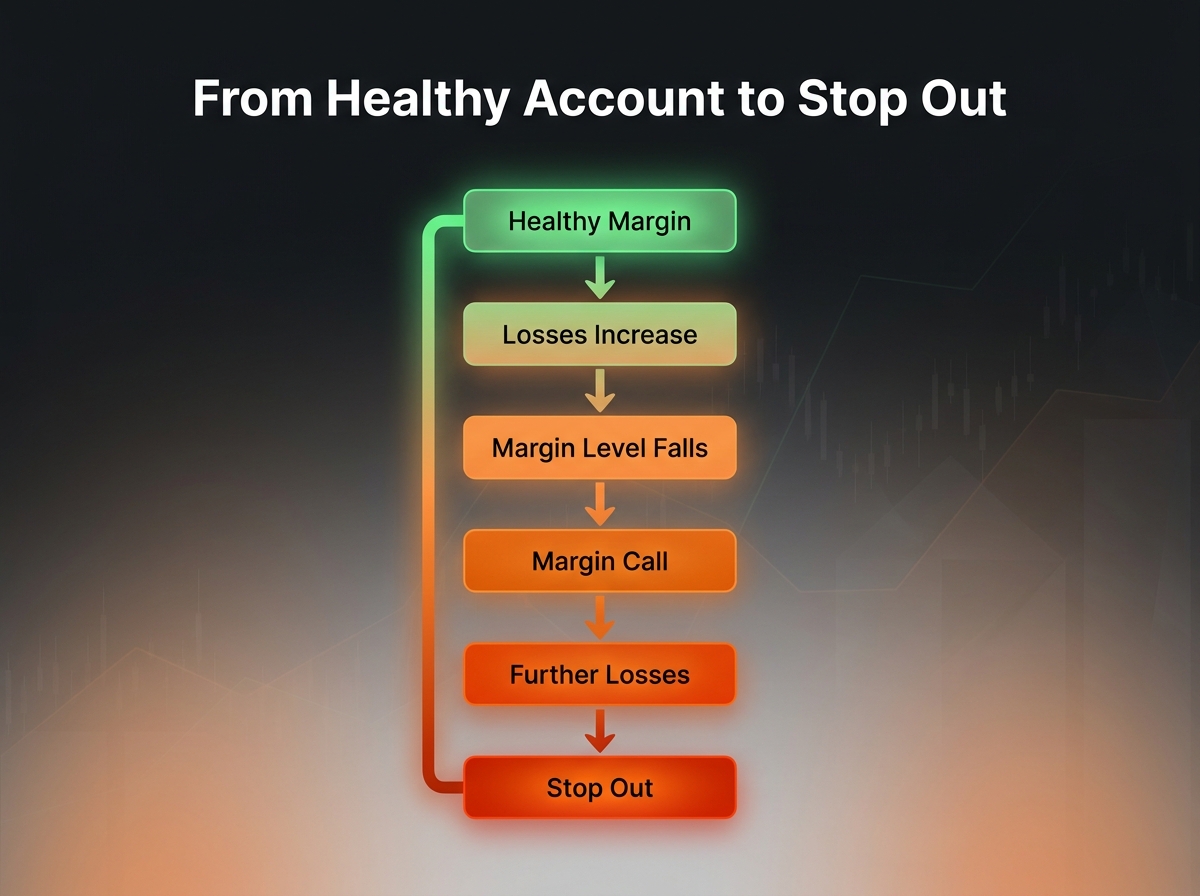
Picture a broker with a margin call level of 100% and a stop-out level of 50%. As losses grow, equity shrinks while used margin stays the same, so margin level falls. Cross below 100%, and you typically get a warning. Keep drifting toward 50%, and the broker starts closing your open positions until margin level recovers.A margin call is not your broker being unfair to you, it is the mechanism that stops your account from going negative. The real failure happened earlier, when the position was sized too large for the account.
Five Ways to Avoid a Margin Call
Size positions off your stop-loss distance and account risk percentage, never off *how much margin is available.*
Keep a healthy buffer of free margin at all times.
Know your specific broker*s margin call and stop out levels before your first trade.
Avoid maximum-size positions directly into high-impact news events.
Treat a margin call warning as a hard stop signal, not a hurdle to trade around.
What Is a Stop Out Level?
If losses continue after a margin call, the broker may eventually activate the Stop Out Level.
At this point, the trading platform begins closing losing positions automatically.
The objective is simple:
Protect both the trader and the broker from the account falling into a negative balance.
Usually, the largest losing position is closed first.
If necessary, additional positions are closed until the account returns above the brokers minimum requirement.
This process happens automatically.
It does not require the traders approval.
How Professional Traders Use Margin Safely
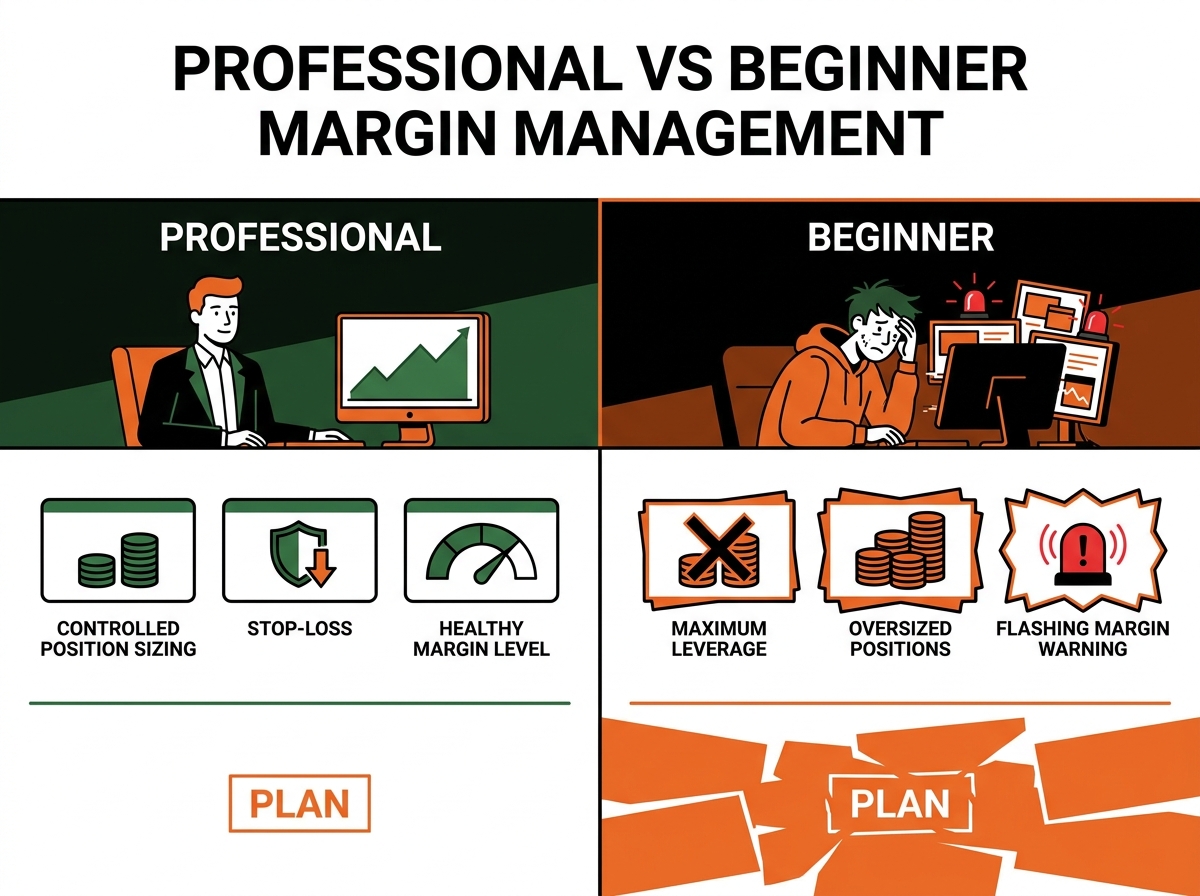
One of the biggest myths in Forex trading is that professional traders constantly use maximum leverage.
The opposite is usually true.
Experienced traders focus on preserving capital first and maximizing returns second.
They understand that margin is a tool, not a shortcut to wealth.
Professional habits include:
Risking only a small percentage of account equity on each trade.
Maintaining generous free margin.
Avoiding excessive leverage.
Trading only high-quality setups.
Using stop-loss orders consistently.
Diversifying exposure rather than concentrating all risk in one position.
Monitoring economic events that could increase volatility.
Successful traders know that surviving difficult market conditions is just as important as profiting during favorable ones.
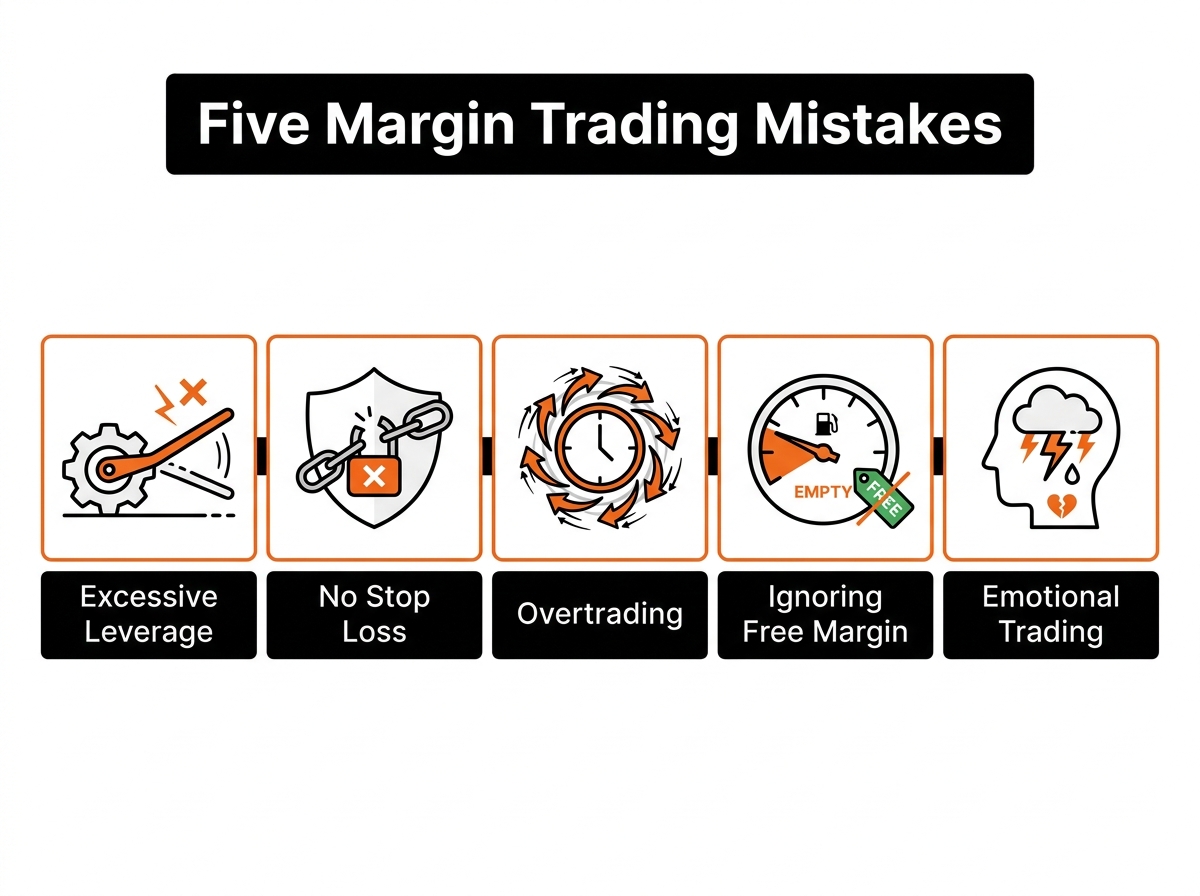
Common Beginner Mistakes with Margin Trading
Many account blow-ups have little to do with poor market analysis and everything to do with poor margin management.
Some of the most common mistakes include:
Using Maximum Leverage
Higher leverage increases exposure, but it also magnifies losses.
Ignoring Free Margin
Opening too many trades leaves little room for normal market fluctuations.
Trading Without Stop Losses
Without predefined exits, small losses can quickly escalate into account-threatening drawdowns.
Overconfidence After Winning Streaks
A series of profitable trades often leads beginners to increase position sizes too aggressively.
Misunderstanding Margin
Many new traders incorrectly believe margin represents borrowed money they can afford to lose.
In reality, it is their own capital acting as collateral.
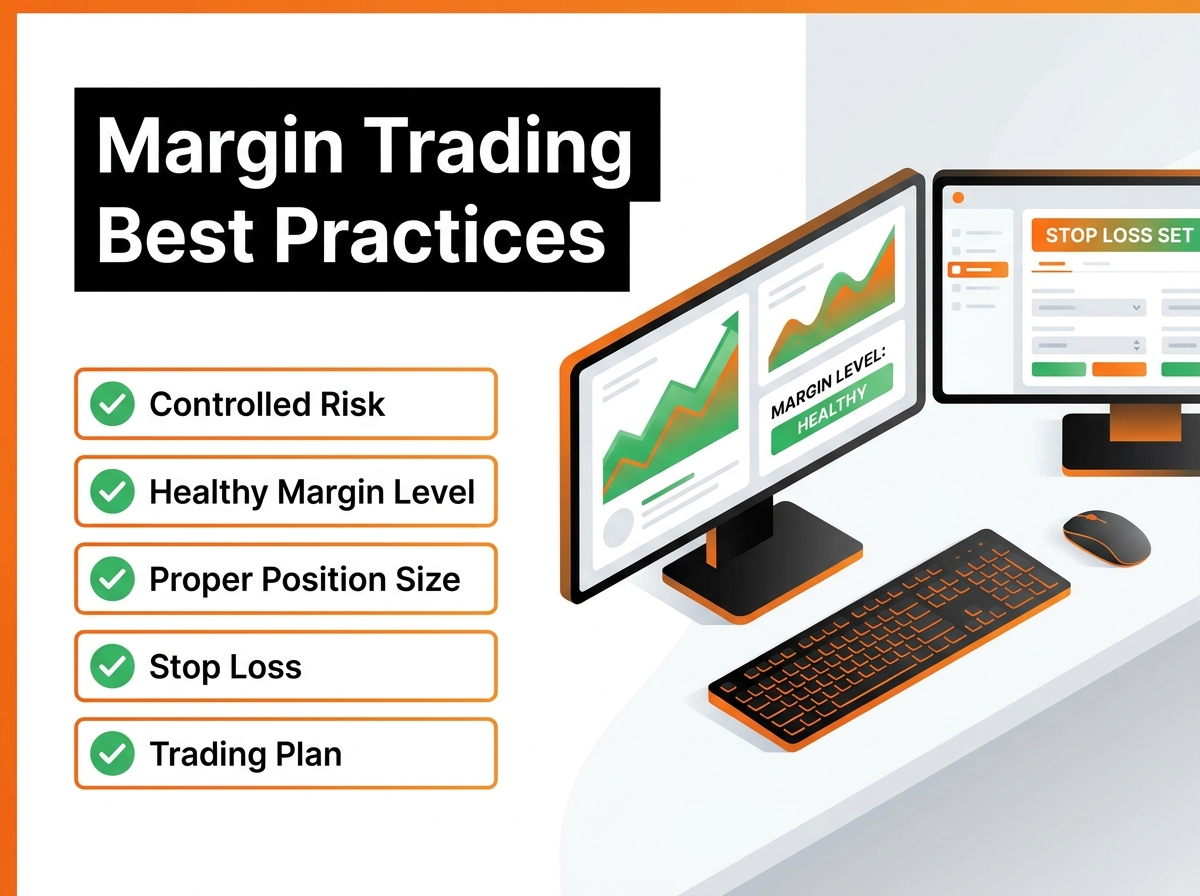
Best Practices for Margin Trading in 2026
Technology has made trading faster than ever, but the principles of sound risk management remain unchanged.
To use margin responsibly:
Understand every value displayed in your trading platform.
Keep sufficient free margin available.
Avoid risking a large portion of your account on a single trade.
Learn how leverage affects both profits and losses before increasing position size.
Regularly monitor margin level during volatile market conditions.
Focus on consistency rather than aggressive account growth.
Margin should increase your flexibility—not your stress.
Things You Should Know
Is margin the same as leverage?
No.
Margin is the amount of capital required to open a position.
Leverage determines how much buying power that margin provides.
Can I lose more than my margin?
Depending on your brokes policies, market conditions, and jurisdiction, losses can exceed the initial margin in extreme circumstances, particularly during severe market gaps. Many regulated brokers now offer negative balance protection for eligible retail clients, but this protection is not universal. Always check your brokers terms before trading.
Does higher leverage guarantee higher profits?
No.
Higher leverage simply magnifies both profits and losses.
Is margin trading suitable for beginners?
Only after fully understanding position sizing, leverage, stop losses, and risk management.
Education should always come before live trading.
Summary
Margin trading allows traders to control larger market positions using a relatively small amount of capital as collateral.
Margin itself is not a fee or borrowed cash. It is a security deposit reserved by your broker while trades remain open.
Understanding concepts such as equity, used margin, free margin, margin level, margin calls, and stop out levels is essential for protecting trading capital.
Professional traders treat margin as a risk management tool rather than a means to maximize position size. They prioritize preserving capital, maintaining healthy free margin, and using leverage responsibly.
Ultimately, successful margin trading is less about how much buying power you can access and more about how effectively you manage the buying power you already have.
Dipprofit Trading AcademySchool of Forex
● Free & Premium Curriculum
Global market knowledge, trade with zero guesswork.
Dipprofit Trading Academy takes you from "what is a pip" to full price-action trading, with graded quizzes, a live leaderboard, and a certificate at the finish line.
Your Overall Progress
—
Sign in to start tracking your progress, rank on the leaderboard, and get a certificate of completion.
📊
Real Progress TrackingEvery quiz score builds your standing
🏆
Global & Level LeaderboardsSee exactly where you rank
🎓
Certificate on CompletionFinish every level, earn your proof
Curriculum
Your path through the School of Forex
"View Lessons" previews a level right here. "Start Lesson" takes you straight into it.