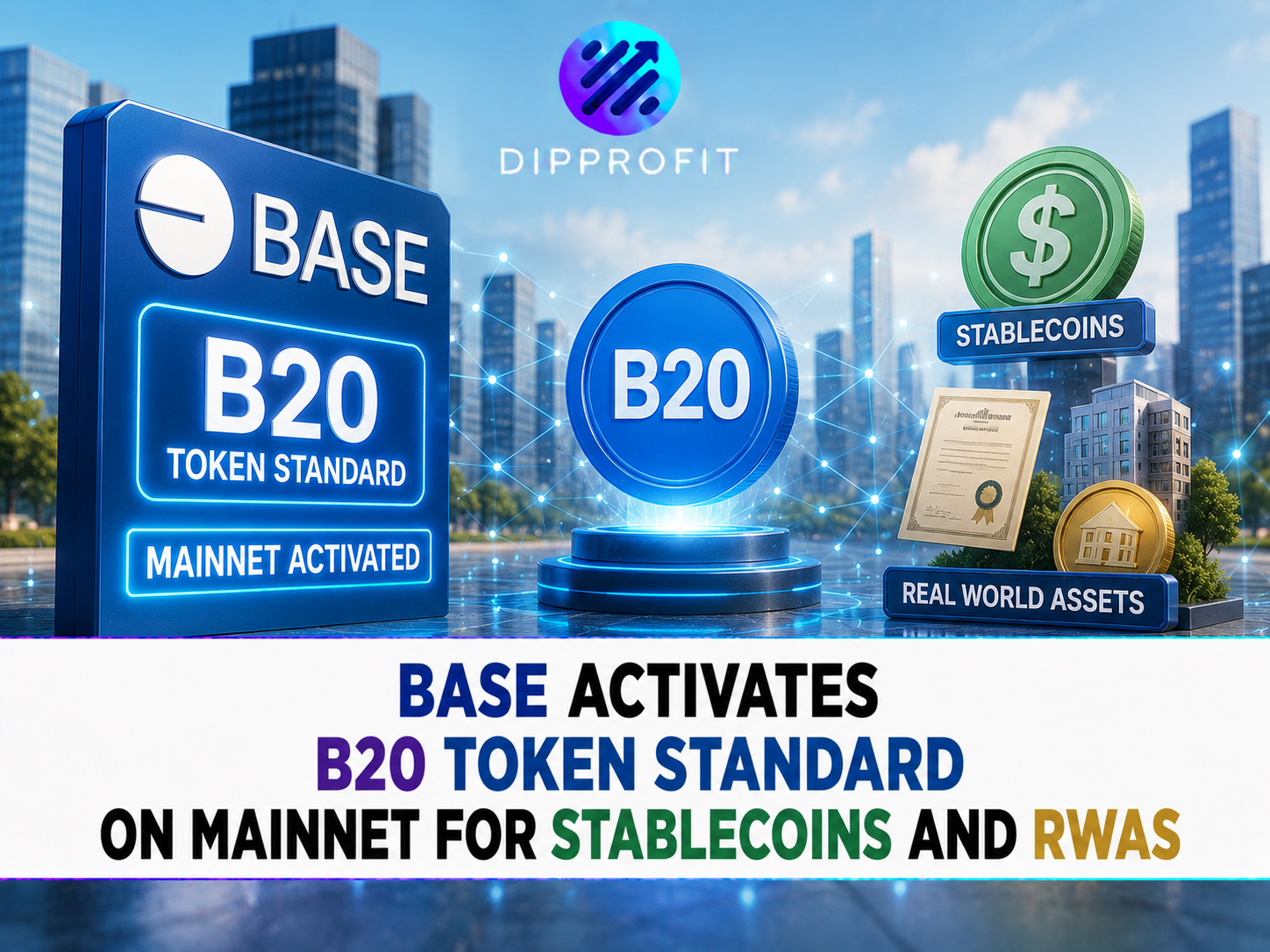

Coinbase-backed Ethereum layer-2 network Base is set to activate its B20 token standard on mainnet, introducing a native framework designed to streamline the creation of stablecoins, tokenized real-world assets (RWAs) and other fungible tokens. According to Base documentation, the B20 standard is scheduled to go live at 6 pm UTC on Wednesday, enabling developers to begin building tokens under the new standard without the need for custom ERC-20 contract development and auditing.
The activation represents a significant milestone for Base’s ecosystem, as it provides developers with a standardized approach to token creation. B20 tokens are compatible with standard ERC-20 tokens but come equipped with built-in issuer controls, including supply limits, transfer rules, minting, burning, pausing capabilities and transaction notes. This combination of compatibility and enhanced functionality aims to reduce friction in token deployment while maintaining security standards.
The B20 standard supports two distinct variants tailored to different use cases. The asset variant features configurable decimals ranging from six to 18, providing flexibility for various token types. The stablecoin variant, by contrast, employs fixed six-decimal formatting and requires issuers to specify a fiat currency denomination, such as the US dollar or euro. This dual-variant approach reflects Base’s recognition that different token categories have distinct technical requirements.
B20 was introduced as part of Base’s Beryl upgrade, which went live on June 26. The upgrade delivered multiple improvements to the network, including shortened withdrawal waiting periods reduced from seven days to five days, alongside technical changes aimed at enhancing overall network performance. The staggered rollout between the Beryl upgrade and B20 activation allowed the network to address technical issues before full standard deployment.
The timing of B20’s activation follows a series of infrastructure challenges that tested Base’s operational resilience. On June 25, Base experienced an outage caused by a consensus issue when an invalid block was sequenced, preventing new blocks from being created. The network resumed block production after a nearly two-hour halt on the same day. A post-mortem analysis revealed that a sequencer bug caused back-to-back outages on June 25 and June 26, with the first incident lasting approximately 116 minutes and a second outage lasting about 20 minutes after a race condition prevented sequencers from catching up following a system reset.
These infrastructure challenges delayed the initial Beryl upgrade by one day due to a separate B20 activation registry timing issue. The incidents highlighted the complexities involved in coordinating major network upgrades and the importance of thorough testing before mainnet deployment. Despite these setbacks, Base has proceeded with the B20 activation as scheduled, suggesting confidence in the standard’s readiness for production use.
The B20 standard addresses a key pain point in the current token ecosystem. Developers creating stablecoins or RWAs typically must build and audit custom smart contracts, a process that is both time-consuming and expensive. By providing a standardized framework with pre-built functionality, B20 significantly lowers the barrier to entry for token issuers. This approach mirrors broader industry trends toward standardization, as seen in AI-powered security tools reshaping crypto’s standards for code audits.
See also: Tim Draper Denies Moving Bitcoin After Coinbase Transfer Claim, Reiterates $250K BTC Price Target
The activation of B20 comes at a time when institutional interest in tokenized assets continues to grow. Stablecoins and RWAs represent two of the most promising use cases for blockchain technology, with significant capital flowing into these sectors. Base’s move to provide native infrastructure for these token types positions the network to capture a portion of this emerging market.
For developers on Base, the B20 standard offers immediate practical benefits. The built-in issuer controls reduce the need for custom logic, while compatibility with ERC-20 ensures interoperability with existing tools and infrastructure. The ability to specify transaction notes within the standard also provides enhanced transparency and auditability, features increasingly demanded by institutional participants and regulators.
Base continues to establish itself as a competitive layer-2 solution within the Ethereum ecosystem. With B20 now live, the network has expanded its value proposition beyond transaction throughput and cost efficiency to include developer-friendly infrastructure for emerging token categories. The coming weeks will reveal how quickly the developer community adopts the new standard and what token projects emerge on Base’s platform.
More Reads:
Wall Street Launches Overwhelmingly Bullish Coverage of SpaceX Post-IPO, With Price Targets Up to $800
Trader Loses $2M in Same-Block Backrun Extraction Exploit on DEX
If you’re reading this, you’re already ahead. Stay there, by joining the…
Dipprofit’s private Telegram community

Discover more from Dipprofit
Subscribe to get the latest posts sent to your email.