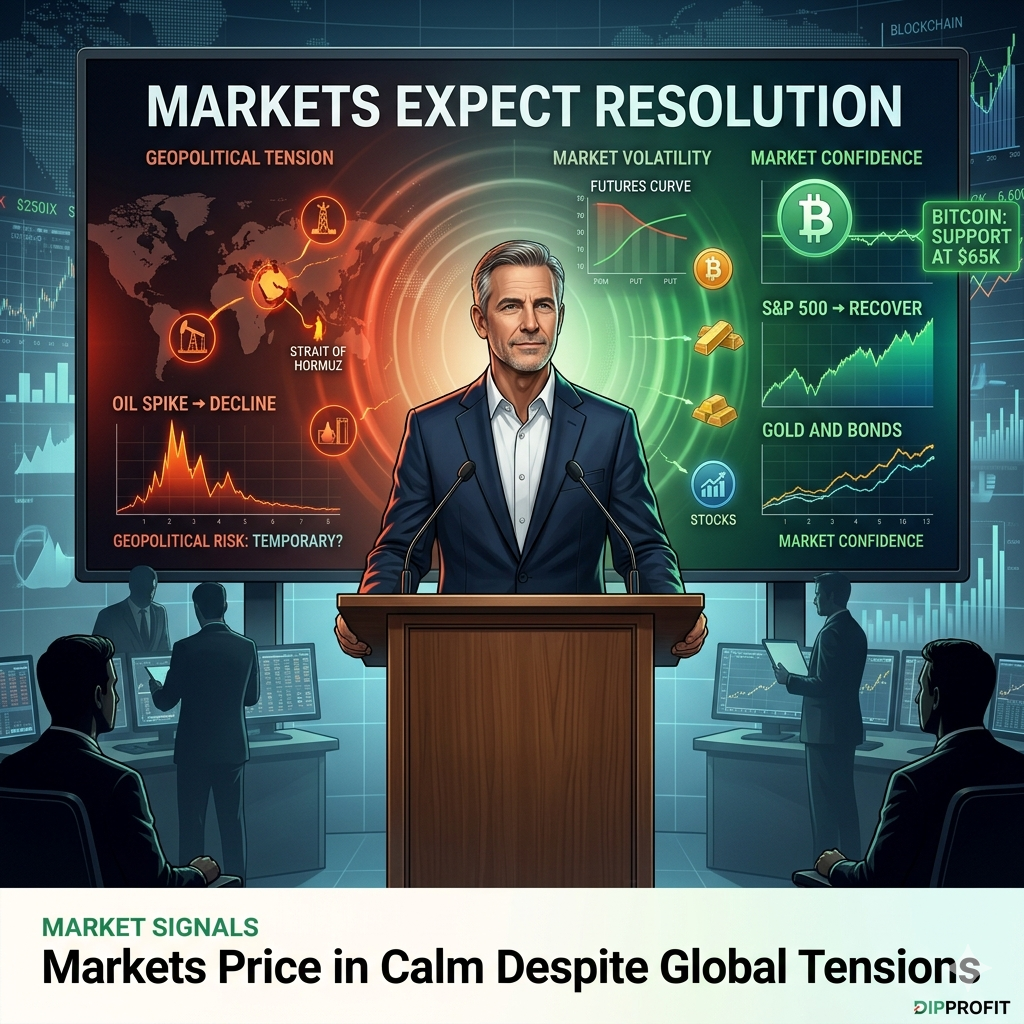

Jurrien Timmer, director of global macro at Fidelity Investments, believes markets are pricing in a near-term resolution to current geopolitical tensions, particularly around Iran, despite ongoing volatility and headlines that seem to intensify week after week.
Speaking to CoinDesk, Timmer characterized the current market environment as “another wild ride,” yet maintained a relatively constructive outlook. His analysis suggests that conditions are not as dire as they might initially appear, with multiple market indicators pointing to investor confidence in a peaceful resolution.
Oil market structure provides key evidence for this view. While crude prices surged above $100 per barrel, the futures curve remains in backwardation, with contracts further out trading roughly $40 below the front month. This structure signals that markets view the current supply disruption as a short-term bottleneck rather than a prolonged crisis.
The broader equity market has also demonstrated resilience. The S&P 500, which dropped approximately 9% at its lowest point, has since recovered to a drawdown closer to 1%. Credit spreads remain contained, suggesting limited systemic stress in financial markets despite heightened geopolitical uncertainty.
Unusual correlations in traditionally defensive assets tell an interesting story. Gold and bonds, typically less correlated, have been moving more closely together. Timmer attributes this partly to global capital flows, noting that countries facing constraints in moving energy through the Strait of Hormuz may be raising liquidity by selling highly liquid assets such as gold and U.S. Treasuries.
Bitcoin has emerged as a significant component of this shifting market landscape. After declining 50-60% from its October peak of $126,000, the cryptocurrency has shed many “paper hands,” according to Timmer. The selling pressure has largely been absorbed, leaving what he describes as a more stable foundation.
Timmer sees the $65,000 level acting as solid technical support for Bitcoin. He believes the potential exists for a base to form at this level, though he emphasizes that a catalyst will be needed to drive the next leg higher. Bitcoin was trading in the low $70,000s at the time of publication, following a brief surge after U.S. President Donald Trump announced a two-week ceasefire with Iran.
The crypto market received a significant lift from the ceasefire announcement. Oil prices plunged more than 17% following the news, and equity markets also gained. WTI crude has since bounced back to trade around $100 per barrel. The market reaction demonstrates how closely linked geopolitical developments remain to cryptocurrency valuations.
Timmer remains bullish on both Bitcoin and gold, despite the technical corrections both assets have experienced. He notes that gold, after a strong run, appears more vulnerable to a pullback than Bitcoin at current levels. However, he emphasized that both assets maintain compelling fundamentals for long-term investors.
Equities, according to Timmer, are effectively priced for success, with only single-digit drawdowns despite significant geopolitical uncertainty. Strong corporate earnings provide the primary support for equity valuations, helping markets absorb geopolitical shocks that might otherwise trigger deeper selloffs.
The broader economic backdrop before the Iran conflict was already constructive. The U.S. Supreme Court’s rollback of tariffs improved the policy environment, and fears of an AI-driven market bubble have not materialized. Investor skepticism toward AI and software valuations, rather than representing weakness, signals healthy market dynamics where investors continue asking hard questions.
Timmer highlighted several risks that investors should actively manage going forward. Concentration risk in the “Magnificent Seven” technology stocks remains a concern, as does interest rate risk. The 10-year Treasury yield approaches 4.5% and could move toward 5%, a development occurring even amid geopolitical uncertainty.
The strategist frames periods of volatility not merely as challenges but as opportunities for disciplined investors. Those who panic during turbulent periods become price takers, while long-term investors with diversified portfolios can step in as price makers. This approach, Timmer argues, offers the best path forward for navigating unpredictable geopolitical events.
More Reads:
Ethereum Weekly Analysis: Week 15 Market Overview
Ether Machine Abandons $1.5B Public Debut as SPAC Merger Collapses
If you’re reading this, you’re already ahead. Stay there, by joining the…
Dipprofit’s private Telegram community

Discover more from Dipprofit
Subscribe to get the latest posts sent to your email.