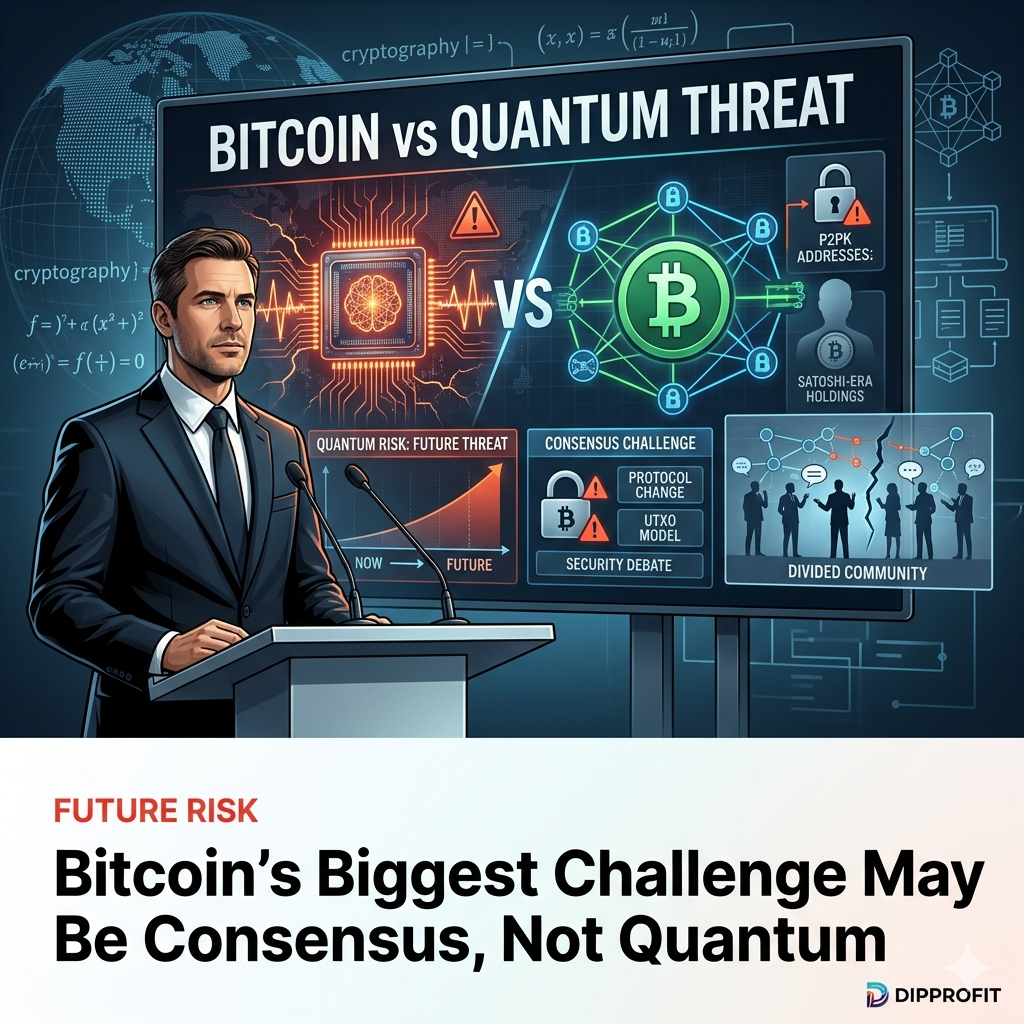
The biggest challenge facing Bitcoin in addressing quantum computing threats may not be technical but rather achieving community consensus on protocol changes, according to Grayscale’s head of research Zach Pandl.
While quantum computers pose a potential future threat to Bitcoin’s cryptographic security, Pandl argued that the cryptocurrency has inherent technical advantages that make it less vulnerable than other digital assets. The real obstacle lies in Bitcoin’s history of contentious debates over protocol modifications.
“Bitcoin has lower risk than other cryptocurrencies” because it uses a UTXO model and proof-of-work consensus, does not have native smart contracts, and certain address types are not quantum vulnerable, Pandl wrote in a research note.
The statement comes after Google released a paper on March 30 that sent shockwaves through the crypto industry, suggesting quantum computers could potentially crack Bitcoin’s cryptography using fewer resources than previously estimated.
The Bitcoin community is currently debating what to do about approximately 1.7 million BTC locked in early Pay-to-Public-Key (P2PK) addresses, which are particularly vulnerable to quantum attacks. This includes an estimated 1 million BTC belonging to Bitcoin’s pseudonymous creator Satoshi Nakamoto, currently worth about $68 billion.
According to Pandl, the community faces three main options for addressing coins where private keys have been lost or are otherwise inaccessible: burning the coins entirely, deliberately slowing their release by limiting the rate of spending from vulnerable addresses, or taking no action.
“All are conceptually doable, but the challenge is reaching a decision, and the Bitcoin community has a history of contentious debates over protocol changes, including last year’s dispute around image data stored in blocks,” Pandl said.
The reference to last year’s dispute points to the 2023 controversy over Bitcoin Ordinals, a technology that enables inscribing data such as text and images to a satoshi, the smallest unit of Bitcoin. The debate divided the community into opposing camps, with disagreements continuing even two years later.
Despite identifying social consensus as the primary challenge, Pandl emphasized that blockchain networks should begin preparing now. “It is time to get started” on adopting post-quantum cryptography, he wrote, echoing sentiments previously expressed by Google.
Several blockchain projects are already taking steps to address the quantum threat. Both Solana and the XRP Ledger are experimenting with post-quantum cryptography implementations, Pandl noted. The Ethereum Foundation released its post-quantum roadmap in February, outlining its strategy for protecting the network against future quantum attacks.
However, Pandl sought to reassure investors that there is no immediate cause for alarm. “In our view, there is no security threat to public blockchains from quantum computers today,” he stated, while adding that now is the time to accelerate preparation efforts for a post-quantum future.
The quantum computing threat has been a topic of increasing discussion in the cryptocurrency space as technology advances. While experts generally agree that quantum computers capable of breaking Bitcoin’s encryption are likely years away, the debate over how to prepare has highlighted deep divisions within the Bitcoin community over protocol governance.
The challenge of achieving consensus on protocol changes is not new to Bitcoin. The cryptocurrency has experienced several contentious debates throughout its history, including the 2017 block size debate that led to the creation of Bitcoin Cash, a hard fork of the original Bitcoin blockchain.
Pandl’s analysis suggests that while Bitcoin’s technical architecture provides certain protections against quantum threats, the decentralized nature of its governance structure—which many consider a feature rather than a bug—could complicate efforts to implement necessary security upgrades in a timely manner.
The researcher concluded that investors “should not fret” for now, but emphasized the importance of beginning discussions and preparations today to ensure the network is ready when quantum computers do become a genuine threat to blockchain security.
More Reads:
GBP/USD Weekly Price Analysis: Pound Battles Multiple Economic Headwinds
Solo Bitcoin Miner Beats 1-in-28,000 Odds to Win $210,000 Block Reward
If you’re reading this, you’re already ahead. Stay there, by joining the…
Discover more from Dipprofit
Subscribe to get the latest posts sent to your email.