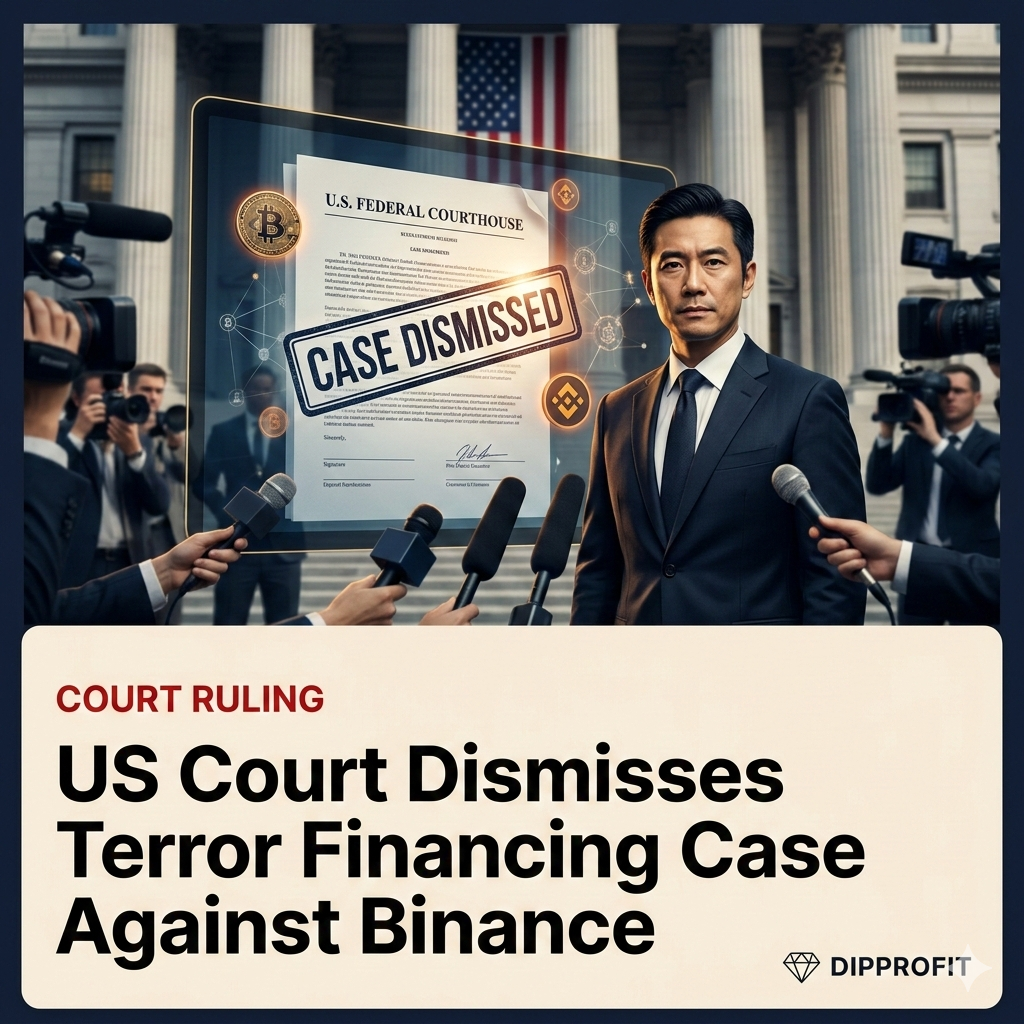

US Court Dismisses Terrorism Financing Lawsuit Against Binance and CZ
A US federal judge has dismissed a lawsuit accusing Binance, former CEO Changpeng Zhao and Binance.US of facilitating terrorist financing through cryptocurrency transactions. The ruling marks a significant legal victory for the world’s largest cryptocurrency exchange amid ongoing regulatory scrutiny.

The US District Court for the Southern District of New York dismissed claims brought by hundreds of victims and relatives of victims of terrorist attacks spanning nearly a decade. Judge Jeannette A. Vargas ruled that the plaintiffs failed to establish a sufficient connection between Binance’s operations and the specific terrorist attacks that caused their injuries.
The lawsuit represented 535 individuals linked to victims of 64 attacks carried out between 2016 and 2024. The incidents were attributed to groups including Hezbollah, Hamas, ISIS, al-Qaeda and Palestinian Islamic Jihad.
Following the court’s decision, Zhao took to X to argue that centralized crypto exchanges have no economic incentive to assist terrorist organizations. “There are absolutely zero (0) motive for any CEX to have anything to do with terrorists,” Zhao wrote, explaining that such actors are unlikely to generate trading revenue and typically only deposit funds briefly before withdrawing them.
The plaintiffs had sought damages under the US Anti-Terrorism Act and the Justice Against Sponsors of Terrorism Act. These laws allow victims to pursue claims against entities accused of assisting terrorist acts.
They argued that the attackers or affiliated organizations benefited from transactions conducted on the Binance exchange. The complaint described alleged compliance failures and illicit activity on the platform.
However, Judge Vargas determined that the plaintiffs did not plausibly link the exchange’s conduct to the specific attacks. The decision effectively ended the case at the pleading stage, though the judge noted that “any amended complaint shall be due within 60 days.”
The dismissal comes at a time when Binance faces mounting scrutiny over its compliance practices and alleged connections to sanctioned entities. On Friday, the exchange pushed back against allegations raised by a group of 11 US senators regarding transactions tied to Iranian entities.
In a letter sent to Senators Richard Blumenthal and Ron Johnson, Binance rejected claims that it facilitated transactions tied to Iranian entities. The exchange said the February inquiry relied on reports that were “demonstrably false” and lacked credible evidence.

The scrutiny followed media reports alleging that Binance processed more than $1 billion in crypto transactions linked to Iranian entities Hexa Whale and Blessed Trust. The reports also claimed the exchange fired employees who raised concerns internally about these transactions.
Binance has consistently denied these allegations and maintains that it operates robust compliance programs. The exchange has emphasized its cooperation with law enforcement agencies worldwide in combating illicit finance.
The terrorism financing lawsuit dismissal represents a rare legal win for Binance, which has faced numerous regulatory challenges across multiple jurisdictions. In 2023, the exchange and Zhao pleaded guilty to violations of US anti-money laundering laws, resulting in billions of dollars in fines and Zhao’s resignation as CEO.
Despite the legal victory, the case highlights ongoing concerns about cryptocurrency’s potential use in illicit finance. Regulators worldwide have increased pressure on exchanges to implement stronger know-your-customer and anti-money laundering controls.
Zhao’s argument about the economic disincentives for exchanges to work with terrorists reflects broader industry claims that blockchain technology’s transparency actually makes it a poor tool for illicit finance compared to traditional banking systems. Industry advocates frequently point to the traceability of blockchain transactions as a feature that helps law enforcement track criminal activity.
The court’s decision to dismiss the case at the pleading stage suggests that plaintiffs face significant legal hurdles in proving direct causation between exchange operations and terrorist attacks. The 60-day window for an amended complaint leaves open the possibility that plaintiffs could attempt to strengthen their claims with additional evidence.
More Reads:
Latin America Crypto User Growth Triples U.S. Rate in 2025, Report Shows
Bitcoin Price Analysis: Week 10 – Record High Sets Stage for Consolidation
Discover more from Dipprofit
Subscribe to get the latest posts sent to your email.