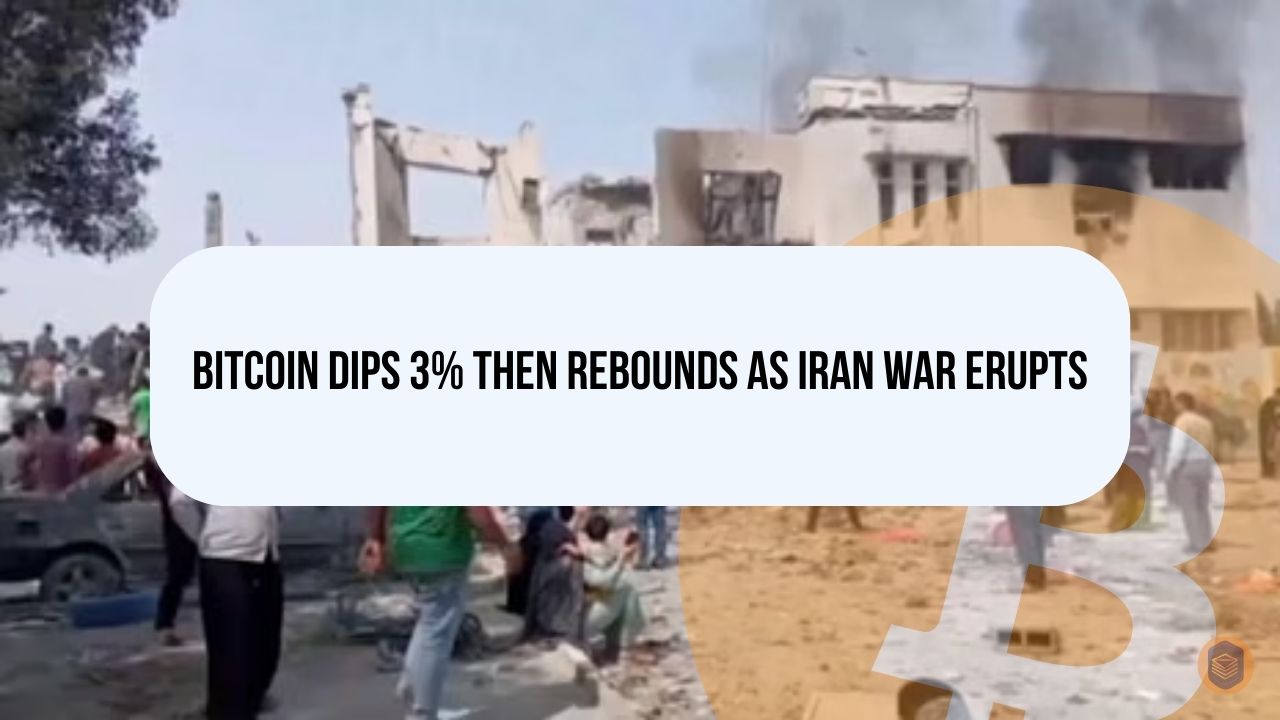
Bitcoin dropped from roughly $65,500 to $63,000 within hours early Saturday as the US and Israel launched coordinated missile strikes on Iranian nuclear, missile, and naval infrastructure. The cryptocurrency rebounded sharply to $68,196 after Iranian state media confirmed Supreme Leader Ayatollah Ali Khamenei was killed in the strikes, ultimately settling around $66,300 by Sunday morning.
The initial market reaction saw the total crypto market cap fall by $128 billion, with $449 million in long positions liquidated as traders digested the conflict’s emergence. President Trump confirmed “major combat operations” and urged Iranians to overthrow the regime, while Iran retaliated with missiles targeting Israel, Qatar, the UAE, Bahrain, and US bases in Iraq. Israeli Defense Minister Israel Katz declared a nationwide state of emergency, signaling the severity of the escalation.
Bitcoin’s relatively modest 3% drop during the initial shock differed markedly from traditional asset behavior during similar geopolitical events. According to Hayden Hughes of Tokenize Capital, “Bitcoin is the only large liquid asset trading 24/7, so it absorbed all the selling pressure that would normally spread across equities, bonds, and commodities.” This unique characteristic allowed crypto markets to process the conflict in real time while traditional markets slept.
The pattern mirrors previous Middle East conflicts. In April 2024, when Iran first fired missiles at Israel, Bitcoin dropped about 6% before rallying over subsequent months to new all-time highs. The June 2025 strike on Iranian nuclear sites pushed Bitcoin below $100,000 briefly before recovering. However, this time Bitcoin was already down roughly 50% from its October 2025 all-time high above $126,000, raising questions about whether the bear market changes the recovery dynamics.
Bitcoin ETFs recorded $787 million in net inflows last week, suggesting institutional appetite remained intact heading into the conflict. Ethereum ETFs added $80.5 million in inflows, indicating broader conviction in digital assets despite macroeconomic uncertainty. These flows provide a foundation for potential continued strength once US equity markets and cryptocurrency trading resume normal patterns on Monday.
Hyperliquid emerged as the surprising winner of the weekend, with its HIP-3 markets setting a new record open interest above $1.1 billion. The platform became the primary marketplace for traders hedging commodities as the conflict erupted. The HYPE token rallied from $26 to $32 through weekend trading, reflecting increased demand for decentralized infrastructure. Arthur Hayes noted that “where price discovery happens when TradExchanges sleep” appears increasingly on Hyperliquid’s 24/7 infrastructure.
Beyond Bitcoin, market reactions remained measured. Ethereum fell 2% to $1,950, while Solana dipped 1% to $84. Morpho, NEAR, and Jupiter led top movers with gains between 3% and 5%, suggesting selective risk appetite for alt assets. The meme coin sector showed mixed signals, with most major tokens down between 1% and 4%, though war-themed tokens like WAR rallied 150%.
Traditional commodities responded more dramatically than crypto. Oil surged 8% premarket with concerns about Strait of Hormuz closure, through which approximately 20% of global oil passes daily. Goldman Sachs predicted oil could reach $100 per barrel if the conflict extends for four weeks as Trump suggested. Gold and silver rallied 3% and 2% respectively as investors sought traditional safe havens.
The critical variables ahead include whether Iran’s Islamic Revolutionary Guard Corps retaliates by threatening the Strait of Hormuz, which could trigger an inflation shock that would pressure risk assets broadly. Alternatively, if Khamenei’s death accelerates regime destabilization, traders may interpret it as shortening the conflict duration, continuing the relief rally.
Monitoring will focus on today’s Bitcoin ETF flows, which will provide the first signal from traditional financial markets. The Hyperliquid ecosystem also warrants attention, as the exchange’s performance suggests crypto infrastructure is establishing itself as a genuine 24/7 alternative to traditional markets during major macro events.
The conflict also raised questions about Iran’s cryptocurrency operations. Intelligence indicates the Iranian regime operated between 2% and 5% of global Bitcoin hashrate using subsidized electricity, though the strategic implications remain unclear. Meanwhile, prediction market Polymarket saw one trader bank $385,000 by betting daily on US-Israel Iran strike dates since February 8, finally profiting Saturday morning when the attack materialized.
If you’re reading this, you’re already ahead. Stay there, by joining the…
Dipprofit’s private Telegram community
Discover more from Dipprofit
Subscribe to get the latest posts sent to your email.